
Understanding workflow automation vs process automation is essential for businesses looking to improve efficiency, reduce manual work, and scale operations. While both approaches automate business activities, they differ in scope, complexity, and implementation. In this guide, Ohtez breaks down the key differences between workflow automation and process automation, compares their benefits, and helps businesses determine which approach best aligns with their operational goals.
What is Workflow Automation?
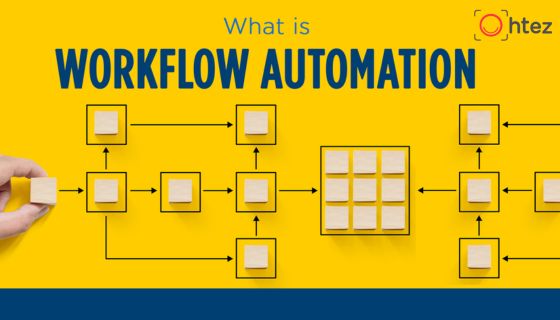
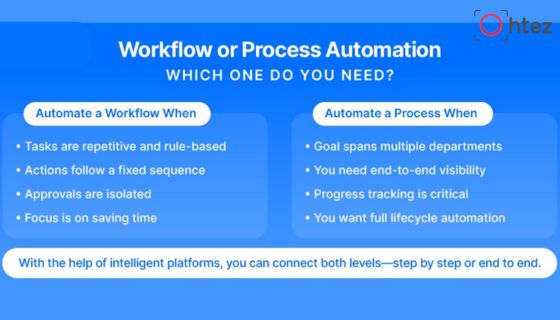
Workflow automation is the use of technology to automate repetitive tasks based on predefined rules and workflows. In the context of workflow automation vs process automation, workflow automation focuses on improving efficiency within a specific team, department, or business function.
Common workflow automation examples include:
-
Automatically assigning tasks to team members
-
Sending notifications and reminders
-
Routing documents for approval
-
Updating records between applications
Many organizations use workflow automation tools to reduce manual work, improve consistency, and speed up routine operations. By automating individual workflows, businesses can increase productivity while allowing employees to focus on higher-value activities. This makes workflow automation an effective starting point for companies beginning their automation journey.
>> See more: Cloud Application Integration Services For Developers
What is Process Automation?
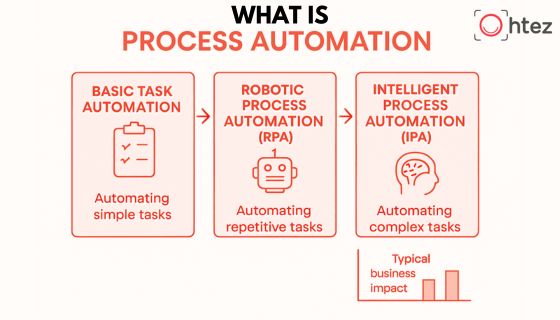
Process automation uses technology to automate entire business processes that involve multiple workflows, systems, and teams. When comparing workflow automation vs process automation, process automation takes a broader approach by optimizing operations from start to finish.
Common process automation examples include:
-
Employee onboarding processes
-
Order-to-cash operations
-
Procurement workflows
-
Customer service management
Unlike workflow automation, business process workflow automation focuses on connecting tasks across departments to improve visibility, consistency, and operational efficiency. By eliminating bottlenecks and reducing manual handoffs, process automation helps organizations scale more effectively and maintain standardized business processes.
Workflow Automation vs Process Automation: key differences
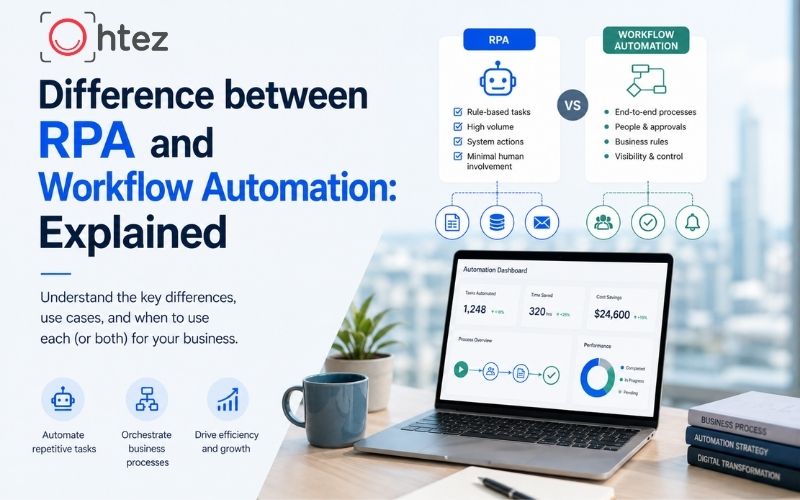
Although the terms are often used interchangeably, understanding workflow automation vs process automation is essential for selecting the right automation strategy. Both approaches help businesses reduce manual work and improve productivity, but they address different operational needs. Workflow automation focuses on automating specific tasks or sequences within a department. Process automation takes a broader perspective by optimizing complete business processes across multiple teams and systems.
The key differences between workflow automation vs process automation can be categorized into several areas:
-
Scope and business goals
-
Level of automation
-
System integration
-
Operational complexity
-
Scalability
-
Customization capabilities
Businesses should not view these approaches as competing solutions. In many cases, workflow automation serves as the foundation for larger process automation initiatives. Understanding how each approach contributes to operational efficiency enables organizations to build a more effective automation roadmap.
1. Scope and Business Objectives
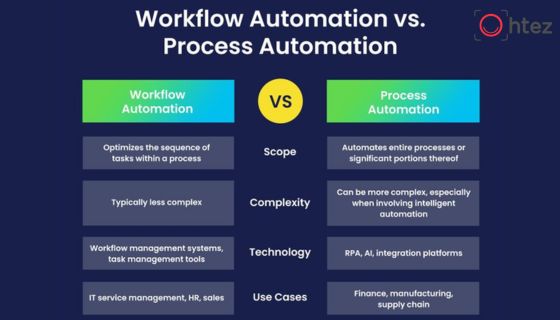
A key difference in workflow automation vs process automation is scope. Workflow automation focuses on specific tasks or workflows, such as document approvals or leave requests. Process automation covers broader business operations by connecting multiple workflows across departments.
|
Workflow Automation |
Process Automation |
|
Task-focused |
Process-focused |
|
Department-level |
Organization-wide |
|
Quick implementation |
Strategic transformation |
|
Limited dependencies |
Multiple dependencies |
Businesses should choose based on whether they want to optimize individual workflows or entire business processes.
2. Level of Automation
When evaluating workflow automation vs process automation, the level of automation is another important factor. Workflow automation handles repetitive, rule-based tasks, while process automation automates end-to-end activities involving multiple systems and teams.
|
Workflow Automation |
Process Automation |
|
Task automation |
End-to-end automation |
|
Rule-based actions |
Automated decisions and actions |
|
Limited process visibility |
Full process visibility |
|
Department workflows |
Cross-functional workflows |
Organizations seeking enterprise-wide efficiency often benefit more from process automation.
3. System Integration Requirements
Integration requirements also distinguish workflow automation vs process automation. Workflow automation tools often work within a single platform, while process automation typically connects CRM, ERP, HR, and other business systems. The more systems involved in a process, the more valuable process automation becomes.
|
Workflow Automation |
Process Automation |
|
Minimal integrations |
Extensive integrations |
|
Single-platform focus |
Multi-system connectivity |
|
Faster deployment |
More implementation planning |
|
Lower technical complexity |
Higher technical complexity |
4. Complexity and Governance
Another important aspect of workflow automation vs process automation is complexity. Workflow automation is generally easier to implement because it focuses on specific tasks within a team or department. Process automation involves multiple workflows, systems, and stakeholders, making governance more critical.
|
Workflow Automation |
Process Automation |
|
Lower complexity |
Higher complexity |
|
Fewer stakeholders |
Multiple stakeholders |
|
Faster deployment |
Longer implementation |
|
Basic governance needs |
Strong governance framework |
Organizations with complex operations often need process automation to maintain consistency, compliance, and accountability.
5. Flexibility and Scalability
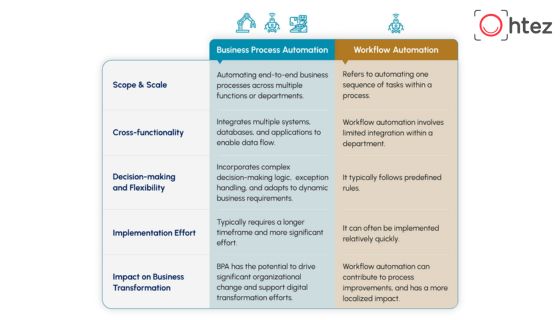
Flexibility and scalability are key considerations when comparing workflow automation vs process automation. Workflow automation allows teams to quickly modify processes and adapt to changing requirements. However, managing many isolated workflows can become difficult as a business grows.
|
Workflow Automation |
Process Automation |
|
Highly flexible |
Highly scalable |
|
Easy workflow updates |
Enterprise-wide standardization |
|
Suitable for small teams |
Supports business growth |
|
Limited expansion capabilities |
Handles complex operations |
Businesses planning significant growth should consider whether their automation strategy can scale alongside future operational demands.
6. Customization and Control
Customization is another area where workflow automation vs process automation differs. Workflow automation enables teams to tailor task flows to their specific needs. Process automation provides broader control by standardizing rules and processes across the organization. The best approach depends on whether the organization values flexibility within teams or centralized control across the business.
|
Workflow Automation |
Process Automation |
|
Department-level customization |
Enterprise-wide control |
|
Flexible workflow design |
Standardized governance |
|
Team-specific rules |
Organization-wide rules |
|
Simple configuration |
Advanced process management |
Workflow Automation vs Process Automation comparison table
The table below summarizes the key differences between workflow automation vs process automation. Use it as a quick reference when evaluating automation solutions.
|
Feature |
Workflow Automation |
Process Automation |
|
Primary Focus |
Individual tasks |
End-to-end processes |
|
Scope |
Departmental |
Enterprise-wide |
|
Complexity |
Low to moderate |
Moderate to high |
|
Integration Needs |
Limited |
Extensive |
|
Scalability |
Team-level growth |
Organization-wide growth |
|
Implementation Time |
Faster |
Longer |
|
Governance Requirements |
Minimal |
Comprehensive |
|
Business Impact |
Operational efficiency |
Strategic transformation |
When evaluating workflow automation vs process automation, the right choice depends on your business needs and goals. Workflow automation is best for optimizing specific tasks, while process automation helps streamline end-to-end operations. By selecting the right approach, businesses can improve efficiency, reduce manual work, and support long-term growth.
How Ohtez helps businesses implement AI-powered automation
Choosing between workflow automation vs process automation is only the first step. To achieve meaningful business outcomes, organizations need the right strategy, technology, and implementation partner.
At Ohtez, we help businesses streamline operations through AI-powered automation solutions tailored to their unique workflows and processes. Rather than simply automating repetitive tasks, our approach focuses on building intelligent systems that improve productivity, reduce operational costs, and support long-term scalability.
Our AI Agent solutions can assist businesses in:
-
Automating repetitive workflows and approvals
-
Handling customer inquiries through AI-powered assistants
-
Extracting and processing data from documents
-
Integrating information across multiple business systems
-
Supporting decision-making with real-time insights
-
Creating end-to-end automated business processes
Whether a company is starting with simple workflow automation tools or pursuing large-scale business process workflow automation, Ohtez provides the expertise needed to identify opportunities, design automation strategies, and deploy solutions that align with business goals. By combining automation technologies, AI agents, and system integration capabilities, Ohtez helps organizations move beyond manual operations and build more efficient, scalable, and intelligent business processes.
>> See more: Modern Business Intelligence Solutions to Maximize Company ROI

FAQs about Workflow Automation vs Process Automation
Is process automation more expensive?
Generally, yes. Process automation often costs more than workflow automation because it involves broader implementation, multiple system integrations, and enterprise-wide governance. However, the long-term benefits can outweigh the initial investment, especially for organizations with complex operations.
Which option delivers faster ROI?
Workflow automation typically delivers faster ROI because it is easier to implement and requires fewer resources. Process automation may take longer to show results, but it often generates greater long-term value through end-to-end process optimization.
Can small businesses use both approaches?
Yes. Small businesses often start with workflow automation to streamline repetitive tasks and later expand into business process workflow automation as they grow. This phased approach helps balance cost, efficiency, and scalability.