Modern businesses rely on many different applications such as CRM platforms, ERP systems, marketing tools, analytics software, and other SaaS solutions. When these systems operate independently, data becomes fragmented and workflows slow down.
Cloud application integration services solve this problem by connecting applications, automating processes, and synchronizing data across multiple systems. This allows organizations to improve efficiency, reduce manual work, and gain more value from their data.
As a result, businesses can improve efficiency, gain better visibility into their data, and maximize the value of their digital systems. In this article, we explore how cloud application integration services and cloud integration work, their key benefits, and how businesses can implement them successfully.
What is an application integration service?
Cloud application integration services are solutions that enable organizations to connect applications, systems, and data sources within cloud environments. Instead of operating in isolated silos, applications can communicate and share information across the entire business ecosystem.
As companies adopt more cloud platforms, the number of systems used across departments continues to grow. Sales, marketing, finance, and operations often rely on different tools to perform their tasks.
Without cloud application integration services, data exchange between these tools becomes manual and inefficient.
The Growing Ecosystem of Cloud Applications
Modern organizations use a wide variety of cloud tools including CRM systems, project management platforms, marketing automation tools, and analytics services.
As the number of applications increases, the need to connect them becomes critical. This is where cloud application integration services play an essential role.
For organizations implementing enterprise platforms such as ERP - Business Solution, seamless integration with other systems becomes even more important.
The Role of Cloud Application Integration Services
Cloud application integration services help organizations:
Connect multiple applications and systems
Automate business workflows
Synchronize data across platforms
Improve operational efficiency
By using cloud application integration services, businesses can ensure data flows smoothly between applications without manual intervention.
>> Read more: What Is Cloud Provisioning? An In-Depth Guide for Scalable Cloud Infrastructure
How Cloud Application Integration Services Connect Systems and Data
A typical cloud application integration services environment includes several technologies that help applications communicate and exchange data.
API Integration as the Foundation of Modern Application Connectivity
API Integration is one of the most common methods used in cloud application integration services.
APIs allow applications to communicate with each other, exchange information, and trigger automated processes.
For example:
A CRM sends customer data to a marketing platform
A sales system sends order data to a finance system
An operations platform updates data for analytics dashboards
Through API Integration, applications work together within a unified workflow.
Cloud Data Integration for Unified Data Management
Cloud Data Integration is another critical component of cloud application integration services.
It enables organizations to:
Synchronize data between systems
Transform data formats
Consolidate data from multiple sources
With cloud application integration services, businesses can combine data from different platforms into a centralized environment for analysis and decision-making.
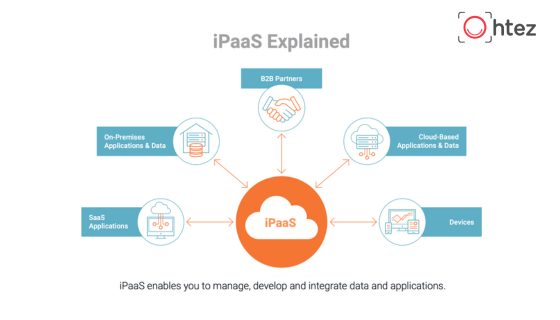
How Integration Platform as a Service (iPaaS) Works
Many organizations deploy cloud application integration services using Integration Platform as a Service (iPaaS).
An iPaaS platform provides a centralized environment that allows businesses to:
Connect multiple cloud applications
Build integration workflows
Manage APIs and data exchanges
By using iPaaS, companies can implement cloud application integration services faster and manage integrations more efficiently.
Key Benefits of Cloud Application Integration Services
Implementing cloud application integration services provides several advantages for organizations seeking to optimize their digital infrastructure.
Automating Business Processes
One of the main benefits of cloud application integration services is workflow automation.
Processes such as:
Order processing
Customer data updates
Marketing data synchronization
can be automated through cloud application integration services, reducing manual effort and minimizing errors.
Faster Integration of New Applications
As businesses expand their technology stack, integrating new applications can become complex.
Cloud application integration services simplify this process by providing ready-to-use connectors and integration tools.
This enables organizations to deploy new applications more quickly.
Monitoring and Managing Integration Workflows
Modern cloud application integration services platforms provide tools that allow organizations to monitor and manage integration processes.
These capabilities include:
Workflow monitoring
Error handling
Performance tracking
With these features, businesses can maintain reliable integration systems.
Types of Application Integration Services
Organizations use different types of cloud application integration services to connect systems, automate workflows, and ensure smooth data exchange across applications. Depending on business needs and technology environments, companies may adopt several integration approaches.
API-based integration: This type of cloud application integration services allows applications to communicate through APIs, enabling real-time data exchange and seamless connectivity between cloud platforms.
Data integration: These cloud application integration services focus on synchronizing and consolidating data from multiple systems, helping businesses maintain consistent and reliable information across applications.
Application-to-application integration: This approach connects two or more systems directly, allowing cloud application integration services to automate workflows and share data without manual intervention.
Integration Platform as a Service (iPaaS): Many organizations implement cloud application integration services through iPaaS platforms, which provide centralized tools to build, manage, and scale integrations between cloud and enterprise systems.
Essential Features of Effective Cloud Application Integration Services
To successfully deploy cloud application integration services, businesses should choose platforms that provide key capabilities for integration management.
Built-in Connectors for Popular Applications
A robust cloud application integration services platform should include prebuilt connectors for widely used applications such as:
CRM systems
marketing platforms
data management tools
These connectors reduce integration time and simplify deployment.
Visual Integration Designers for Faster Workflow Creation
Many cloud application integration services platforms offer visual workflow builders that allow users to create integrations through drag-and-drop interfaces.
These tools enable teams to build integration processes without extensive coding knowledge.
Secure API Management
Security is essential when implementing cloud application integration services.
Effective platforms should support:
API management
authentication mechanisms
access control policies
These capabilities help protect business data while maintaining integration efficiency.
When Businesses Should Implement Cloud Application Integration Services
While every organization’s needs are different, several situations make cloud application integration services particularly valuable. Businesses often consider implementing these solutions when they need to connect systems, improve data flow, and automate operations across multiple platforms.
Companies using multiple SaaS platforms: Organizations that rely on various SaaS tools such as CRM systems, analytics platforms, and marketing applications can use cloud application integration services to connect these systems and ensure seamless communication between them.
Businesses managing data across multiple systems: When important business data is stored across different platforms or databases, cloud application integration services help synchronize, consolidate, and maintain consistent data across the entire technology ecosystem.
Organizations automating complex business workflows: Companies that need to automate processes across multiple departments often implement cloud application integration services to streamline workflows, reduce manual tasks, and improve operational efficiency.
>> Read more: What Is SaaS Software Development? Step-by-Step Guide on How to Create SaaS Software in 2025
Implement Cloud Application Integration Services with Ohtez
Deploying cloud application integration services requires strong expertise in system architecture, API connectivity, and data management. Organizations must ensure that applications communicate efficiently, data flows securely across systems, and integration frameworks can scale as the business grows.
Ohtez helps companies implement cloud application integration services through a strategic and structured approach, enabling businesses to build a connected and efficient digital ecosystem.
Ohtez provides solutions that help organizations:
Implement cloud application integration services efficiently by designing integration frameworks that connect multiple applications, cloud platforms, and enterprise systems within a unified environment.
Design scalable integration architectures that support growing business needs, ensuring new applications and services can be integrated without disrupting existing systems.
Build secure and reliable API integration frameworks that allow different platforms to exchange data in real time, automate workflows, and enable seamless communication between services.
Optimize cloud data integration strategies so that information from multiple systems can be synchronized, transformed, and unified for better operational visibility and decision-making.
Automate complex business workflows by connecting applications such as CRM systems, analytics platforms, and operational tools through robust cloud application integration services.
Improve system performance and reliability through continuous monitoring, error handling, and optimization of integration processes.
Support long-term digital transformation by building flexible integration infrastructures that allow organizations to adopt new technologies without major system redesigns.
With deep expertise in cloud technologies and system integration, Ohtez enables businesses to deploy cloud application integration services that create scalable, secure, and efficient digital environments. These connected systems help organizations streamline operations, enhance collaboration between applications, and unlock the full potential of their data.
Choosing the right partner to implement cloud application integration services can make a significant difference in how effectively your systems work together. With strong expertise in cloud architecture, API connectivity, and enterprise integration, Ohtez supports businesses in designing and deploying reliable integration solutions tailored to their operational needs.
If your organization is looking to implement cloud application integration services to connect applications, streamline business processes, and unlock the full value of your data, Ohtez is ready to help.
Website: https://ohtez.com/
Email: info@ohtez.com
Hotline: 090 1900 626