
The rapid development of AI Agents is making it possible to automate increasingly complex workflows, but connecting AI to external data and tools remains a major challenge. Model Context Protocol was introduced to standardize this process, helping Agents access the right resources, use the right tools, and carry out tasks more safely. So, what is MCP in an AI Agent, how does it work, and what value can it bring to businesses? Read on to understand how MCP AI works, how it can be integrated, and where it can be applied in practice.
What is MCP in an AI Agent?
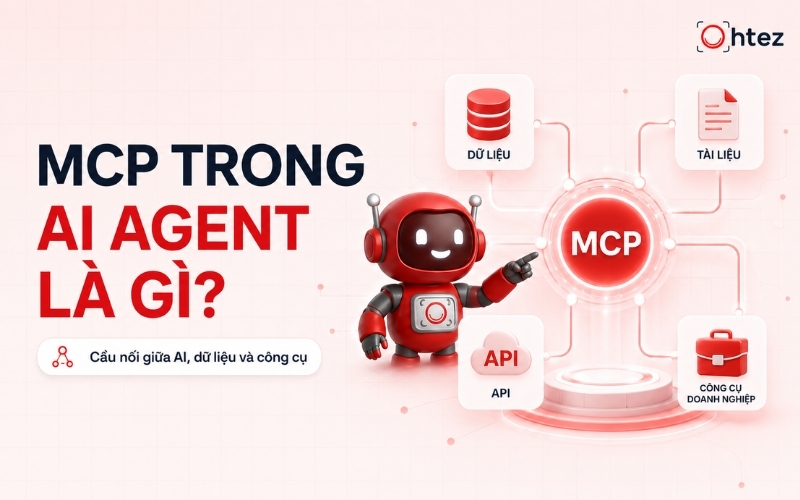
The question of what is MCP in an AI Agent becomes especially relevant when businesses want AI to do more than answer questions and instead access data and take action. MCP provides a standardized way for AI models to communicate with external tools, files, databases, and software. This allows an Agent to retrieve the right information, choose the appropriate tool, and complete complex workflows rather than relying only on its training data. In simple terms, when exploring what MCP is in AI, the protocol can be viewed as a “standard connection gateway” for AI. Instead of building a separate integration for every system, developers can use a shared structure to expand the capabilities of MCP AI.
What is MCP in an AI Agent?
The concept of Model Context Protocol
Model Context Protocol is an open protocol that defines how AI applications connect to and exchange information with external data sources or tools. It standardizes how capabilities are described, requests are sent, and results are returned. This is the technical foundation behind the question: what is MCP in an AI Agent?
A typical connection model includes an application that hosts the AI Agent, an MCP client, and one or more MCP servers. When a user submits a request, the Agent can identify the relevant tool, send parameters, and receive structured data. This architecture allows MCP AI to connect with multiple systems without rebuilding the entire integration layer.
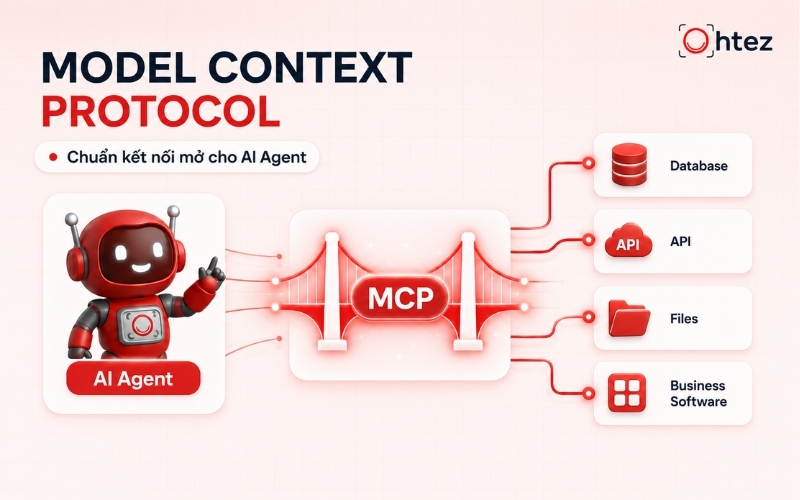
Model Context Protocol is an open protocol that helps AI Agents connect to multiple data sources and tools.
The role of MCP AI
The most important role of MCP AI is to extend the capabilities of language models into real-world working environments. An Agent is no longer limited to generating text; it can read documents, retrieve customer data, update systems, or trigger an authorized workflow. By answering the question What is MCP in an AI Agent?, businesses can see three main benefits: standardized integrations, lower maintenance effort, and greater tool reusability. A single MCP server can serve multiple Agents. However, real-world effectiveness still depends on data quality, permission design, and action-approval processes.
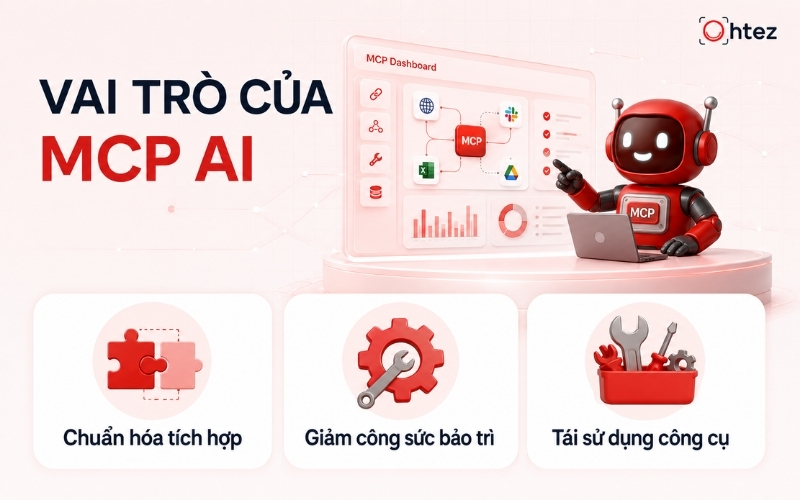
This broader role also helps answer the question What is MCP in an AI Agent? by showing how MCP extends model capabilities into real-world working environments.
How is MCP different from tool calling?
Tool calling is the ability of a model to select and request a predefined function. MCP has a broader scope because it provides a standardized protocol that allows an Agent to discover, connect to, and use multiple tools from different servers.
When answering What is MCP in an AI Agent?, MCP should not be described as simply another name for tool calling. MCP can use tool-calling mechanisms, but it also handles connectivity and context delivery.
> See also: AI Agent vs Workflow: Detailed comparison & how to choose
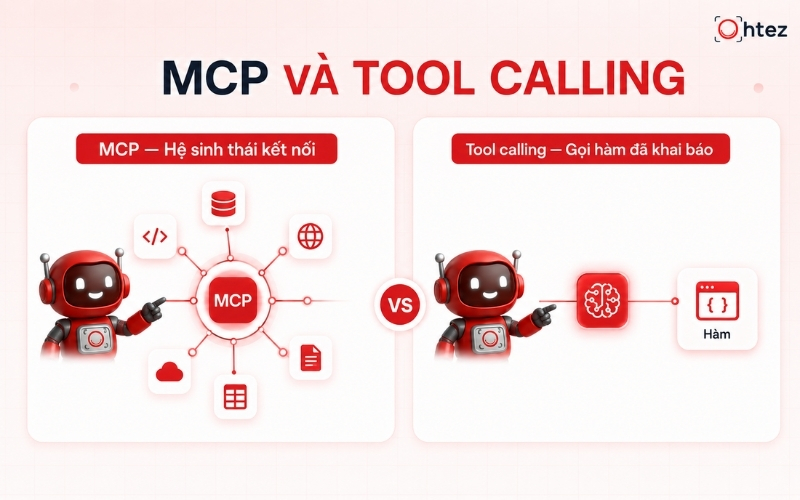
MCP has a broader scope than tool calling because it provides a standardized protocol for discovering and using multiple tools.
How MCP works in an AI Agent
To understand how it works, MCP should be viewed as an intermediary layer between the Agent and external systems. The user provides a goal, the model analyzes the intent, and the MCP client then searches the MCP server for a suitable capability. A request is executed only when the tool exists, the parameters are valid, and access is authorized. This process helps answer What is MCP in an AI Agent? from an operational perspective. MCP AI does not automatically grant the model access to all data. Developers still need to define which tools can be used, what data is accessible, and which actions require human approval.
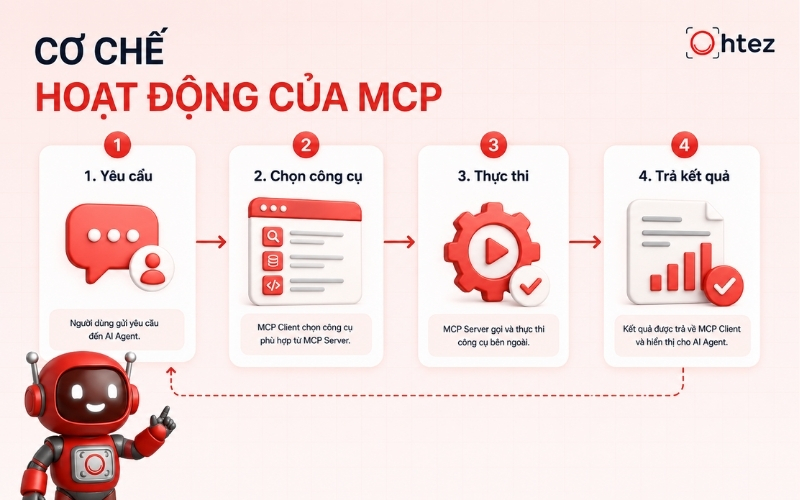
How does MCP work in an AI Agent?
Connection initialization and authentication
At the beginning of a session, the MCP client establishes a connection with the MCP server through a supported transport method. The two sides exchange protocol versions, available capabilities, and the information required to maintain the session. This is the foundation for a stable connection. If the server contains internal data, the system should authenticate using an appropriate method such as API keys, tokens, or the organization’s access-control mechanism. When deploying MCP AI, credentials should never be stored directly in prompts or public source code. Each Agent should also receive only the minimum permissions required for its task.
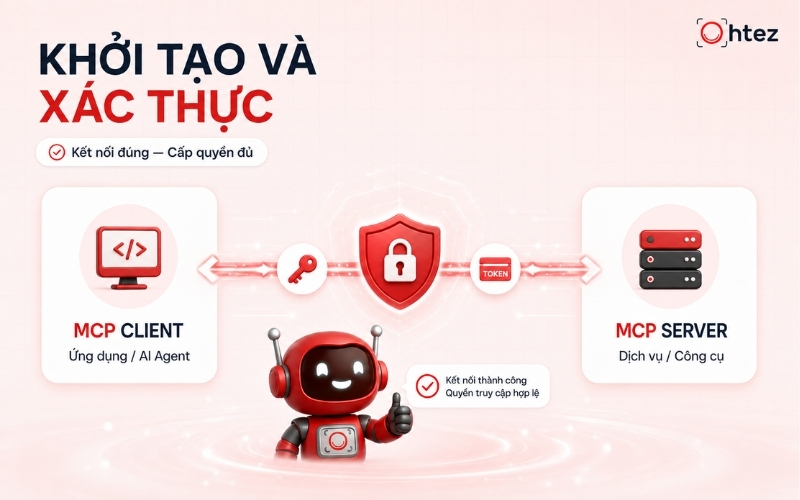
Connection initialization and authentication provide the foundation for stable communication between the MCP client and MCP server.
Automatic tool discovery
Once the connection is established, the MCP client can ask the server for a list of available tools. Each tool typically includes a name, description, input parameters, and expected output format. The model uses this information to select the capability that best matches the user’s request. Automatic tool discovery is an important part of answering What is MCP in an AI Agent? When an MCP server adds a new capability, the Agent can discover it without embedding the full definition again in every application. Even so, tool descriptions must be clear to reduce the risk of selecting the wrong tool or passing incorrect parameters.
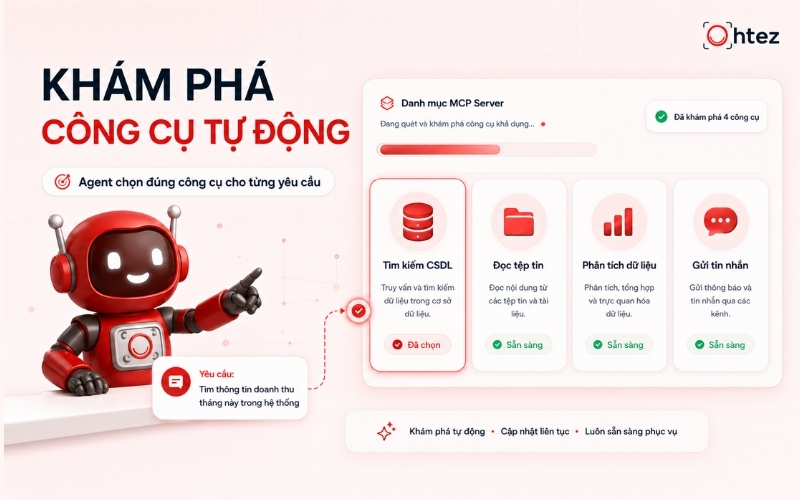
Automatic tool discovery allows an Agent to recognize new capabilities without embedding the full definition again.
Context-aware resource retrieval
In addition to executable tools, MCP AI can provide resources such as documents, configuration files, product data, or content from a knowledge base. The Agent retrieves only the information relevant to the task instead of placing the entire dataset into the prompt. For example, when an employee asks about a product’s return policy, the MCP client can retrieve the correct document from an internal system. This mechanism enables responses based on up-to-date data while reducing unnecessary context. Businesses should verify the source, update date, and access permissions of documents before returning results to users.
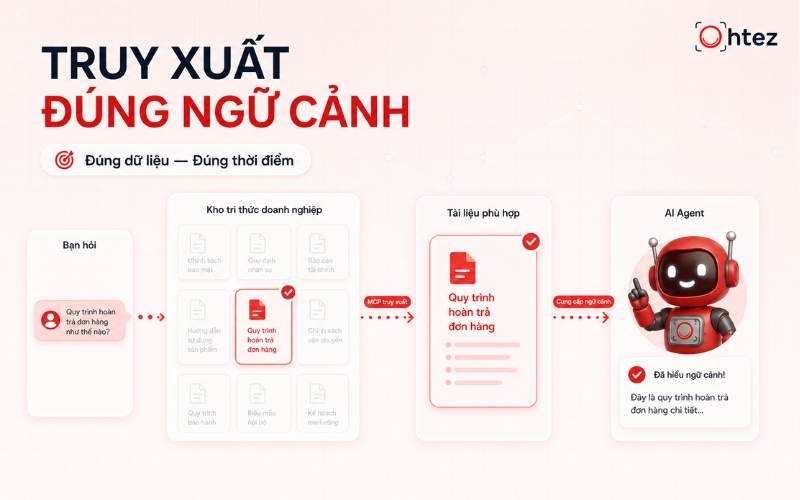
To answer What is MCP in an AI Agent?, it is also important to understand how an Agent retrieves the right contextual resources instead of putting all data into the prompt.
Execution and returning results to the Agent
After the model selects a tool, the MCP client sends a structured request to the server. The MCP server validates the parameters, performs the task, and returns the result to the Agent. The model then interprets the data or decides on the next step based on the original goal. For example, an Agent can query sales data, summarize changes, and create a management brief. For actions that modify data, such as sending an email or updating a CRM, the system should include a confirmation step. A complete answer to What is MCP in an AI Agent? must recognize that every important action needs to be controllable and traceable.
A complete answer to What is MCP in an AI Agent? must also consider how important actions remain controllable and traceable.
How to integrate MCP into an AI Agent
MCP integration should not begin by connecting as many tools as possible. Businesses should start with a clearly defined workflow, reliable data, and measurable outcomes. This approach helps validate the value of MCP AI before expanding into more complex operations. A practical implementation plan usually progresses from identifying needs and setting up the server to configuring the MCP client, testing, and monitoring. This helps teams answer What is MCP in an AI Agent? and assess whether the protocol actually solves the intended operational problem.
> See also: AI Agent vs Workflow: Detailed comparison & how to choose
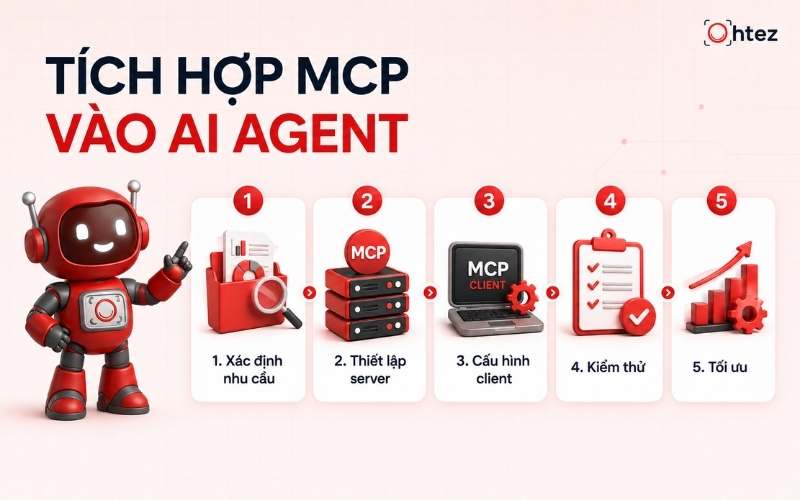
Integrating MCP into an AI Agent should begin with a clear workflow and reliable data before expanding further.
Identify the data and tools to connect
First, the business should clearly define what the Agent needs to do, which data it will use, and how far it is allowed to take action. Understanding What is MCP in an AI Agent at this stage helps clarify which data sources and tools the Agent actually needs. The integration list should prioritize systems with stable APIs, clearly identified owners, and well-managed data.
A practical starting point is to focus on three groups of needs:
- An Agent that searches classified, reviewed, and regularly updated internal documents to help employees find information faster.
- An Agent that consolidates data from multiple systems, creates reports using predefined templates, and sends the results to the responsible reviewer.
- An Agent that performs limited actions with clear confirmation steps and maintains logs for later review.
Set up the right MCP server
The MCP server is responsible for exposing tools and interacting directly with external data sources or services. Understanding What is MCP in an AI Agent also means recognizing how the MCP server provides controlled access to these tools. Businesses can use an existing server or build a custom one when the system contains specialized business logic. Each tool should have an accurate description, strict parameters, and consistent outputs.
Configure the MCP client
The MCP client runs inside the application that hosts the Agent and is responsible for maintaining communication with the MCP server. Knowing What is MCP in an AI Agent helps teams understand the role of the client in connecting the Agent to available tools. Configuration usually includes the server address, transport method, authentication details, and the scope of tools the Agent is allowed to use.
Test tool-calling capabilities
Testing should cover valid, invalid, and incomplete scenarios. In addition to checking whether the Agent selects the correct tool, the team should evaluate how the system responds when users provide missing data, make requests beyond their permissions, or when the server fails to respond. These tests also help validate What is MCP in an AI Agent from a practical implementation perspective.
Monitor and optimize performance
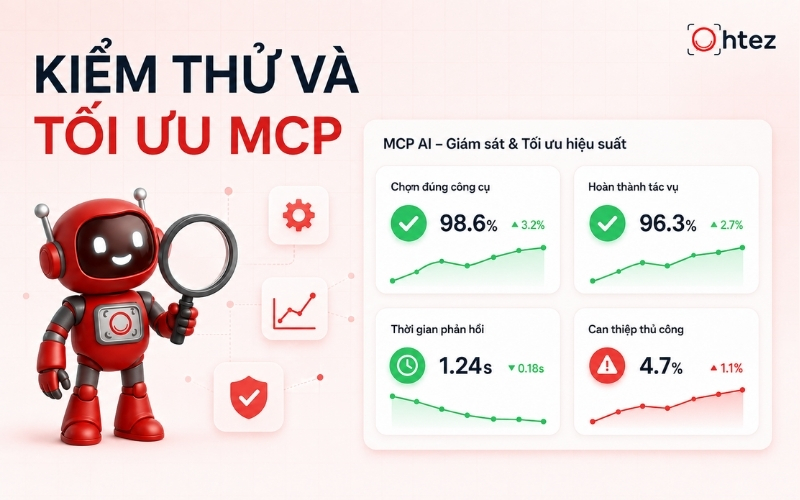
After deployment, the system should log requests, selected tools, response times, and execution status. Logs need to support troubleshooting, but passwords, tokens, and sensitive personal data should not be stored indiscriminately. Understanding What is MCP in an AI Agent is also important when determining which operational data should be monitored.
Businesses can optimize performance by shortening tool outputs, caching data that changes infrequently, and limiting the number of steps an Agent is allowed to perform. Periodic reviews also help remove underused tools, update permissions, and detect abnormal behavior. These practices are important for keeping MCP AI stable as usage scales.
Business applications of MCP in AI Agents
Once businesses understand the answer to What is MCP in an AI Agent?, they can apply the protocol to workflows that need to connect multiple information sources. The value is most apparent when employees constantly switch between CRM systems, document repositories, analytics tools, and task-management platforms. MCP AI standardizes the connection layer so the Agent can access the right data and perform only authorized functions. Businesses should prioritize use cases with measurable goals, such as reducing lookup time, shortening report preparation time, or increasing the successful request-resolution rate.
Connect CRM and customer data
MCP can help an Agent retrieve interaction history, sales opportunity status, and support information from a CRM. Employees can then receive a summary before contacting a customer instead of opening multiple screens and manually consolidating data. For businesses evaluating What is MCP in an AI Agent, this use case demonstrates how the protocol can connect AI Agents with customer data while maintaining access controls.
Automate marketing and SEO
In marketing, MCP AI can connect analytics data, content management systems, and brand-guideline repositories. An Agent can summarize performance, identify pages with declining traffic, or suggest topics based on actual data. For SEO, the Agent can collect metrics, group issues, and generate scheduled reports. This is another practical example of What is MCP in an AI Agent when applying MCP to data-driven marketing workflows.
However, content should still be reviewed by a specialist before publication to verify search intent, factual accuracy, and brand voice. MCP automates data retrieval, but it does not fully replace expert strategic judgment.
Retrieve internal knowledge
Enterprise knowledge bases often contain documents scattered across multiple systems. An MCP client can connect authorized sources and help the Agent find policies, procedures, or technical guidance relevant to an employee’s question. This use case is especially useful for staff training, internal support, and customer service.
For teams researching What is MCP in an AI Agent, internal knowledge retrieval shows how MCP can provide an Agent with controlled access to distributed enterprise information. To make answers reliable, each document should have an owner, version, and update date. The Agent should also cite its source or clearly state when there is not enough evidence, rather than guessing missing information.
Support software development and source code management
MCP AI can help developers read repository structures, find technical documentation, analyze errors, and suggest changes. With appropriate permissions, an Agent can also create issues, prepare patches, or summarize review feedback. This application further illustrates What is MCP in an AI Agent in software development and source code management.
However, the Agent should not automatically push code into production without review. Changes should go through testing, vulnerability scanning, and developer approval. This approach uses AI for speed while maintaining technical accountability, security, and recoverability when errors occur. For development teams, understanding What is MCP in an AI Agent is therefore essential for defining the right permissions and approval processes.
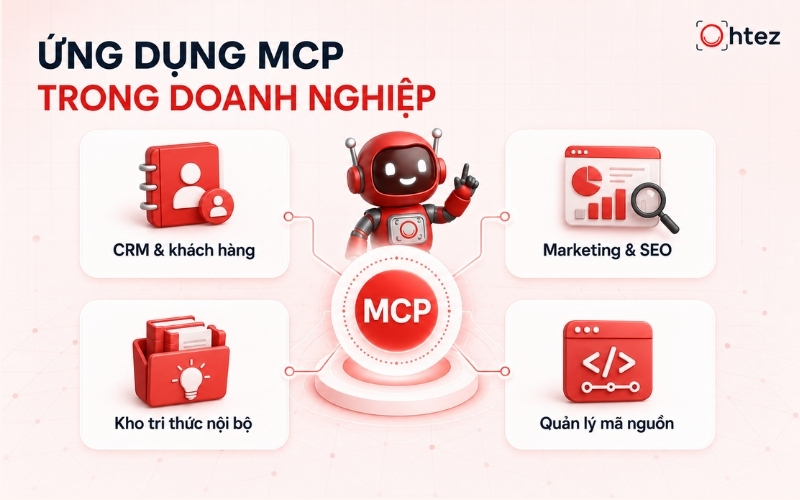
Understanding the answer to What is MCP in an AI Agent? helps businesses apply the protocol effectively to workflows that connect multiple information sources.
In summary, MCP acts as a standard bridge between AI Agents and external databases, software, and tools. Understanding the answer to What is MCP in an AI Agent? helps businesses choose the right architecture, reduce integration time, and expand automation capabilities. However, deployment should always include strict permissions, authentication, testing, and monitoring to ensure data is used safely, accurately, and for the intended purpose.