
In research, business, or data analysis, drawing accurate conclusions should not rely on intuition alone—it requires a systematic approach. This is why many people search for what is an analytical framework and how to build one correctly.
This article will help you clearly understand the analytical framework’s meaning, its structure, and provide a practical guide on how to create an analytical framework that is easy to apply in real-world situations.
What is an analytical framework?
An analytical framework is a structured system consisting of components, criteria, and analytical steps arranged in a logical order. This framework helps users collect, process, and interpret information to answer a specific question or solve a clearly defined problem.
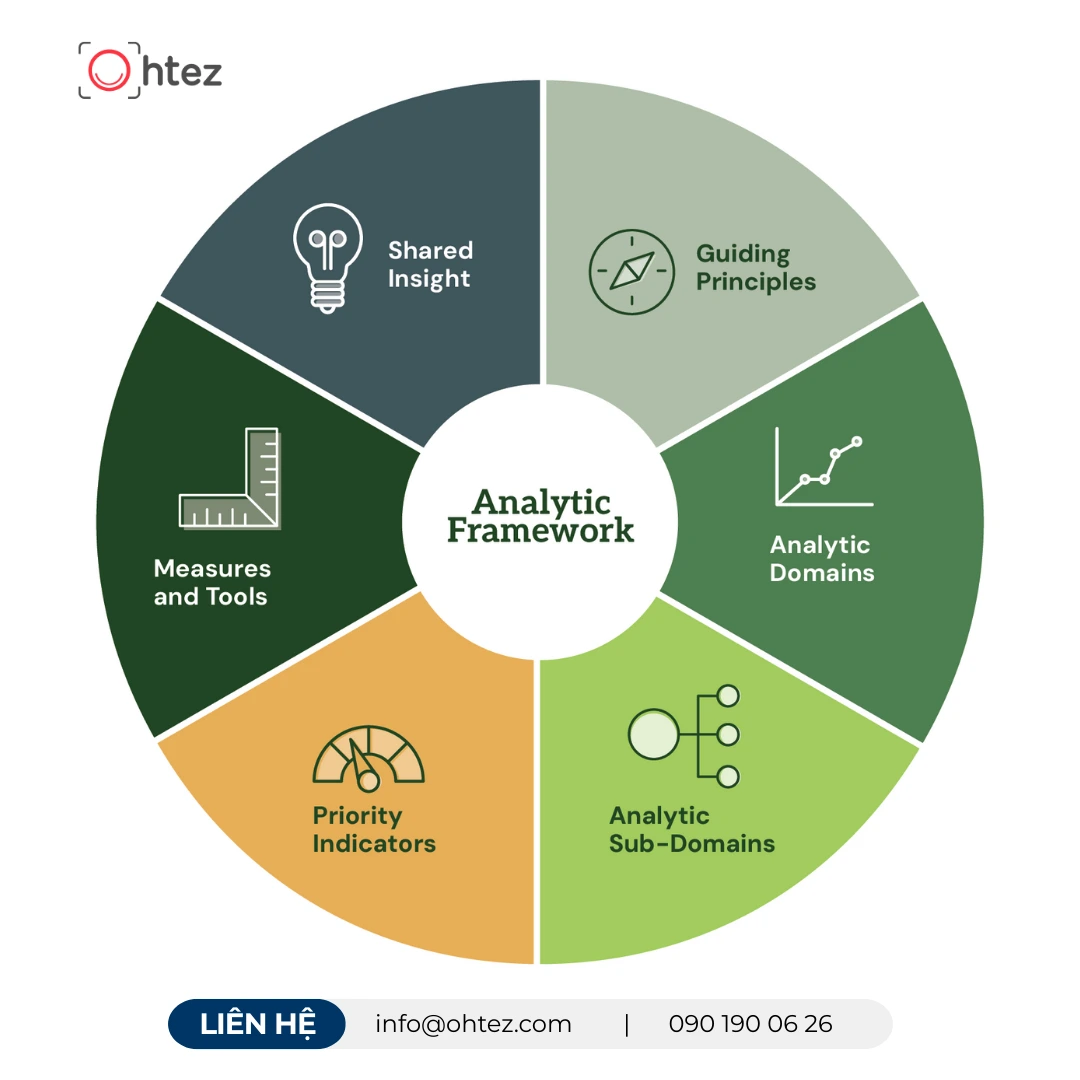
Simply put, when asking what is an analytical framework, you can understand it as a tool that helps to:
-
Clearly identify which factors need to be analyzed
-
Select the right data or information to collect
-
Evaluate, compare, and draw conclusions in a systematic and convincing way
In practice, what is an analytical framework is a common question across many fields, because analytical frameworks are widely used in:
-
Academic research such as theses and dissertations
-
Market analysis and competitor analysis
-
Data analytics, KPI reporting, and performance evaluation
-
Project evaluation and strategic decision-making
By applying an analytical framework, the analysis process becomes more structured, less subjective, and significantly more accurate.
>> Read more: DevOps: Bridging the Gap Between Development and Operations
Analytical framework meaning: Why is it important?
To fully understand what is an analytical framework, you can think of it as a “structured cognitive map.” An analytical framework helps you define the right analytical direction and avoid collecting excessive data or conducting unfocused analysis.
When answering what is an analytical framework, it is important to emphasize that it is a tool for organizing thinking and guiding the process of data collection, processing, and interpretation in a logical and consistent manner.
An effective analytical framework offers several clear benefits:
1. Clear analytical objectives
Instead of approaching data randomly, understanding what is an analytical framework helps you clarify:
-
The ultimate goal of the analysis
-
Which factors should be prioritized
-
Which areas do not require deep analysis
As a result, the entire analytical process stays aligned with predefined objectives.
2. Reduced bias and subjectivity
One of the core values behind understanding what is an analytical framework is its ability to control subjectivity. A framework helps you:
-
Draw conclusions based on clear criteria and logic
-
Avoid “opinion-based” analysis
-
Increase objectivity and reliability of results
3. More persuasive and clear presentation
Knowing what is an analytical framework also means you can present analysis results more convincingly. The framework helps explain clearly:
-
Why a specific analytical approach was chosen
-
Why the selected data is relevant
-
Why the conclusions are well-founded and credible
Analytical framework structure: What does it include?
To fully answer what is an analytical framework, structure cannot be ignored. In practice, a common analytical framework structure usually includes five key components to ensure a logical, systematic, and controllable analysis process.
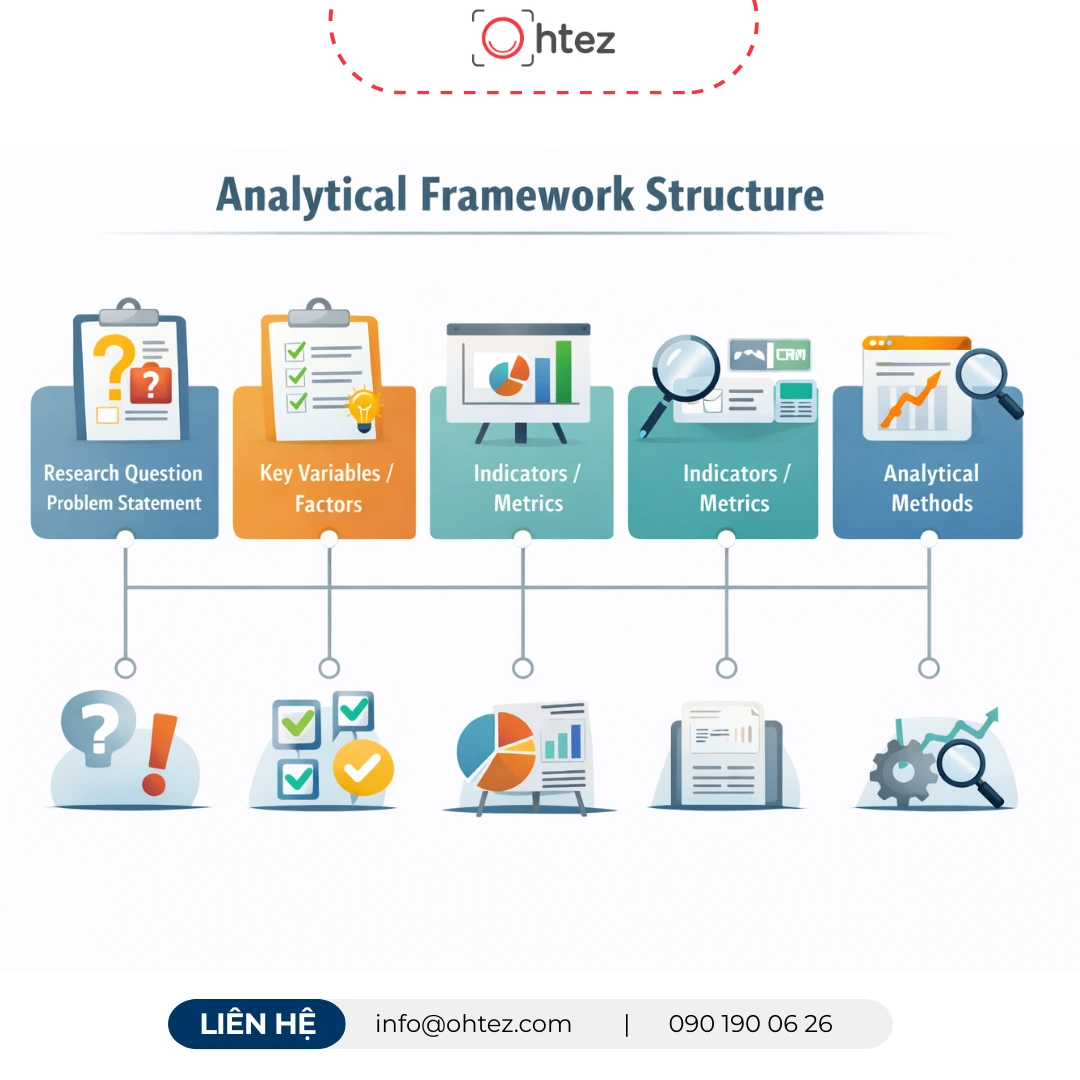
1. Research Question / Problem Statement
When exploring what is an analytical framework, the first step is always defining the problem clearly. A well-defined problem statement guides the entire framework, for example:
-
Why are sales declining?
-
Why are users leaving the application?
-
Which factors are affecting marketing campaign performance?
2. Key Variables / Factors
Another essential part of what is an analytical framework is identifying the key variables or factors that directly impact the problem, such as:
-
Price, product quality, customer experience
-
Traffic, conversion rate, customer acquisition cost (CAC)
-
Product features, UI/UX, page loading speed
3. Indicators / Metrics
To better understand what is an analytical framework, abstract factors must be translated into measurable indicators, for example:
-
Retention rate, churn rate
-
NPS, CSAT
-
ROI, ROAS
These metrics allow you to quantify the impact of each factor.
4. Data Sources
An important part of answering what is an analytical framework is identifying appropriate data sources, which may include:
-
Google Analytics, CRM systems, internal databases
-
User surveys, interviews, field observations
-
Industry reports and publicly available data
5. Analytical Methods
Finally, to complete the understanding of what is an analytical framework, suitable analytical methods must be selected, such as:
-
Trend analysis
-
Segmentation analysis
-
Root cause analysis
-
Forecasting and predictive modeling
How to create an analytical framework correctly (step-by-step guide)
Before diving into execution, it is crucial to understand what is an analytical framework: a structured thinking tool that helps define problems, select relevant data, and apply appropriate analytical methods to generate valuable conclusions.
If you are looking for how to create an analytical framework, follow these six steps to ensure clarity, accuracy, and real-world applicability.
Step 1: Define the analytical objective
An effective analytical framework—true to what is an analytical framework—always starts with a clear objective.
Objectives should be:
-
Specific
-
Measurable in terms of outcomes
Good examples:
-
Identify three main reasons for declining conversion rates
-
Propose five actions to improve retention within 30 days
Step 2: Define the scope
To properly apply what is an analytical framework, define the scope early:
-
Timeframe: 7 days, 30 days, 6 months
-
Geography: Vietnam or global
-
Customer segment: new users, returning users
This prevents unfocused analysis.
Step 3: Identify influencing factors
A core element of what is an analytical framework is identifying the right influencing factors. Two common approaches include:
-
Top-down: based on existing theories or frameworks
-
Bottom-up: based on real data, observations, and user insights
Step 4: Translate factors into metrics
To make the framework actionable—true to what is an analytical framework—factors must be measurable:
-
User experience →
-
Page load time
-
Bounce rate
-
Completion steps
-
-
Marketing effectiveness →
-
CPC, CPA
-
Conversion rate
-
Step 5: Select appropriate analytical methods
Depending on the objective, choosing the right method is critical when applying what is an analytical framework in practice:
-
“What is happening?” → Descriptive analytics
-
“Why is it happening?” → Diagnostic analysis
-
“What will happen?” → Predictive analytics
-
“What should we do?” → Prescriptive analytics
Step 6: Present the framework clearly
A true analytical framework—aligned with what is an analytical framework—must be easy to understand and apply. Common formats include:
-
Tables: problem → factors → metrics → data → method
-
Flowcharts: visualizing the analytical process
-
Mind maps: showing relationships between factors
Common mistakes when building an analytical framework
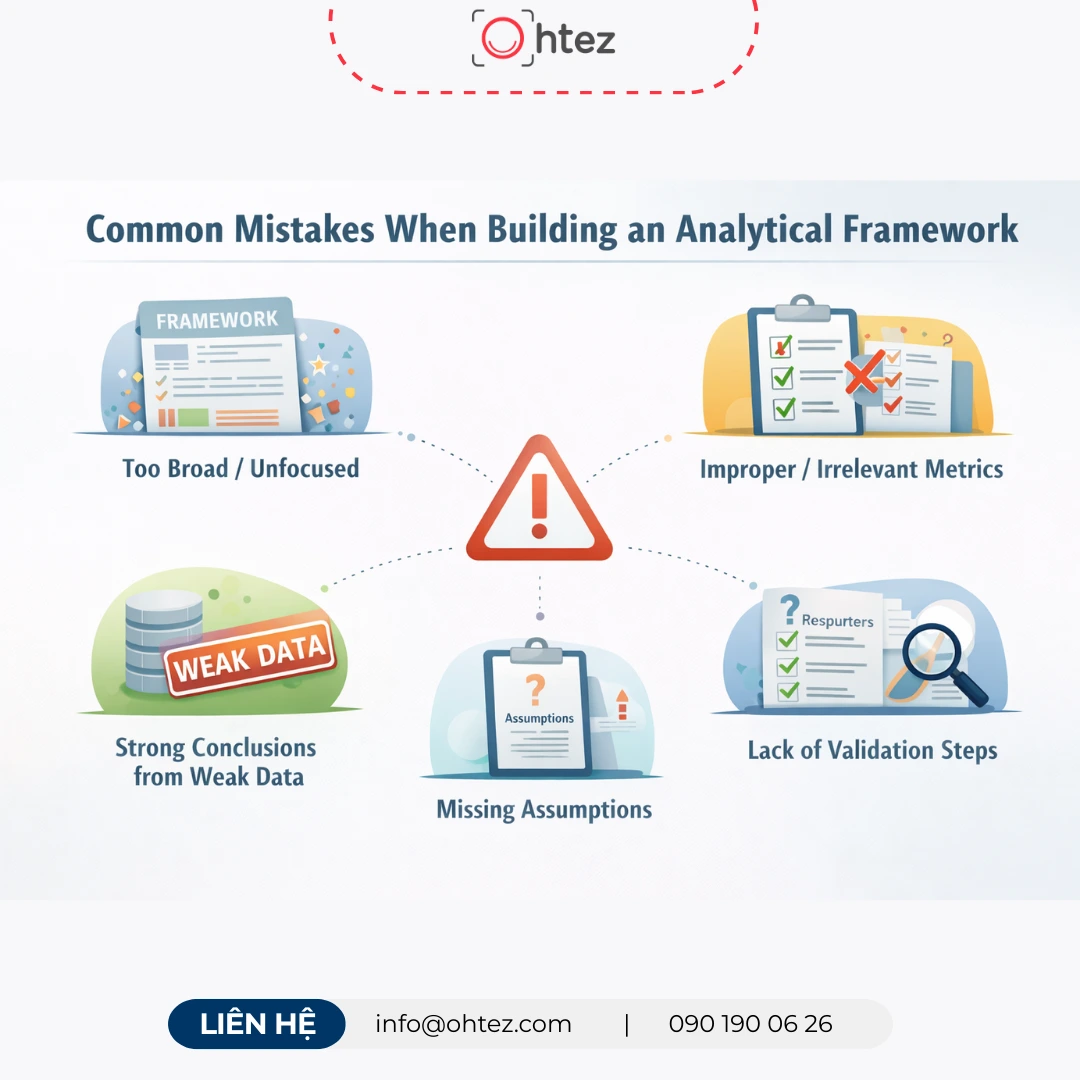
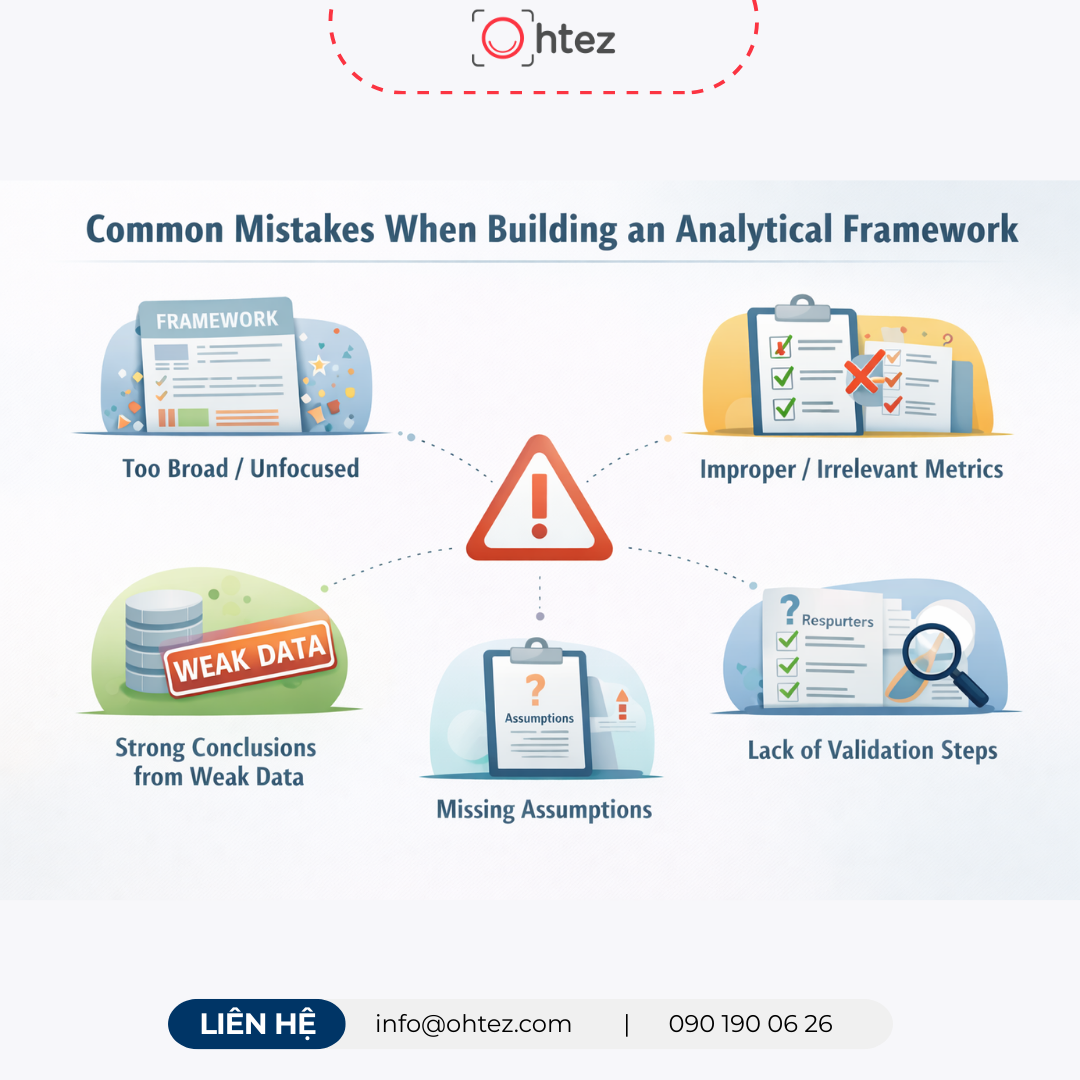
Many people understand what is an analytical framework conceptually but still make mistakes in execution. Common issues include:
-
Frameworks that are too broad and unfocused
-
Metrics that are not measurable or not aligned with objectives
-
Drawing strong conclusions from low-quality data
-
Failing to state assumptions
-
Lacking validation steps
Ohtez – Supporting businesses in building and implementing analytical frameworks
If your business is exploring what is an analytical framework and wants to build a structured, highly practical analytical system, Ohtez can support you throughout the entire journey—from strategy to implementation.

With a deep understanding of what is an analytical framework and its real-world business applications, Ohtez helps organizations:
-
Design analytical framework structures aligned with business goals, operating models, and growth stages
-
Standardize the full analytics lifecycle, from data collection and cleaning to dashboards and actionable insights
-
Design KPI and metrics systems that enable fast, accurate, data-driven decision-making
-
Implement department-specific analytical frameworks for Sales, Marketing, and Product instead of using a one-size-fits-all model
-
Develop and deploy reliable digital solutions through web & app development, ensuring analytics are embedded directly into business systems
-
Ensure system stability, performance, and scalability through professional software testing, helping data-driven decisions run on secure, well-tested platforms
With a data-driven mindset and strong focus on real-world applicability, Ohtez helps teams not only understand what is an analytical framework, but also operate it effectively—integrating analytics with testing software, web development, and app development to turn raw data into insights and insights into concrete business actions.
Understanding what is an analytical framework is only the first step. The real value lies in building and operating that framework within well-tested web and mobile applications, so data becomes not just reports, but actionable business decisions.
If your organization needs a practical, business-aligned analytical framework—backed by software testing and web & app development—Ohtez is ready to support you from consulting and data standardization to system implementation and quality assurance.
Contact Ohtez today to build an analytical framework tailored to your business and turn data and technology into a sustainable competitive advantage.