
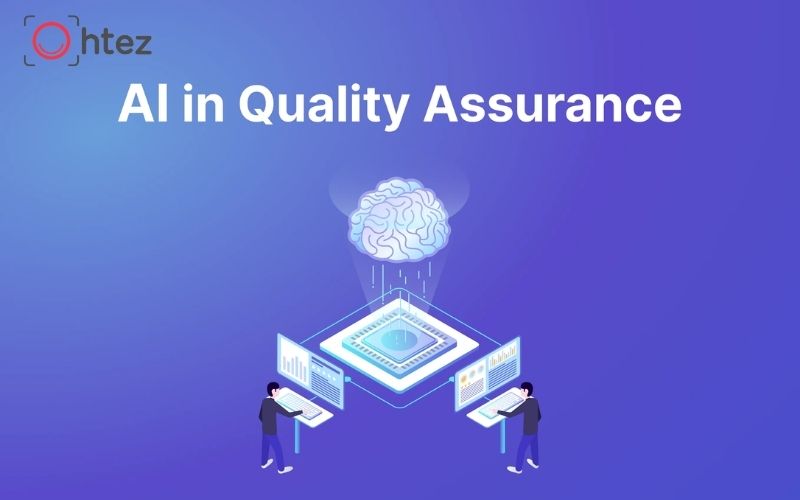
Artificial intelligence is changing the way organizations approach software quality. Instead of relying solely on manual testing and predefined automation scripts, businesses are increasingly adopting AI software testing solutions to improve testing speed, accuracy, and scalability. This shift has created a growing need for AI agent quality assurance, a discipline focused on evaluating and monitoring autonomous AI agents. By ensuring AI systems operate reliably and safely, organizations can take full advantage of AI-driven testing while minimizing risks. At Ohtez, we see AI agent quality assurance as a critical foundation for building trustworthy and effective software testing processes.
What is AI agent quality assurance?
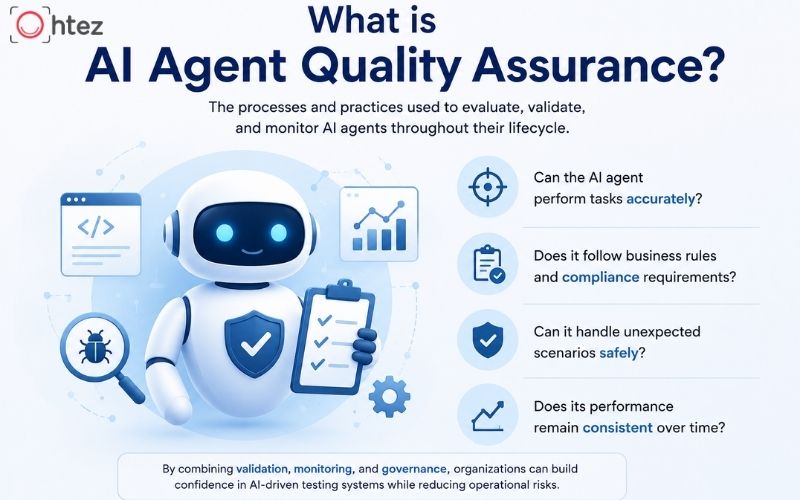
AI Agent Quality Assurance refers to the processes, frameworks, and practices used to evaluate, validate, and monitor AI agents throughout their lifecycle. Unlike traditional software testing, which focuses on verifying predefined outputs, AI agent QA evaluates how autonomous systems make decisions, interact with tools, and complete tasks.
As AI agents become more capable, they are increasingly used to automate testing activities, generate test cases, and identify software defects. However, these systems can also make unexpected decisions or produce inaccurate results. This is why AI Agent Quality Assurance is essential.
A strong quality assurance strategy helps organizations answer important questions:
-
Can the AI agent perform tasks accurately?
-
Does it follow business rules and compliance requirements?
-
Can it handle unexpected scenarios safely?
-
Does its performance remain consistent over time?
By combining validation, monitoring, and governance, organizations can build confidence in AI-driven testing systems while reducing operational risks.
>> See more: AI Agent YouTube Automation: How to automate Youtube content
Why AI agent quality assurance matters
As organizations deploy more autonomous systems, software testing becomes increasingly complex. Traditional testing approaches were designed for deterministic applications where the same input consistently generates the same output. AI agents operate differently. They learn, adapt, and make decisions based on context, which introduces new challenges.
1. Challenges of testing autonomous systems
Testing autonomous systems is significantly more difficult than testing conventional software. AI agents can generate different responses to similar inputs, making outcomes less predictable.
Additional challenges include:
-
Dynamic decision-making
-
Complex tool integrations
-
Context-dependent behavior
-
Continuous adaptation
For example, an AI agent used in software testing may prioritize different test cases based on application changes or historical defect patterns. While this flexibility improves efficiency, it also requires more advanced validation methods. Without proper AI agent quality assurance, organizations may struggle to identify hidden issues before deployment.
2. Risks of unvalidated AI decisions
AI agents can make mistakes that traditional software systems typically do not. These errors may include incorrect recommendations, inaccurate outputs, or unintended actions.
Common risks include:
-
Hallucinated information
-
Misinterpreted user requests
-
Incorrect workflow execution
-
Security and compliance violations
When AI agents are used for software testing, these issues can result in inaccurate test reports or overlooked defects. Implementing AI agent quality assurance helps identify these risks early and prevents them from impacting users or business operations.
3. Ensuring reliability, safety, and compliance
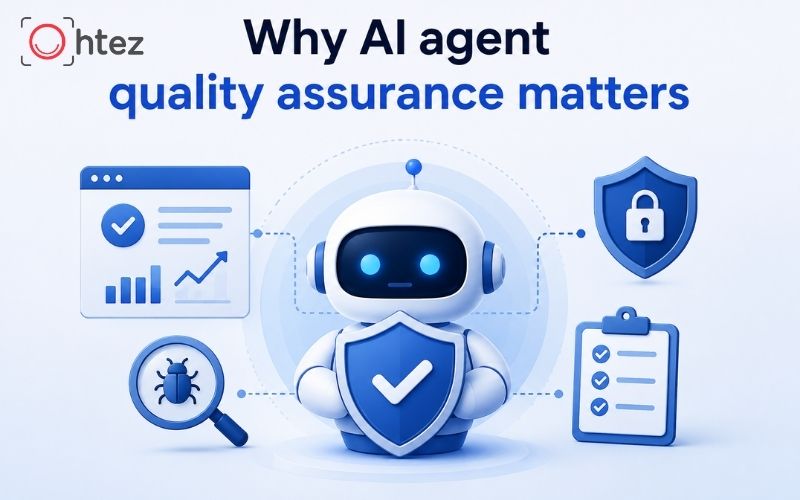
Reliability is one of the most important objectives of AI agent quality assurance. Organizations must ensure that AI systems consistently deliver accurate results while operating within defined safety and compliance boundaries.
Effective QA programs focus on:
-
Continuous monitoring
-
Risk management
-
Performance measurement
-
Governance controls
These practices help maintain trust in AI systems and support long-term adoption across enterprise environments.
How AI agent quality assurance improves software testing
One of the primary reasons organizations invest in AI technologies is their ability to improve software testing. AI agents can automate repetitive tasks, analyze large datasets, and adapt to changing environments much faster than traditional testing tools.
>> See more: Mobile Automation Testing Services: Boost App Quality & Speed
1. Faster test case generation
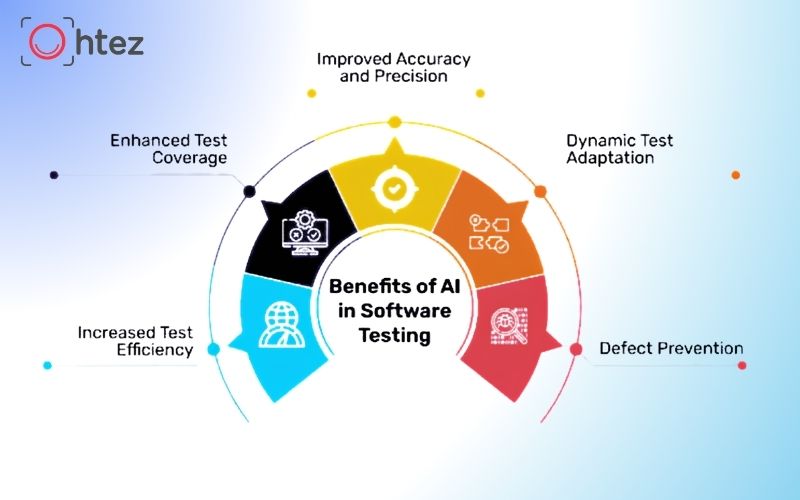
One of the biggest ways AI agent quality assurance improves software testing is by accelerating test case creation. Traditionally, QA teams spend considerable time writing, updating, and maintaining test scenarios whenever requirements change. As applications become more complex, this process can quickly become a bottleneck.
With AI-powered testing systems, test cases can be generated automatically based on:
-
Application requirements
-
User stories
-
Historical defect data
-
User behavior patterns
Instead of building every scenario manually, QA teams can focus on reviewing and refining AI-generated tests. This not only reduces manual effort but also expands test coverage and helps teams identify potential risks earlier in the development cycle.
2. Smarter test coverage analysis
Traditional testing often struggles to identify gaps in coverage. AI systems can analyze application behavior and determine which areas require additional testing. AI addresses this challenge by analyzing application behavior, user journeys, and historical defect patterns to identify areas that require additional testing. It can highlight high-risk components, prioritize important workflows, and recommend where testing resources should be focused.
This data-driven approach helps teams achieve more comprehensive test coverage while minimizing redundant testing efforts. By understanding which areas present the greatest risk, organizations can improve software quality and reduce the likelihood of critical defects reaching end users.
3. Intelligent defect detection
Another major advantage of AI agent QA is the ability to identify defects proactively rather than reactively. Traditional testing often detects issues only after a test case fails, whereas AI systems continuously analyze application behavior to uncover anomalies before they become critical problems.
AI agents can help detect:
-
Performance degradation
-
Workflow inconsistencies
-
Integration failures
-
Regression risks
By recognizing patterns across large volumes of testing data, AI can surface issues that might otherwise go unnoticed. Early defect detection allows development teams to resolve problems faster, reduce remediation costs, and improve software reliability.
4. Automated root cause identification
Identifying the source of a software defect can often take longer than fixing the issue itself. QA engineers and developers may need to review logs, execution reports, and system dependencies before finding the actual cause of a failure. As part of an effective AI agent quality assurance strategy, AI agents can automatically analyze large volumes of testing data and pinpoint the most likely source of an issue. Instead of manually investigating every possible factor, teams receive faster and more actionable insights.
This capability helps organizations:
-
Reduce debugging time
-
Improve issue resolution speed
-
Minimize operational downtime
-
Accelerate software delivery
By automating root cause analysis, AI enables development teams to spend less time searching for problems and more time resolving them, leading to faster releases and higher software quality.
5. Self-healing test automation
Maintaining automated test scripts is often one of the most time-consuming aspects of QA. Even small UI changes can cause hundreds of automated tests to fail, forcing teams to spend valuable time updating scripts.
A mature AI Agent QA strategy can address this challenge through self-healing automation. When application elements change, AI systems can automatically recognize the updates and adjust test execution accordingly.
Benefits of self-healing automation include:
-
Less script maintenance
-
Higher test stability
-
Faster adaptation to UI changes
-
Improved automation scalability
AI agents quality assurance for software testing: key benefits
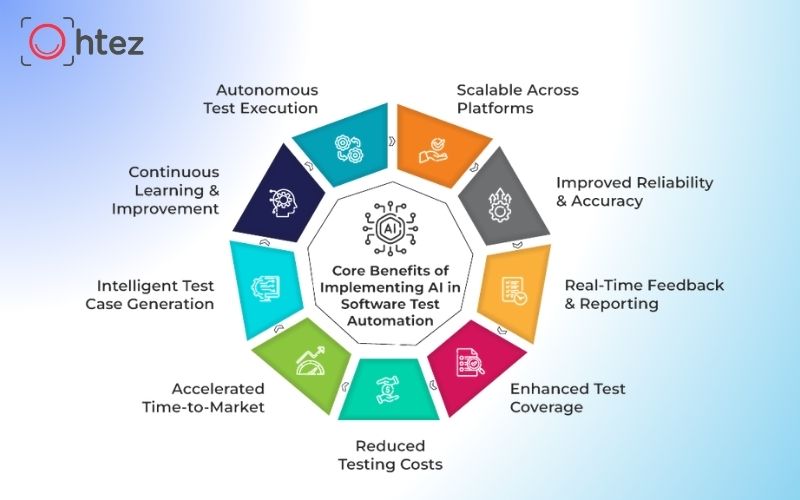
The combination of automation, intelligence, and adaptability makes AI agents valuable assets in modern software testing. By applying AI agent quality assurance, organizations can improve testing efficiency, accelerate releases, and maintain higher software quality at scale.
-
Reducing Manual Testing Effort: AI agents automate repetitive activities such as test execution, regression testing, result analysis, and defect categorization. This allows QA teams to spend less time on routine tasks and focus more on exploratory testing, quality strategy, and user experience improvements.
-
Accelerating Software Release Cycles: By generating test cases automatically, prioritizing high-risk features, and providing continuous feedback throughout development, AI agents help organizations shorten testing cycles and release software faster without compromising quality.
-
Improving Testing Accuracy: AI systems can analyze large volumes of testing data consistently and identify patterns that may be difficult for humans to detect. This reduces the risk of missed defects, improves test reliability, and increases confidence before deployment.
-
Scaling QA Operations Efficiently: As applications become larger and more complex, AI agents can execute thousands of tests simultaneously across multiple environments. This enables organizations to expand testing capacity without proportionally increasing team size or operational costs.
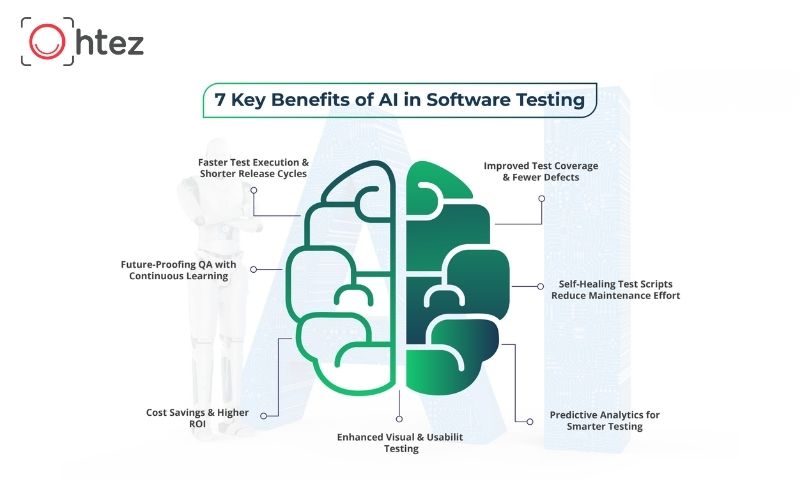
As AI continues to transform software testing, organizations need effective strategies to ensure autonomous systems remain accurate, reliable, and secure. By combining intelligent automation with robust validation and monitoring practices, businesses can improve testing efficiency, reduce operational risks, and accelerate software delivery. Hopefully, this article from Ohtez has helped you better understand AI agent quality assurance and its growing importance in modern software testing.