
As artificial intelligence continues to evolve, AI agents are becoming a key technology for automating tasks, improving decision-making, and increasing business efficiency. Understanding the characteristics of AI agent systems is essential for organizations looking to adopt intelligent automation. In this article, you’ll learn the core characteristics of AI agents, how they work, common types, real-world applications, and the impact they are having across industries. Follow along with Ohtez to discover how AI agents are shaping the future of business operations and digital transformation.
What are AI Agents? Why are they important?
AI agents are intelligent software systems designed to perceive information, make decisions, and take actions to achieve specific goals. Unlike traditional software that follows fixed rules, AI agents can analyze changing situations, adapt their behavior, and improve their performance over time. These capabilities allow them to handle more complex tasks with less human intervention.
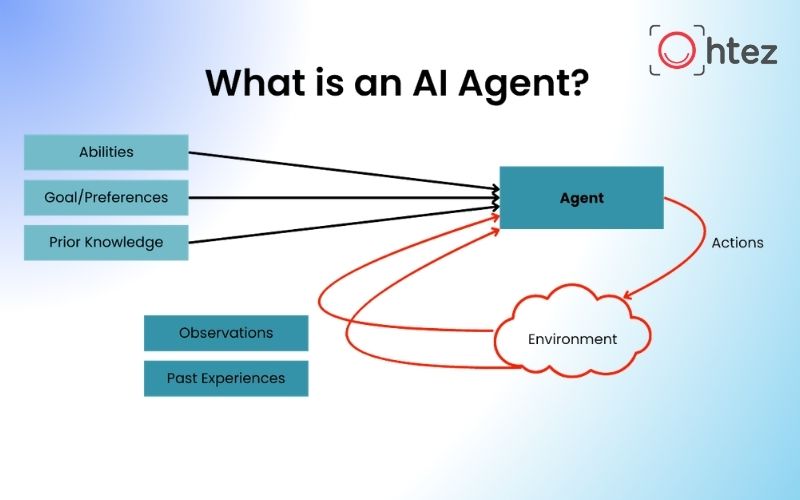
The growing interest in AI agents is largely driven by the unique characteristics of AI agent systems. They can process large volumes of data, respond to real-time conditions, and automate decision-making across a wide range of business functions. As organizations seek to improve productivity and reduce operational costs, the characteristics of AI agent technology make it a valuable tool for intelligent automation.
Today, AI agents are used in customer support, software development, data analysis, marketing, cybersecurity, and many other industries. The advanced AI agent platforms enable businesses to streamline workflows, improve customer experiences, and make faster, data-driven decisions. As AI technology continues to evolve, AI agents are expected to become an essential part of modern business operations.
>> See more: AI Agents: The Intelligent Forces Shaping the Future of Technology
Core Characteristics of AI Agent Systems
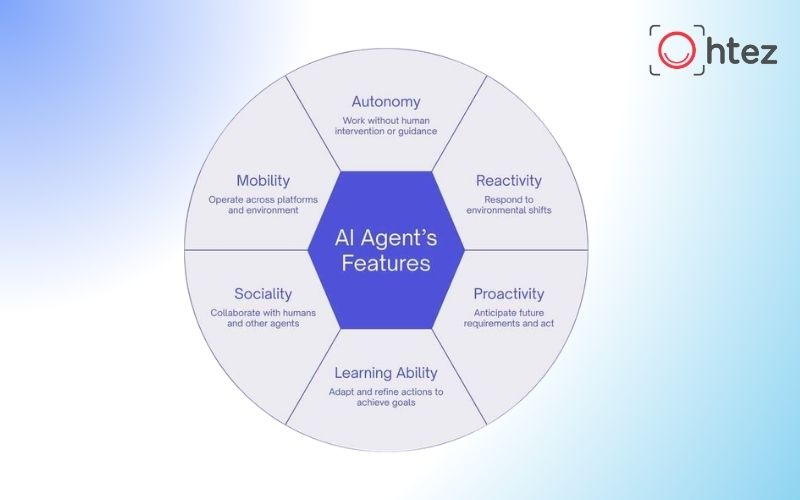
The effectiveness of an AI agent comes from a set of capabilities that enable it to operate independently, adapt to changing conditions, and achieve specific goals. These core characteristics distinguish AI agents from traditional automation tools and make them suitable for complex tasks across industries.
1. Autonomy and independent decision-making
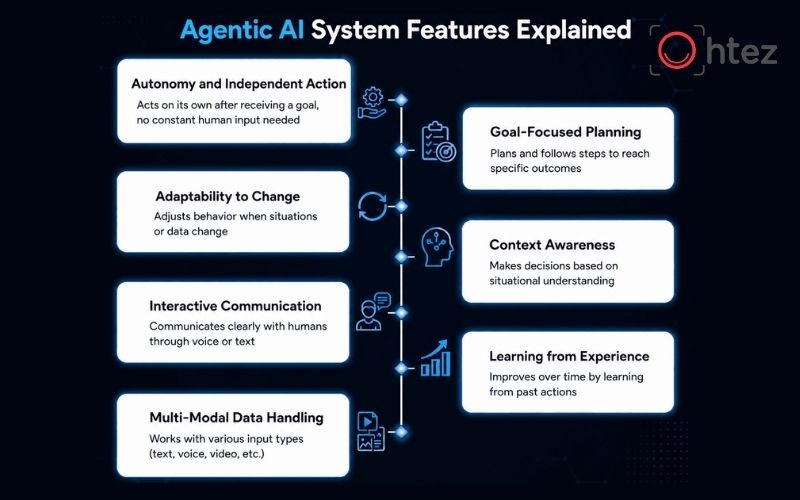
Autonomy means an AI agent can perform tasks without requiring step-by-step instructions from a human. Once given a goal, the agent can determine what actions need to be taken, select the appropriate tools, and execute tasks independently.
For example, if a user asks an AI agent to generate a weekly sales report, the agent can collect data from multiple sources, analyze the results, create a report, and send it to the relevant team without additional guidance. This is one of the most important characteristics of AI agent systems because it reduces manual effort and speeds up task completion.
2. Goal-oriented behavior
Goal-oriented behavior means an AI agent focuses on achieving a specific objective rather than simply responding to commands. The agent continuously evaluates its progress and adjusts its actions to reach the desired outcome.
For instance, if the goal is to improve customer satisfaction, the agent may prioritize urgent requests, provide personalized recommendations, or escalate complex issues when necessary. This ability to work toward a defined objective is a key characteristics of AI agent capability that distinguishes AI agents from traditional automation tools.
3. Context awareness and memory
Context awareness refers to an AI agent’s ability to understand the situation in which it operates. Instead of treating every interaction as a separate event, the agent can use previous conversations, user preferences, and historical data to make better decisions.
Memory supports this capability by storing relevant information that can be retrieved when needed. For example, a support agent can remember a customer’s previous issue and continue the conversation without asking the same questions again. This is one of the most valuable characteristics of AI agent features for delivering personalized experiences.
4. Learning and adaptation
Learning and adaptation refer to an AI agent’s ability to improve its performance based on new data, user feedback, and past experiences. Rather than relying entirely on predefined rules, the agent can identify patterns, refine its responses, and adjust its behavior over time.
For example, a recommendation agent used by an e-commerce platform can analyze a customer’s browsing history and purchasing behavior. As it gathers more information, the agent becomes better at suggesting products that match the customer’s interests. This ability to evolve with changing conditions is one of the key characteristics of AI agent systems and allows them to remain effective in dynamic environments.
5. Collaboration with other agents and humans
Collaboration means an AI agent can work with people, software systems, or other AI agents to complete a task more efficiently. Instead of operating in isolation, the agent can share information, coordinate actions, and contribute to a larger workflow.
For example, in a customer support process, one agent may collect customer information, another may analyze the issue, and a third may generate a recommended solution. Human employees can then review and approve the final action if necessary. This collaborative approach is one of the advanced characteristics of AI agent platforms because it combines automation with specialized expertise to handle complex business processes more effectively.
How AI Agents work?
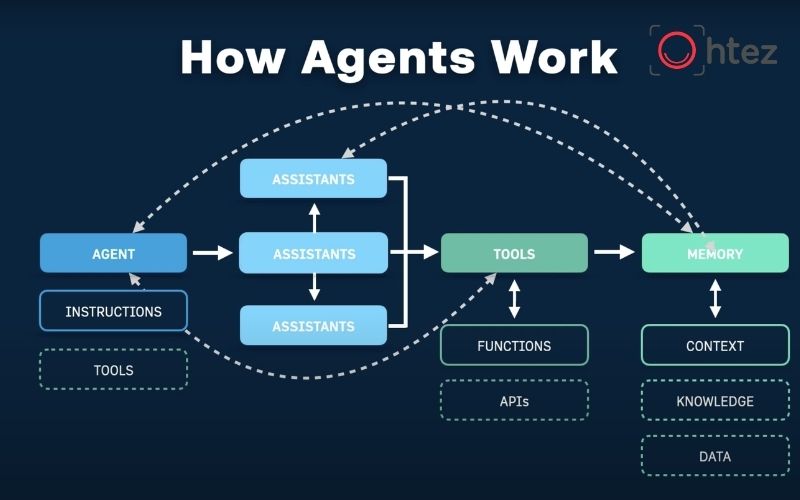
Understanding how AI agents work helps explain why the characteristics of AI agent systems make them more capable than traditional automation tools. AI agents follow a simple workflow: perceive, reason, and act. They collect information, analyze it, decide what to do next, and execute actions to achieve a specific goal. Over time, they learn from results and improve their performance.
-
Perceiving information: The agent collects data from sources such as user inputs, databases, applications, or sensors to understand its environment.
-
Reasoning and planning: The agent analyzes available information, evaluates possible actions, and determines the most effective way to achieve its objective.
-
Executing actions: Once a decision is made, the agent performs the required task, such as generating a report, responding to a customer inquiry, or updating a system.
-
Learning from feedback: The agent evaluates the results of its actions and uses feedback to improve future performance and decision-making.
>> See more: What Is AI Agent Quality Assurance? How AI Improves Software Testing
Types of AI Agents explained
AI agents can be categorized based on how they process information, make decisions, and interact with their environment. Understanding these categories helps organizations choose the right solution for different business needs. The different characteristics of AI agent systems determine their level of autonomy, adaptability, and problem-solving capabilities.
1. Reactive Agents
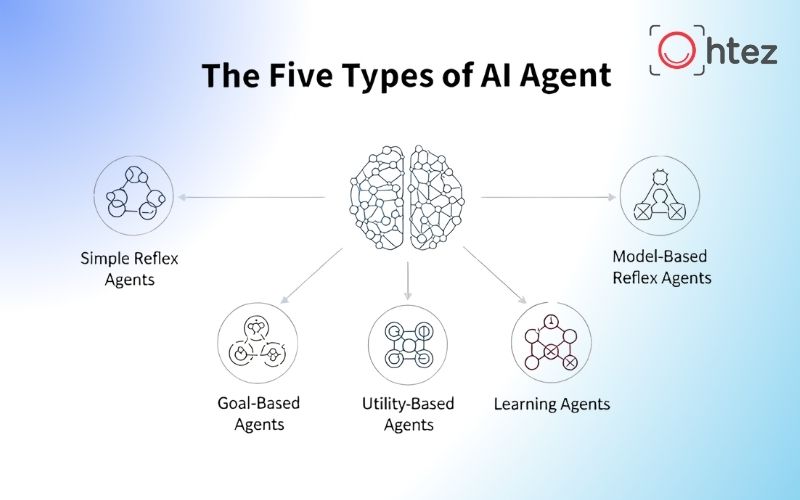
Reactive agents are the simplest type of AI agent. They respond to current inputs based on predefined rules without considering past experiences or future outcomes. Because they focus only on the present situation, they are fast and reliable for straightforward tasks such as spam filtering, recommendation triggers, or automated responses.
2. Goal-Based and Utility-Based Agents
Goal-based agents make decisions based on a specific objective, selecting actions that help achieve the desired outcome. Utility-based agents go a step further by evaluating multiple options and choosing the one that provides the greatest benefit. These characteristics of AI agent models make them suitable for complex scenarios such as route optimization, resource allocation, and strategic planning.
3. Learning Agents
Learning agents improve their performance through experience. By analyzing data, feedback, and previous outcomes, they can refine their decision-making process over time. This adaptability is one of the most valuable characteristics of AI agent technology, making learning agents widely used in recommendation systems, predictive analytics, and fraud detection.
4. Single-Agent vs Multi-Agent Systems
Single-agent systems operate independently to complete tasks, while multi-agent systems involve multiple agents working together toward a shared objective. In a multi-agent environment, each agent may handle a specialized function such as data collection, analysis, or task execution. This collaborative approach improves scalability and enables organizations to automate more complex workflows efficiently.
AI Agent examples in the real world
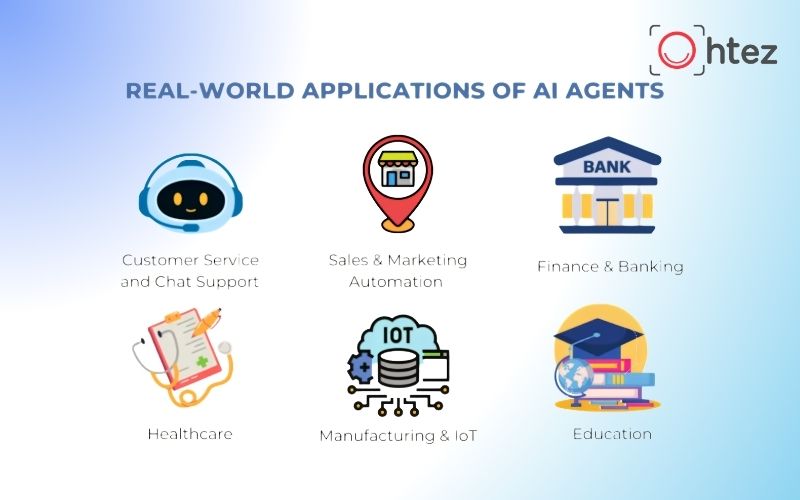
AI agents are already being used across industries to automate tasks, improve productivity, and support decision-making. The real-world value of these systems comes directly from the characteristics of AI agent technology, such as autonomy, reasoning, learning, and contextual awareness. Below are some common AI agent examples used by businesses today.
Customer Service Agents
Customer service agents help businesses handle customer inquiries, resolve common issues, and provide support 24/7. Unlike traditional chatbots, they can understand context, access customer information, and perform actions such as updating accounts or processing requests. This enables organizations to improve response times, reduce support costs, and deliver more personalized customer experiences.
Data Analysis Agents
Data analysis agents collect and process information from multiple sources to identify trends, generate reports, and uncover actionable insights. By analyzing large volumes of data in real time, they help businesses make faster and more informed decisions. These agents are commonly used in industries such as finance, healthcare, retail, and manufacturing.
Coding and Development Agents
Coding agents assist software teams by generating code, reviewing programs, identifying bugs, and suggesting improvements. They help automate repetitive development tasks, allowing engineers to focus on more complex work. As AI capabilities continue to advance, these agents are becoming valuable tools throughout the software development lifecycle.
Marketing and Sales Agents
Marketing and sales agents support activities such as lead generation, audience segmentation, content recommendations, and campaign optimization. These AI agent examples can analyze customer behavior, identify sales opportunities, and automate follow-up activities. The predictive and adaptive characteristics of AI agent systems help businesses improve targeting, increase conversion rates, and scale customer engagement more efficiently.
Real-world impact of characteristics of AI Agent adoption
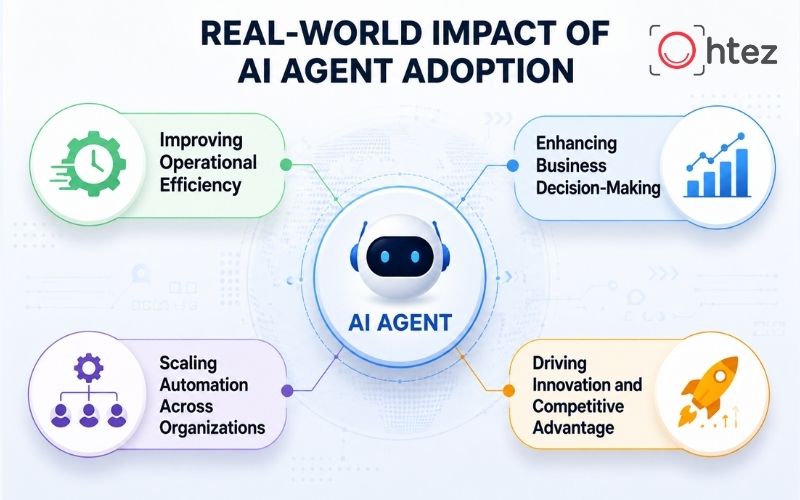
Organizations across industries are leveraging the characteristics of AI agent systems to improve efficiency, enhance decision-making, and support business growth. By combining autonomy, learning, and adaptability, AI agents help businesses automate complex processes and create value beyond traditional automation.
Improving Operational Efficiency
One of the most immediate benefits of AI agent adoption is improved efficiency. AI agents can automate repetitive tasks such as customer support, data entry, scheduling, and report generation, reduce manual workloads, and minimize human error. These characteristics of AI agent capabilities allow employees to focus on higher-value activities while organizations benefit from faster execution, lower costs, and better resource utilization.
Enhancing Business Decision-Making
AI agents help organizations make more informed decisions by analyzing large volumes of data and identifying patterns in real time. One of the most valuable characteristics of AI agent systems is the ability to generate actionable insights and recommendations. This enables businesses to respond more quickly to market changes, customer behavior, and operational challenges.
Scaling Automation Across Organizations
Unlike traditional automation tools, AI agents can adapt to more complex workflows and integrate with multiple systems. This allows organizations to expand automation across departments while maintaining consistent performance. This flexibility makes AI agents valuable for long-term growth and digital transformation initiatives.
Driving Innovation and Competitive Advantage
AI agents support innovation by helping organizations uncover insights, optimize processes, and identify new opportunities. The adaptive characteristics of AI agent technology enable businesses to respond faster to changing market conditions and deliver better customer experiences. As adoption grows, organizations that effectively leverage AI agents can strengthen their competitive advantage and accelerate innovation.
Challenges and future of AI Agents
While AI agents offer significant benefits, organizations must also address several challenges related to implementation, governance, and performance. Understanding these limitations is essential for maximizing the value of AI investments.
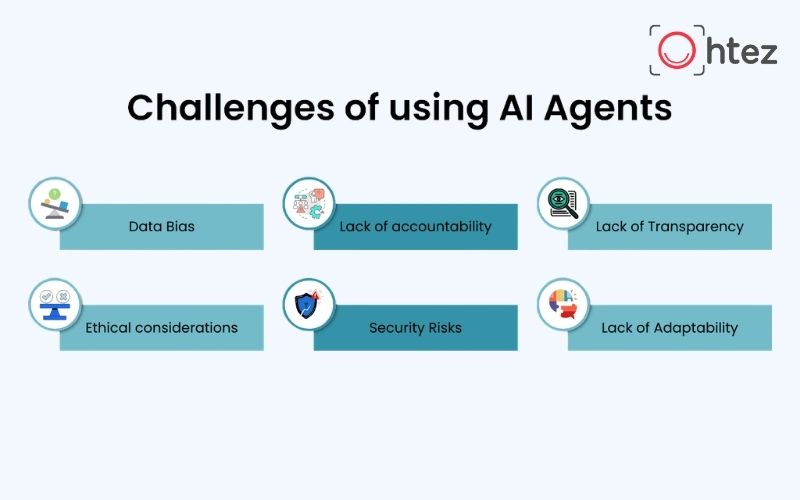
The same characteristics of AI agent systems that make them powerful – such as autonomy, learning, and decision-making – can also introduce risks if not properly managed. Security concerns, data quality issues, and regulatory requirements all play important roles in successful deployment.
At the same time, rapid advancements in artificial intelligence continue to expand what AI agents can accomplish. As the technology matures, the future of AI agent platforms are expected to become even more sophisticated, autonomous, and collaborative.
Security, Privacy, and Governance Concerns
AI agents often access sensitive data and interact with business systems, making security and privacy important considerations. Organizations must establish clear governance policies, monitor agent activities, and ensure compliance with relevant regulations. Balancing autonomy with human oversight is essential for minimizing risks and maintaining accountability.
Accuracy and Reliability Challenges
The effectiveness of AI agents depends on the quality of the data and models they use. Inaccurate information, biased datasets, or misunderstood context can lead to incorrect outputs. While the learning capabilities of characteristics of AI agent systems help improve performance over time, human review remains important for critical decisions.
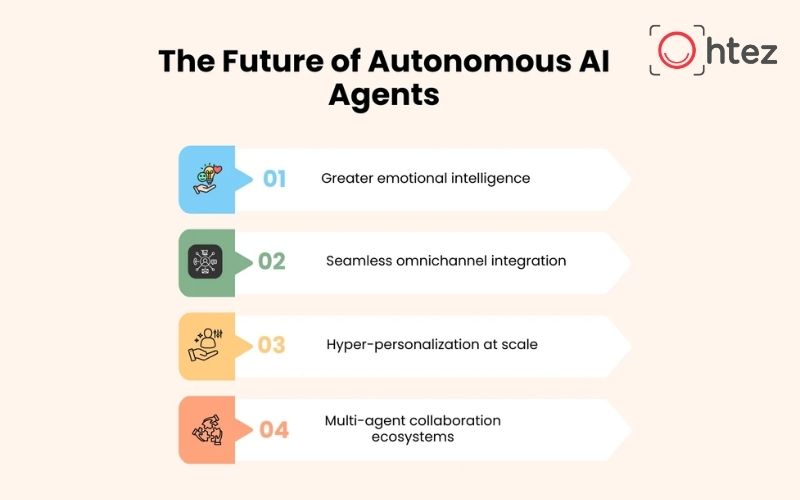
The Future of Autonomous AI Agents
The future of AI agents is expected to be shaped by greater autonomy, stronger reasoning capabilities, and increased collaboration between humans and machines. As large language models and machine learning technologies continue to advance, AI agents will become more capable of handling complex, multi-step tasks.
Future characteristics of AI agent platforms will likely include improved memory, enhanced contextual understanding, and more sophisticated planning abilities. These advancements will allow agents to manage increasingly complex workflows with minimal human involvement.
The characteristics of AI agent systems are what make them capable of automating tasks, adapting to change, and supporting intelligent decision-making. As AI technology continues to advance, AI agents will play an increasingly important role across industries, helping organizations improve efficiency, scale operations, and unlock new opportunities for growth. Follow Ohtez for more insights into AI agents and the future of intelligent automation.