
Lost documents and delayed access to information are directly eroding productivity in modern businesses. Adopting an AI Agent for internal document retrieval marks a technological shift that frees employees from inefficient manual search. By combining intelligent natural language processing with a digitized knowledge base, an AI Agent for internal document retrieval can help retrieve procedures, contracts, and other internal materials in seconds. Contact Ohtez today to receive guidance on building an efficient roadmap for digital knowledge transformation.
Why businesses struggle with internal document management and search

Why businesses struggle with internal document management and search
The challenge is not only the volume of documents, but also how they are stored, updated, and shared. Without common standards, employees may retrieve the wrong version or have to ask the person in charge. Before implementing an AI Agent for internal document retrieval, businesses should identify the main issues:
- Scattered data: Documents are spread across email, personal computers, and separate folders, making search fragmented and inefficient.
- Uncontrolled versions: Drafts and outdated policies coexist, making it difficult to determine which content is currently valid.
- Knowledge dependent on individuals: Experience is not documented, which slows handovers and forces new employees to repeatedly ask for guidance.
- Unclear access rights: Sensitive documents may be shared too broadly, while people who actually need them may not have permission to view them.
>> Read more: AI Agents for Businesses: Real-World Applications and Implementation Guide
What is an AI Agent for internal document retrieval?
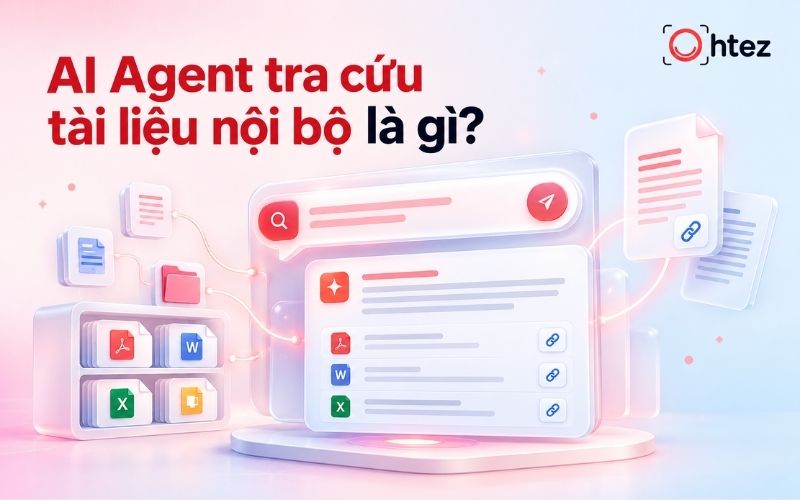
What is an AI Agent for internal document retrieval?
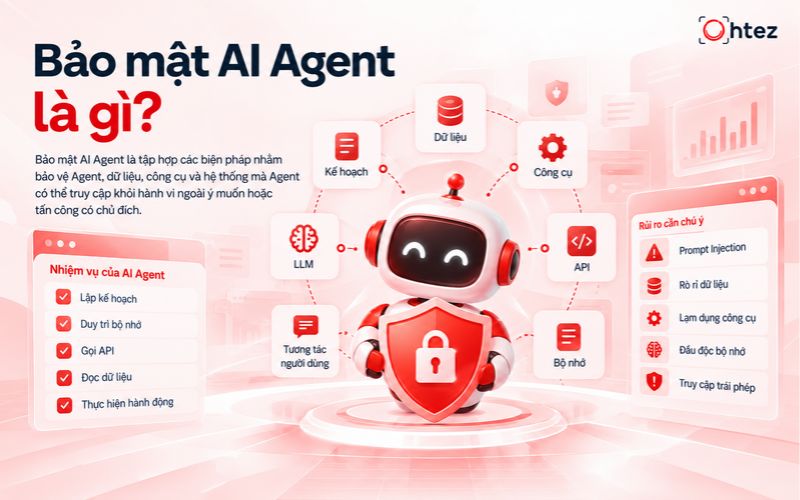
An AI Agent for internal document retrieval is an intelligent virtual assistant trained on a company’s own internal data. Unlike traditional keyword-based search, the Agent applies large language models (LLMs) together with a modern Retrieval-Augmented Generation (RAG) architecture to understand questions in their real context. It can scan thousands of pages across PDF, Word, Excel, or Notion documents and extract the most relevant answer almost instantly. As a result, an AI Agent for internal document retrieval transforms a passive document repository into an active knowledge source that can support day-to-day operations on demand.
>> Read more: What Does AI Agent Mean? How It Works and Detailed Applications in 2026
Benefits of an AI Agent for internal document retrieval

Benefits of an AI Agent for internal document retrieval
The value of an AI Agent for internal document retrieval lies in helping employees access and use knowledge more conveniently. When connected to the right sources, the system can support search, information verification, and repetitive internal Q&A. The benefits below should be evaluated against real work, while also being tied to clear responsibilities for document updates and access management.
Reduce search time with natural-language questions

Reduce search time with natural-language questions
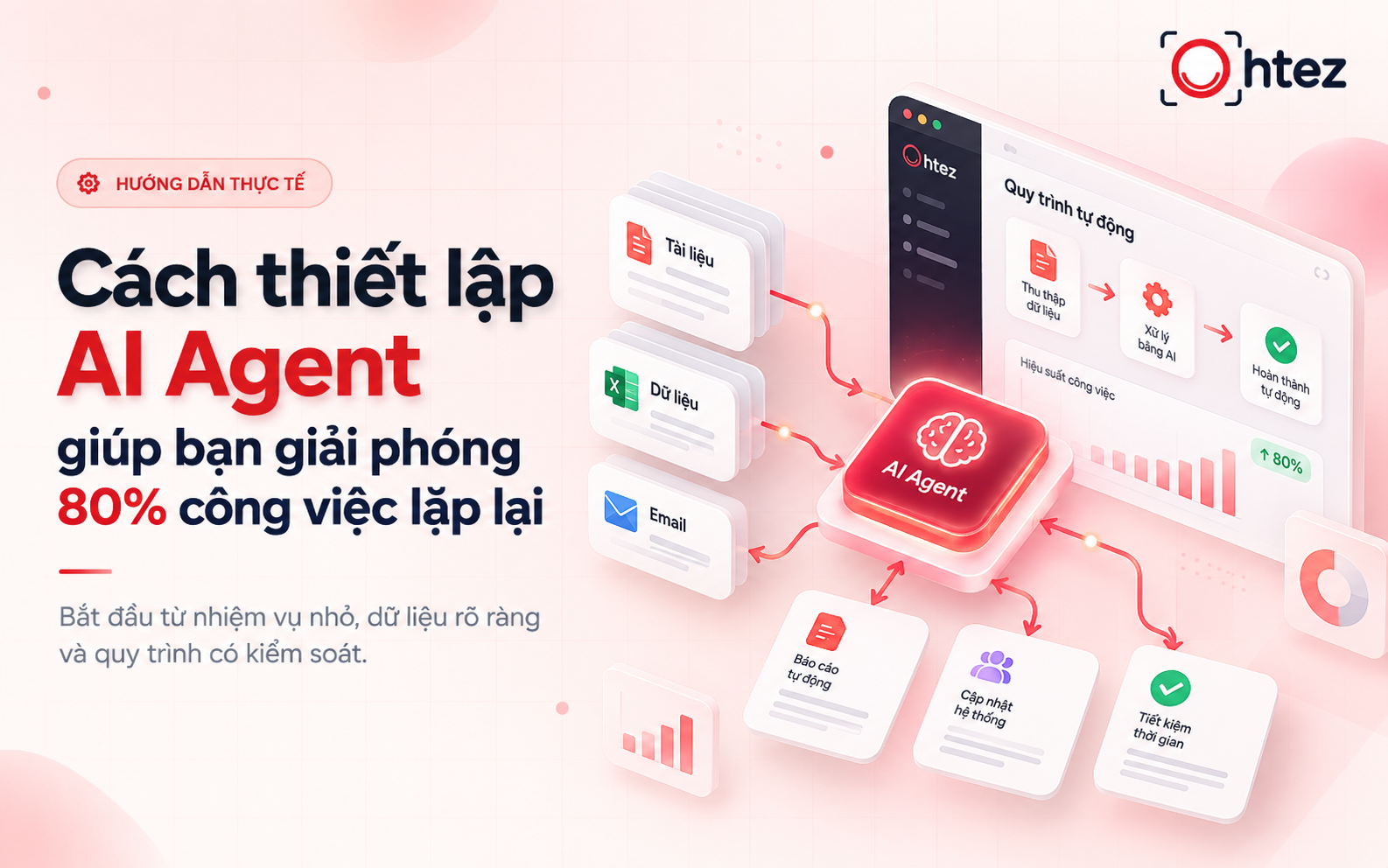
The ability to understand natural-language questions can help an AI Agent for internal document retrieval reduce employee information-processing time by up to 80%. Users no longer need to remember exact file names or complex folder locations, because the AI Agent for internal document retrieval can analyze the meaning of a query and immediately return a concise answer:
- Quickly retrieve contract clauses or HR policies by asking questions through a conversational interface.
- Access information embedded within complex digital documents without manually reviewing every page.
- Eliminate unnecessary manual searching so employees can focus on higher-value professional responsibilities.
Support information verification and consistency
Transparent source citations help an AI Agent for Internal Document Search ensure maximum accuracy when applied to real-world business operations. Using AI Agents eliminates the risk of errors caused by employees relying on outdated pricing tables or obsolete procedures:
- Automatically display links to original documents alongside generated answers, allowing users to cross-check information and assess its reliability.
- Synchronize data around a single source of truth to prevent conflicting information across departments.
- Minimize serious operational disputes and compliance violations caused by employees following outdated instructions or policies.
Speed up onboarding and reduce repetitive questions

Speed up onboarding and reduce repetitive questions
In HR operations, an AI Agent for internal document retrieval can act as an always-available guide that responds 24/7. Deploying an AI Agent helps new team members become familiar with company policies, culture, and working procedures more quickly:
- Automatically answer common questions about employee benefits, attendance, and workplace policies.
- Shorten the onboarding and training cycle while still delivering the full set of standardized operational knowledge.
- Reduce the burden of repetitive questions on managers and optimize operating costs for internal training teams.
Control access based on employee roles
A multi-layer security model helps AI Agents protect sensitive business information flows. Administrators can use an AI Agent for internal document retrieval to define data-access boundaries in a flexible and structured way:
- Assign permissions by role and department so users can retrieve only the documents they are authorized to view.
- Review both the response content and cited sources to reduce information disclosure beyond the permitted scope.
- Update permissions when employees change roles or leave the company, while also limiting who can view activity logs.
Support knowledge retention and transfer

Support knowledge retention and transfer
By systematizing internal data, an AI Agent for internal document retrieval can become a sustainable repository of organizational knowledge assets. Applying an AI Agent for internal document retrieval also reduces the risk of workflow disruption when staffing changes occur:
- Package expert experience and working procedures into digital documents that can be reused and inherited over time.
- Enable smoother handovers between outgoing and incoming employees without disrupting ongoing projects.
- Transform tacit knowledge held by individuals into a valuable knowledge asset shared across the organization.
Implementation process for an internal Q&A AI Agent
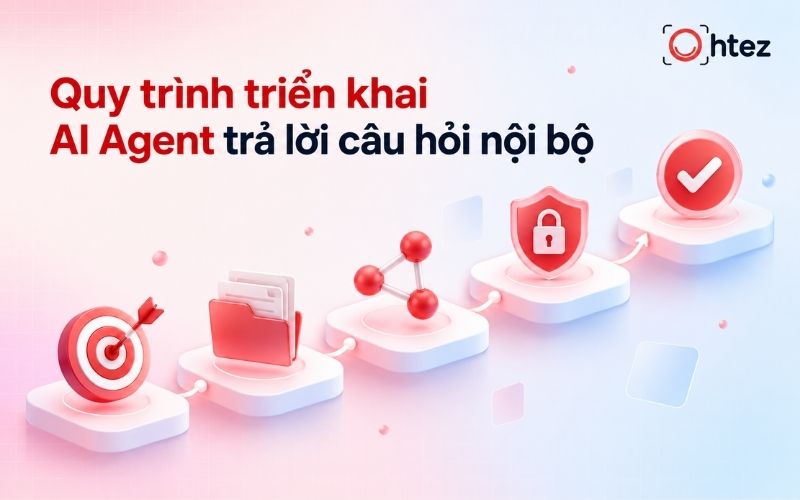
Implementation process for an internal Q&A AI Agent
Setting up an AI Agent for internal document retrieval requires a detailed and structured plan to maximize its value. A well-designed AI Agent implementation can be carried out through the following five stages.
Identify search needs and implementation scope
Before choosing a tool, list the questions that take employees the most time to look up or that are repeatedly escalated to other people. Businesses can survey departments and review historical support requests to identify priority use cases. An AI Agent for internal document retrieval should start with a specific scope, such as answering HR policy questions for office employees. The target users, document groups, and out-of-scope cases should be clearly defined. Evaluation criteria may include search time and the percentage of answers that meet requirements.
Identify search needs and implementation scope
Standardize documents and remove outdated versions
Input data should be reviewed before it is added to the knowledge base. For an AI Agent for internal document retrieval, documents should have clear names, update dates, validity status, and an assigned owner. Drafts, duplicates, or policies that have been replaced should be separated from active sources. Older documents that must be retained for comparison should be labeled rather than deleted indiscriminately. For scanned PDFs, character-recognition quality should be checked. This standardization step helps an AI Agent for internal document retrieval avoid retrieving the wrong source or missing important content.
Choose a platform and connect the knowledge base
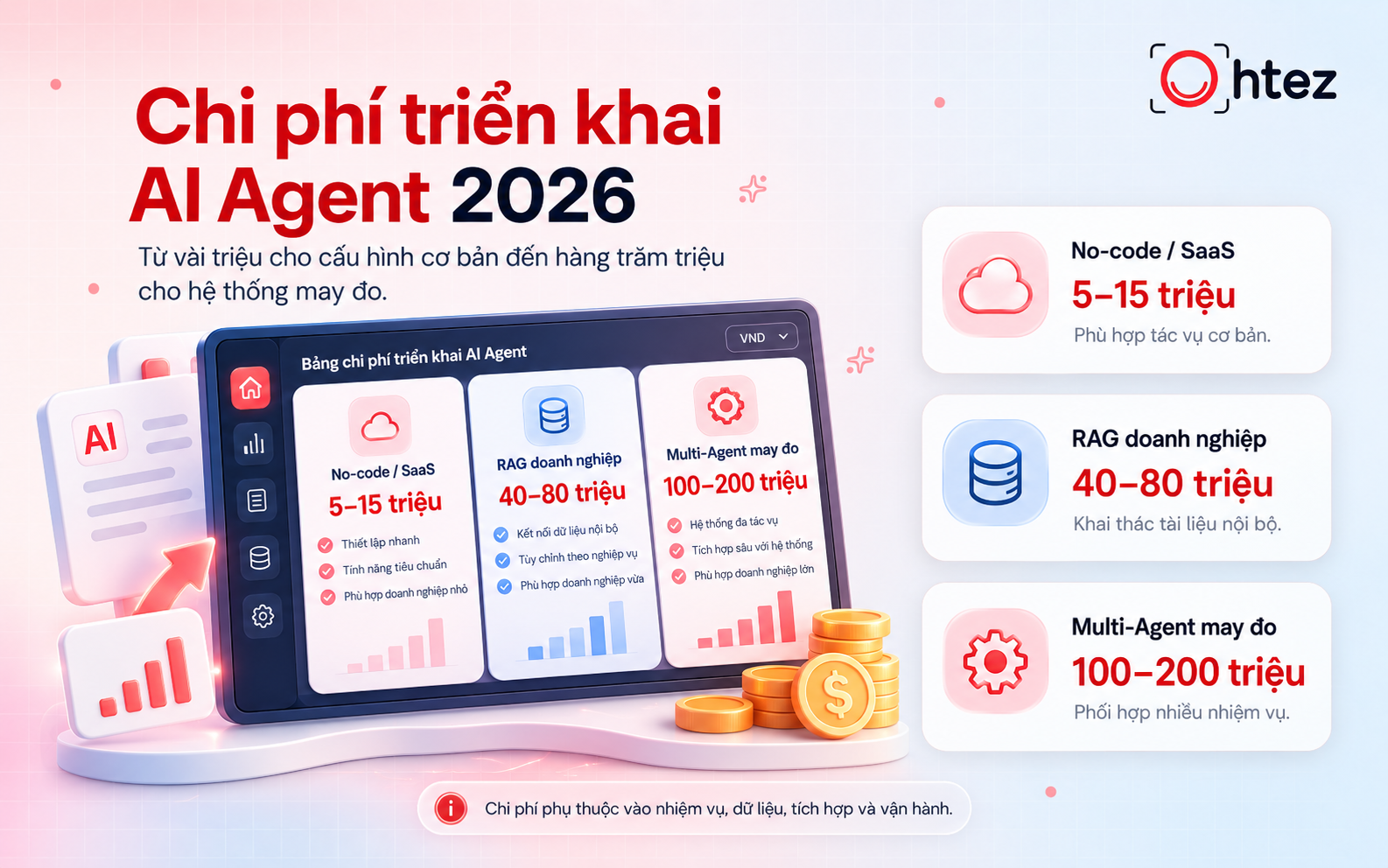
The platform should match the document formats, number of users, and operating requirements. When selecting an AI Agent for internal document retrieval, check whether it can read text documents, spreadsheets, scanned files, and connect to existing systems. The synchronization mechanism should also be clear: when are source changes updated, and how are deleted documents handled? Businesses should test the solution on a representative dataset before connecting it more broadly. AI Agent costs should account for data processing, query volume, storage, and ongoing maintenance.

Choose a platform and connect the knowledge base
Set permissions and source citation requirements
Access control must be enforced at the authentication and data-retrieval layers. An AI Agent for internal document retrieval should use only the sources the requester is authorized to view; a prompt telling the model to keep information secret is not enough. Businesses should also define how citations are displayed and how the Agent should respond when it cannot find supporting evidence. The AI Agent should communicate information limits or direct the user to the responsible person. Conversation logs also need protection, with appropriate rules for who can access them and how long they are retained.
Test responses before scaling
The test set should include frequently asked questions, ambiguous requests, conflicting sources, and situations that exceed the user’s permissions. Each case should have an expected answer and a reference document for comparison. An AI Agent for internal document retrieval should be evaluated on response quality, citation accuracy, and its ability to refuse when information is insufficient. A small pilot group should then use the Agent so real-world errors can be recorded. Scale the AI Agent only after critical issues have been resolved, and retest it whenever the data source, model, or configuration changes.
Test responses before scaling
>> Read more: How to Create an AI Agent on Claude from A to Z: An Easy Guide for Beginners
Frequently asked questions about enterprise document retrieval assistants
When considering an AI Agent for internal document retrieval, managers often have questions about security and cost. The table below summarizes common concerns when applying an AI Agent for internal document retrieval in day-to-day operations:

Frequently asked questions about enterprise document retrieval assistants
Key concern
Detailed explanation for deploying an AI assistant
Can internal data leak outside the organization? The system provides strict protection through dedicated encryption and commits not to using sensitive data to train public models. Can the AI assistant hallucinate or make up information? RAG technology constrains the response scope so answers are grounded in company documents and the system refuses to answer when supporting sources are unavailable. Does the business need a highly specialized IT team to manage it? A user-friendly no-code administration interface allows operational staff to add or remove documents without requiring IT assistance. >> Read more: How to Use AI Agents: A Complete Beginner’s Guide for 2026
Design an AI Agent for internal document retrieval with Ohtez

Design an AI Agent for internal document retrieval with Ohtez
Ohtez designs AI Agent for internal document retrieval solutions around each department’s workflow, data characteristics, and operational needs. The focus is on defining the right problem, selecting appropriate sources, and agreeing on evaluation criteria before deployment. Key advantages of working with Ohtez include:
- Workflow-specific design: Adapt the Q&A flow to real business processes so employees can retrieve information naturally within their existing workflow.
- Grounded retrieval with RAG: Use approved knowledge repositories together with reference sources to support verification.
- Flexible API integration: Connect existing data and software based on technical feasibility, reducing the need to switch between systems.
- Clear permissions and monitoring: Define access scope, monitor responses, and review cases where supporting evidence is insufficient.
- Testing with real scenarios: Evaluate answer quality, citations, and access permissions before expanding usage
>> Read more: AI Agents – Software Consulting & Development – Ohtez
An AI Agent for internal document retrieval helps businesses access knowledge more easily, reduce repetitive questions, and support smoother knowledge transfer. Sustainable results depend on reliable source documents, clear access controls, and regular testing. Starting with a focused scope allows businesses to measure value before scaling.
Contact Ohtez to discuss your business needs, assess existing data sources, and develop a tailored AI Agent implementation strategy that aligns with your workflows and current budget.