
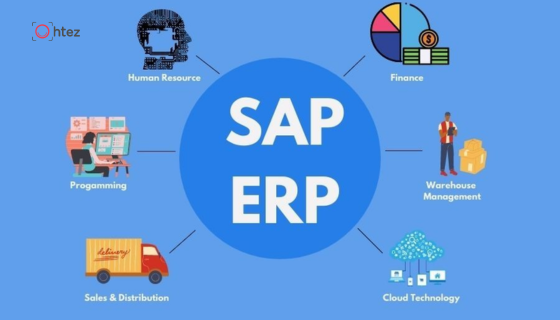
In today’s digital economy, businesses need integrated systems that connect finance, operations, supply chain, and customer management. This is why the sap erp implementation process plays a crucial role in modern enterprises. By implementing SAP ERP, organizations can centralize data, automate workflows, and improve decision-making across departments.
An ERP system is more than just software; it is a strategic ERP – Business Solution that helps companies streamline operations and gain real-time insights into their business performance.
However, implementing SAP ERP is a complex transformation that requires proper planning, collaboration across departments, and a structured sap erp implementation process to avoid risks such as project delays, data migration issues, or low user adoption.
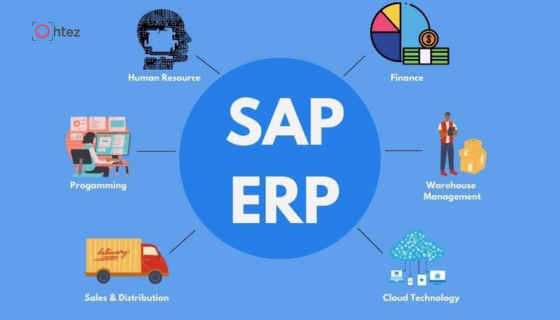
SAP ERP Implementation Process Explained Step by Step
The sap erp implementation process typically follows a structured approach designed to align technology with business operations. While the exact structure may vary depending on the project scope, most SAP projects follow several core phases that guide the system from planning to deployment.
Step 1: Project Preparation and Defining Business Goals
The first phase of the sap erp implementation process focuses on planning and project initiation. During this stage, organizations define business objectives, identify key stakeholders, and build the ERP project team.
Project preparation typically includes:
- Defining project scope and expected outcomes
- Establishing the project timeline and budget
- Selecting implementation partners or consultants
- Preparing technical infrastructure
This stage ensures that the organization clearly understands what it expects from SAP ERP before moving forward with system design.
Step 2: Business Blueprint and Process Analysis
The second stage of the sap erp implementation process is developing the business blueprint. In this phase, companies analyze their existing processes and map them to SAP ERP functionalities.
Key activities in this stage include:
- Documenting current business workflows
- Identifying gaps between existing processes and SAP capabilities
- Designing optimized workflows within the ERP system
- Planning system architecture and module configuration
The business blueprint acts as the foundation of the implementation project. It defines how the ERP system will support the organization’s operational processes.
>> Read more: What Is SaaS Software Development? Step-by-Step Guide on How to Create SaaS Software in 2025
Step 3: System Configuration and Development
Once the business blueprint is finalized, the project moves into system configuration and development. During this stage, the SAP ERP system is configured according to the requirements identified in earlier phases.
This stage often includes:
- Configuring SAP modules such as finance, procurement, or supply chain
- Developing custom features when standard functionality is insufficient
- Integrating SAP with existing enterprise systems
- Preparing the system for data migration
A properly executed configuration stage ensures that the ERP system reflects real business needs and supports operational efficiency.
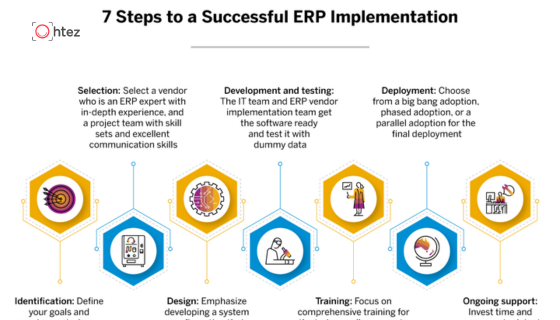
Step 4: Data Migration and Integration Setup
Data migration is one of the most sensitive steps in the sap erp implementation process. Businesses must transfer critical data such as customer records, financial information, and product data into the new system.
This stage includes:
- Cleaning and validating legacy data
- Migrating data into SAP ERP
- Integrating ERP with other enterprise applications
- Verifying data accuracy within the system
Ensuring high data quality is essential because inaccurate or incomplete data can affect business operations after the ERP system goes live.
Step 5: System Testing and Quality Assurance
Before launching the ERP system, organizations must thoroughly test the system to ensure it performs as expected. This stage includes multiple testing activities such as unit testing, integration testing, and user acceptance testing.
One important part of this stage is Software Testing, which verifies that system functionalities, workflows, and integrations operate correctly.
Testing activities typically focus on:
- Verifying business process functionality
- Ensuring system integrations work properly
- Validating data accuracy and system performance
- Identifying and resolving technical issues
A comprehensive testing phase significantly reduces the risk of system errors during the final deployment stage.
Step 6: Go-Live Preparation and User Training

The next stage in the sap erp implementation process focuses on preparing the organization for system launch. During this phase, businesses finalize system configurations and prepare employees to use the new ERP platform.
Key activities include:
- Conducting end-user training sessions
- Finalizing system documentation
- Preparing operational procedures
- Completing final system checks before launch
User training is especially important because ERP systems affect daily workflows across multiple departments.
Step 7: Post-Implementation Support and Optimization
The final stage of the sap erp implementation process occurs after the system goes live. Once SAP ERP is operational, businesses must monitor system performance and resolve any issues that arise during early usage.
Post-implementation activities typically include:
- Providing technical support to users
- Monitoring system performance
- Optimizing workflows and configurations
- Implementing additional modules or improvements
Continuous optimization ensures that the ERP system continues delivering long-term business value.
SAP Implementation Methodology: Frameworks Used in ERP Projects
To successfully manage the sap erp implementation process, organizations rely on structured frameworks known as SAP implementation methodologies. These methodologies provide clear guidelines for managing project phases, resources, and risks throughout the implementation lifecycle.
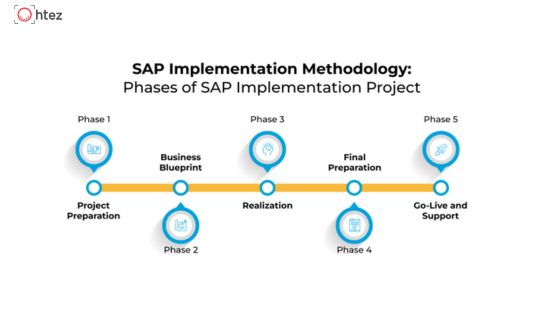
One of the most widely used frameworks is the SAP Activate methodology, which provides a structured approach for modern ERP deployments. It combines best practices, guided configuration tools, and agile project management techniques to accelerate implementation timelines.
SAP Activate typically includes several key phases:
- Discover: identify business needs and evaluate ERP solutions
- Prepare: organize the project team and plan implementation activities
- Explore: analyze business processes and design system configurations
- Realize: configure and build the ERP system
- Deploy: launch the system and migrate data
- Run: maintain and optimize the system after go-live
By following a structured sap erp implementation process supported by proven methodologies, organizations can reduce risks and ensure that ERP projects deliver measurable business outcomes.
ERP Implementation Best Practices for Successful SAP Projects
Successfully managing the sap erp implementation process requires more than technical deployment. Organizations must follow proven strategies that ensure the ERP system aligns with business goals, minimizes operational risks, and supports long-term growth.
Many ERP projects fail not because of technology limitations, but because of poor planning, lack of stakeholder involvement, or insufficient user training. Following recognized ERP implementation best practices helps companies avoid these issues and achieve a smoother transformation.
Read more: What Is Microsoft Azure Development? A Complete Guide for 2025
Build a Strong ERP Project Team
A well-structured project team is essential for a successful sap erp implementation process. ERP implementation impacts multiple departments including finance, operations, procurement, and supply chain. Therefore, the project team should include representatives from each major business function.
A strong ERP team typically includes:
- Project managers responsible for implementation timelines
- SAP functional consultants who understand business workflows
- Technical experts responsible for system configuration and integration
- Key business users who provide operational insights
Having cross-department participation ensures that the ERP system reflects real operational needs rather than purely technical assumptions.
Define Clear Project Scope and Timeline
One of the most common risks during the sap erp implementation process is scope creep. This occurs when new requirements are continuously added during implementation, leading to delays and increased costs.
To avoid this issue, organizations should clearly define:
- Project objectives and expected outcomes
- Implementation phases and milestones
- Budget allocation and resource requirements
- Change management processes for handling new requests
A clear project roadmap keeps the ERP project aligned with business priorities and ensures the implementation stays on schedule.
Ensure Leadership Commitment and Cross-Department Collaboration
ERP implementation affects almost every part of a company’s operations. Because of this, executive support is critical during the sap erp implementation process.
Leadership involvement helps:
- Align ERP strategy with company goals
- Provide resources and budget approval
- Encourage employee adoption of the new system
Additionally, ERP projects require collaboration between departments. Finance teams, operations managers, IT specialists, and supply chain professionals must work together to ensure the ERP platform supports all key business processes.
Conduct Thorough System Testing Before Go-Live
Testing is one of the most critical components of ERP deployment. Even after configuration is complete, businesses must verify that the system performs correctly in real-world scenarios.
Testing phases often include:
- Unit testing of individual system components
- Integration testing across multiple modules
- User acceptance testing with real business workflows
- Performance testing to ensure system stability
Proper testing reduces the risk of operational disruptions when the ERP system is launched.
Provide User Training and Change Management
User adoption is a key success factor in the sap erp implementation process. Employees must understand how to use the ERP system effectively in their daily work.
Training programs should include:
- Hands-on ERP training sessions
- System documentation and user guides
- Workshops explaining new business workflows
- Continuous support during early system usage
Change management strategies help employees transition smoothly from legacy systems to the new ERP platform.
Even with the right methodology and best practices, several strategic factors influence the outcome of a sap erp implementation process. Organizations that pay attention to these factors can significantly improve their chances of success.
Choosing the Right ERP Implementation Partner
Selecting an experienced ERP implementation partner is one of the most important decisions during the sap erp implementation process. Implementation partners provide technical expertise, industry knowledge, and project management support throughout the deployment lifecycle.
An ideal ERP partner should offer:
- Deep experience with SAP technologies
- Industry-specific implementation knowledge
- Proven implementation methodology
- Long-term technical support services
A skilled partner can help businesses avoid costly implementation mistakes and ensure the ERP system delivers maximum value.
Aligning ERP Strategy with Business Goals
ERP implementation should not be treated as just an IT project. Instead, it should be part of a broader digital transformation strategy.
Organizations should ensure that the sap erp implementation process supports key business objectives such as:
- Improving operational efficiency
- Enhancing financial transparency
- Supporting business scalability
- Enabling data-driven decision-making
Aligning ERP implementation with long-term strategic goals ensures that the system continues to deliver value beyond the initial deployment phase.
Ensuring Long-Term System Scalability
Businesses evolve over time, and ERP systems must be able to support future growth. When planning the sap erp implementation process, companies should design systems that can scale with increasing operational complexity.
Scalability considerations include:
- Supporting additional business units or subsidiaries
- Integrating with emerging technologies and applications
- Expanding ERP modules as business needs grow
- Maintaining system performance with larger data volumes
Planning for scalability helps organizations avoid expensive system redesigns in the future.
How OHTEZ Supports Businesses in SAP ERP Implementation

Successfully executing the sap erp implementation process requires technical expertise, strategic planning, and a deep understanding of enterprise systems. This is where OHTEZ provides value to organizations seeking reliable ERP implementation support.
- Consulting and Implementation Expertise: OHTEZ provides consulting services that guide businesses through every stage of ERP transformation, from initial planning to system deployment and post-implementation optimization. Their experts ensure that SAP ERP solutions are aligned with specific business goals and operational requirements.
- Customized ERP Solutions for Enterprises: Every organization has unique operational structures and workflows. OHTEZ focuses on designing tailored ERP solutions that match each company’s needs, ensuring the sap erp implementation process delivers practical and measurable business value.
- Continuous Technical Support and System Optimization: ERP implementation does not end after the system goes live. OHTEZ provides ongoing support to monitor system performance, resolve technical issues, and continuously optimize ERP configurations as business requirements evolve.
If your organization is planning an ERP transformation, working with experienced professionals can significantly reduce implementation risks and accelerate project success. Partner with OHTEZ to ensure a smooth and effective ERP deployment tailored to your business needs.