Businesses today rely on many digital tools to manage operations, customers, finance, and supply chains. However, disconnected systems often create data silos, slow workflows, and reduce visibility across departments. This is where integrated ERP solutions play a crucial role. By connecting enterprise systems into a unified platform, companies can synchronize information, automate processes, and make faster decisions.
Modern organizations increasingly adopt integrated ERP solutions to streamline operations and improve productivity. Through effective ERP integration and ERP system integration, businesses can link applications such as CRM, eCommerce, HR, and financial systems to a central ERP platform. This approach not only enhances collaboration between departments but also unlocks key ERP benefits such as real-time data access, automated workflows, and improved operational transparency.

What Are Integrated ERP Solutions and Why They Matter
Integrated ERP solutions refer to systems that connect enterprise resource planning platforms with other business applications, databases, and software tools. Through ERP integration, companies can synchronize data and workflows across departments to create a unified digital ecosystem.

Without integrated ERP solutions, organizations often face:
Disconnected data between departments
Manual data entry and repetitive tasks
Limited visibility across business operations
Slow decision-making due to fragmented information
With proper ERP system integration, businesses can:
Centralize enterprise data
Enable real-time reporting and analytics
Improve collaboration across departments
Reduce operational inefficiencies
Ultimately, integrated ERP solutions create a single source of truth for business data, allowing companies to operate more efficiently and scale their operations more easily.
How Integrated ERP Solutions Connect Business Systems
Modern integrated ERP solutions connect various enterprise tools and applications through APIs, middleware, or cloud integration platforms. These connections enable seamless ERP integration between critical business systems.
Common systems connected through ERP system integration include:
Business System | Purpose in ERP Integration |
CRM | Synchronize customer data and sales information |
Finance software | Automate accounting and financial reporting |
Supply chain systems | Track inventory, logistics, and procurement |
HR systems | Manage employee data and payroll |
eCommerce platforms | Synchronize product data and orders |
Through integrated ERP solutions, these systems exchange data automatically, ensuring consistency and eliminating redundant manual work.
Key Business Benefits of Integrated ERP Solutions
Organizations adopt integrated ERP solutions primarily to improve efficiency, accuracy, and decision-making. When ERP integration connects business systems, companies gain significant operational advantages.

Key ERP benefits include:
Unified real-time data visibility across departments
Automated workflows that reduce manual tasks
Improved operational efficiency and productivity
Better forecasting through accurate data insights
Faster decision-making supported by centralized information
Additional advantages of ERP system integration include:
Reduced data duplication
Improved reporting and analytics capabilities
Stronger collaboration between teams
These ERP benefits allow businesses to operate with greater agility and respond quickly to market changes.
>> See more: Essential Features of a Robust ERP System
Integration Methods Used in Integrated ERP Solutions
There are several technical approaches used to implement integrated ERP solutions. The right method depends on the organization’s infrastructure, scalability needs, and application ecosystem.
Common ERP integration methods include:
API-Based ERP Integration
API-based ERP system integration allows different software systems to communicate directly through defined interfaces.

Benefits include:
Faster system communication
Real-time data synchronization
Flexible integration with cloud platforms
Middleware and ESB Integration
Middleware acts as a bridge between systems, simplifying complex ERP integration processes.

Advantages:
Centralized integration management
Simplified data transformation between systems
Better scalability for large enterprises
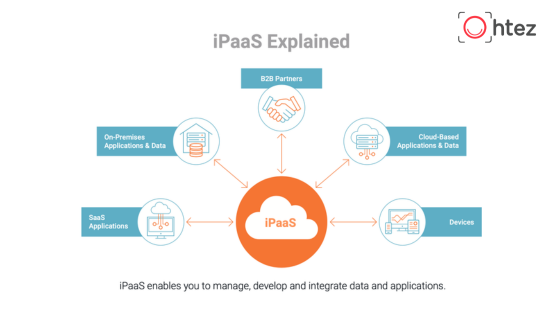
iPaaS Cloud Integration Platforms
Integration Platform as a Service (iPaaS) provides cloud-based tools for implementing integrated ERP solutions.

Key benefits:
Prebuilt connectors for faster integration
Scalable cloud architecture
Simplified integration management
>> See more: SAP ERP Implementation Process: 7 Steps & Best Practices Guide
Real-World Use Cases of Integrated ERP Solutions
Businesses across industries use integrated ERP solutions to streamline operations and improve performance. Through ERP system integration, companies can automate processes that previously required manual effort.

Common use cases include:
Supply Chain Management
Connect inventory systems with ERP platforms
Track shipments and stock levels in real time
Improve demand forecasting
Customer Relationship Management
Integrate CRM with ERP for unified customer data
Align sales and finance teams
Improve customer experience
eCommerce Operations
Synchronize product catalogs and inventory
Automate order processing
Improve fulfillment efficiency
These practical examples demonstrate how integrated ERP solutions enable smarter and more connected business operations.
Common Challenges When Implementing Integrated ERP Solutions
Despite their advantages, organizations may encounter challenges during ERP integration.
Common issues include:
Data migration complexity
System compatibility between legacy software
Security and compliance concerns
Monitoring and maintaining integration workflows
Successful ERP system integration requires careful planning, including:
Clear integration architecture
Data governance policies
Scalable technology platforms
When properly managed, these challenges can be minimized while maximizing the long-term ERP benefits.

Choosing the Right Integrated ERP Solutions for Your Business
Selecting the right integrated ERP solutions is critical for successful digital transformation. Businesses should evaluate several factors when implementing ERP integration.
Important considerations include:
Scalability to support business growth
Compatibility with existing software systems
Cloud integration capabilities
Automation and workflow features
Security and compliance standards
A well-planned ERP system integration strategy ensures that organizations achieve the full ERP benefits of data visibility, operational efficiency, and improved collaboration.

>> See more: Project Based ERP Systems: 6 Ways They Transform Project Success
Ohtez - A Trusted Provider of Integrated ERP Solutions
Ohtez delivers integrated ERP solutions designed to help businesses connect systems, streamline operations, and gain real-time visibility into enterprise data. As organizations increasingly rely on multiple platforms for finance, supply chain, HR, and e-commerce, integrated ERP solutions become essential to unify these systems into a single digital ecosystem.
With extensive experience in ERP integration and enterprise automation, Ohtez provides scalable integrated ERP solutions that enable companies to centralize data, eliminate manual processes, and improve decision-making. These integrated ERP solutions support both cloud and hybrid environments, ensuring seamless ERP system integration across modern and legacy applications.
Businesses implementing integrated ERP solutions from Ohtez can improve operational efficiency while maintaining secure data management. By leveraging APIs, automation tools, and modern integration platforms, Ohtez helps enterprises deploy integrated ERP solutions that adapt to changing business needs.

Key capabilities of Ohtez integrated ERP solutions include:
Seamless ERP system integration across CRM, HR, finance, and supply chain systems
Real-time data synchronization between business applications
Workflow automation to reduce manual tasks and improve accuracy
Centralized dashboards for enterprise visibility and reporting
Scalable architecture supporting cloud-based and on-premise systems
These integrated ERP solutions are designed to simplify complex IT environments and create a unified data ecosystem for modern organizations.
Core ERP Integration Services by Ohtez
Ohtez offers specialized services that support efficient ERP integration and enterprise digital transformation.
Key services include:
ERP platform integration with third-party business applications
API-based ERP system integration for flexible system connectivity
Data migration and synchronization across enterprise platforms
Automation of financial, supply chain, and operational workflows
Integration monitoring and performance optimization
Through these services, Ohtez ensures businesses gain maximum value from integrated ERP solutions while maintaining operational stability.

ERP Benefits Businesses Gain from Ohtez Solutions
Organizations adopting Ohtez integrated ERP solutions can unlock several strategic ERP benefits, including improved data visibility, process automation, and operational agility.
ERP Benefits | Business Impact |
Unified enterprise data | Creates a single source of truth across departments |
Automated workflows | Reduces manual data entry and operational errors |
Real-time analytics | Enables faster and more informed decisions |
Scalable integration | Supports business growth and system expansion |
Improved collaboration | Aligns teams through shared enterprise data |
By implementing advanced integrated ERP solutions, Ohtez helps organizations modernize their IT infrastructure while enabling secure and efficient ERP system integration across all business functions.
If your organization is looking to implement reliable integrated ERP solutions, the right technology partner can make the process faster and more effective.
Contact Ohtez to learn how our integrated ERP solutions can help streamline your systems, optimize workflows, and unlock the full potential of your enterprise data.