
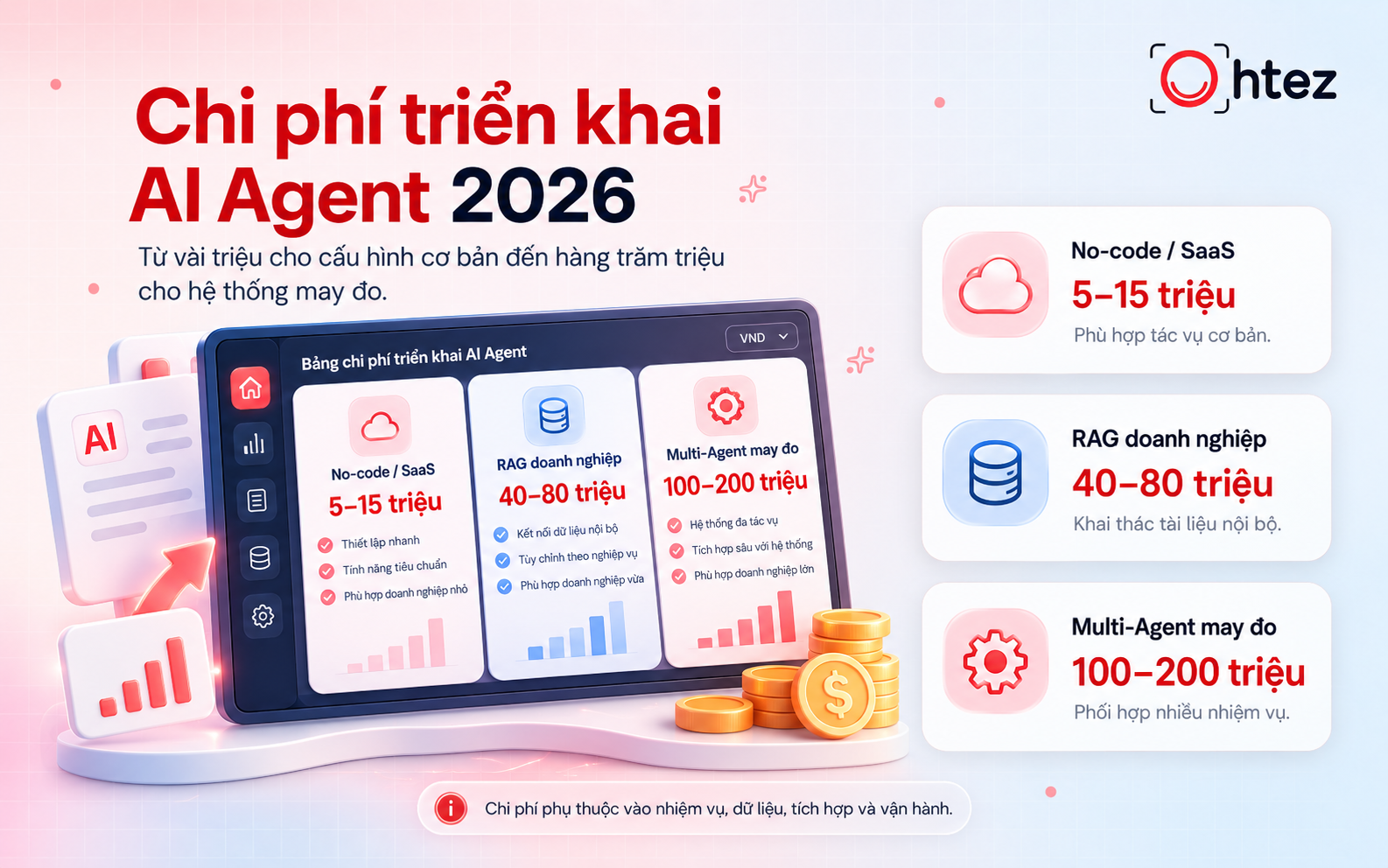
AI Agent implementation costs can range from a few million Vietnamese dong for configuring an existing platform to hundreds of millions for a custom-built system. The difference depends on the tasks involved, data requirements, number of integrations, and operational needs. To estimate AI Agent implementation costs accurately, businesses must account for both initial development and ongoing maintenance after launch. This article explains the main solution categories, identifies potential additional expenses, and helps you choose an appropriate investment approach.
What is an AI Agent, and why does implementation often cost more?
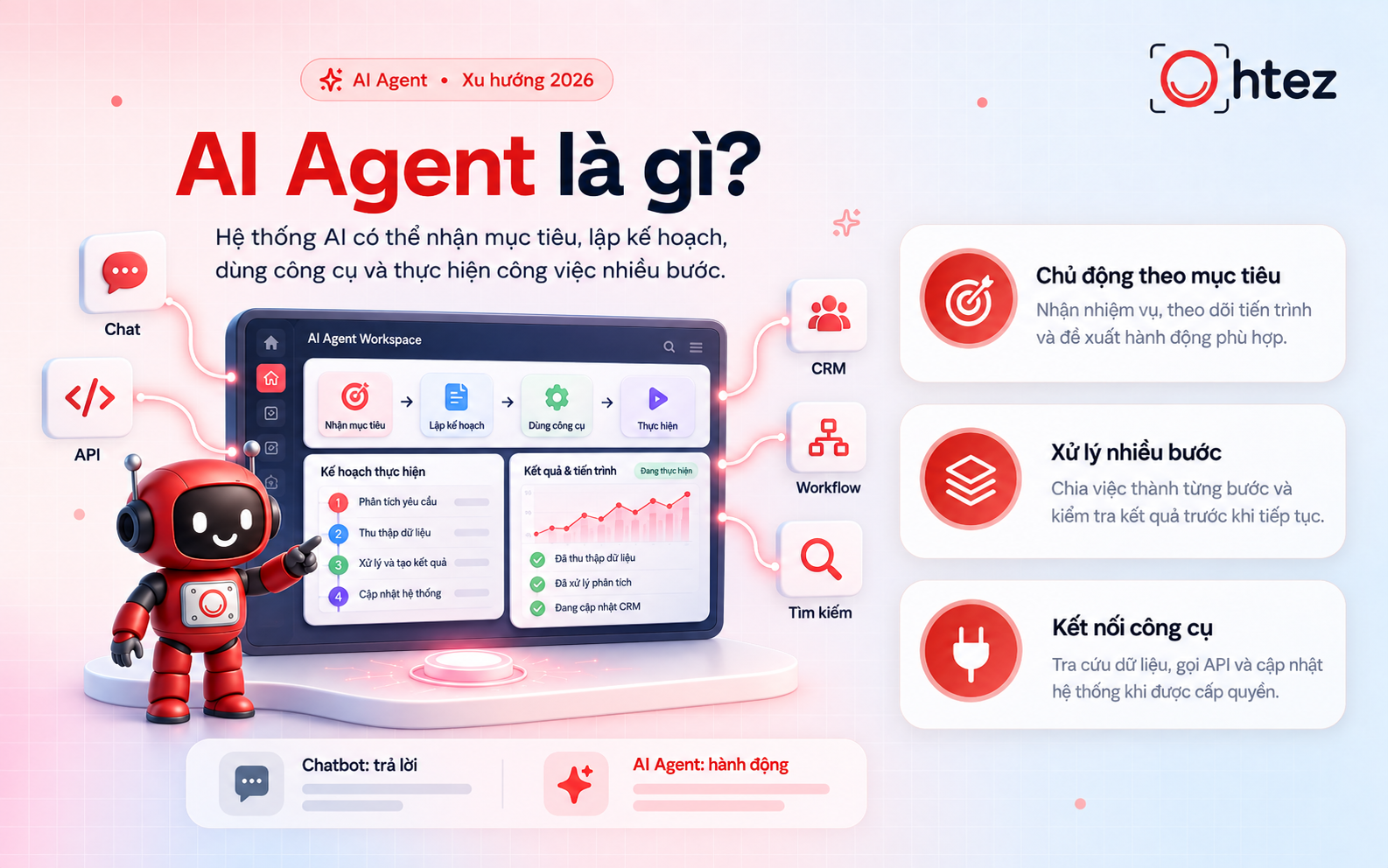
An AI Agent is a system that uses AI models, data, and tools to complete tasks through multiple steps. Compared with a basic question-and-answer chatbot, an Agent also needs to execute actions, monitor outcomes, and handle unexpected situations. These requirements often make AI Agent development more expensive than building a chatbot with a limited set of features.
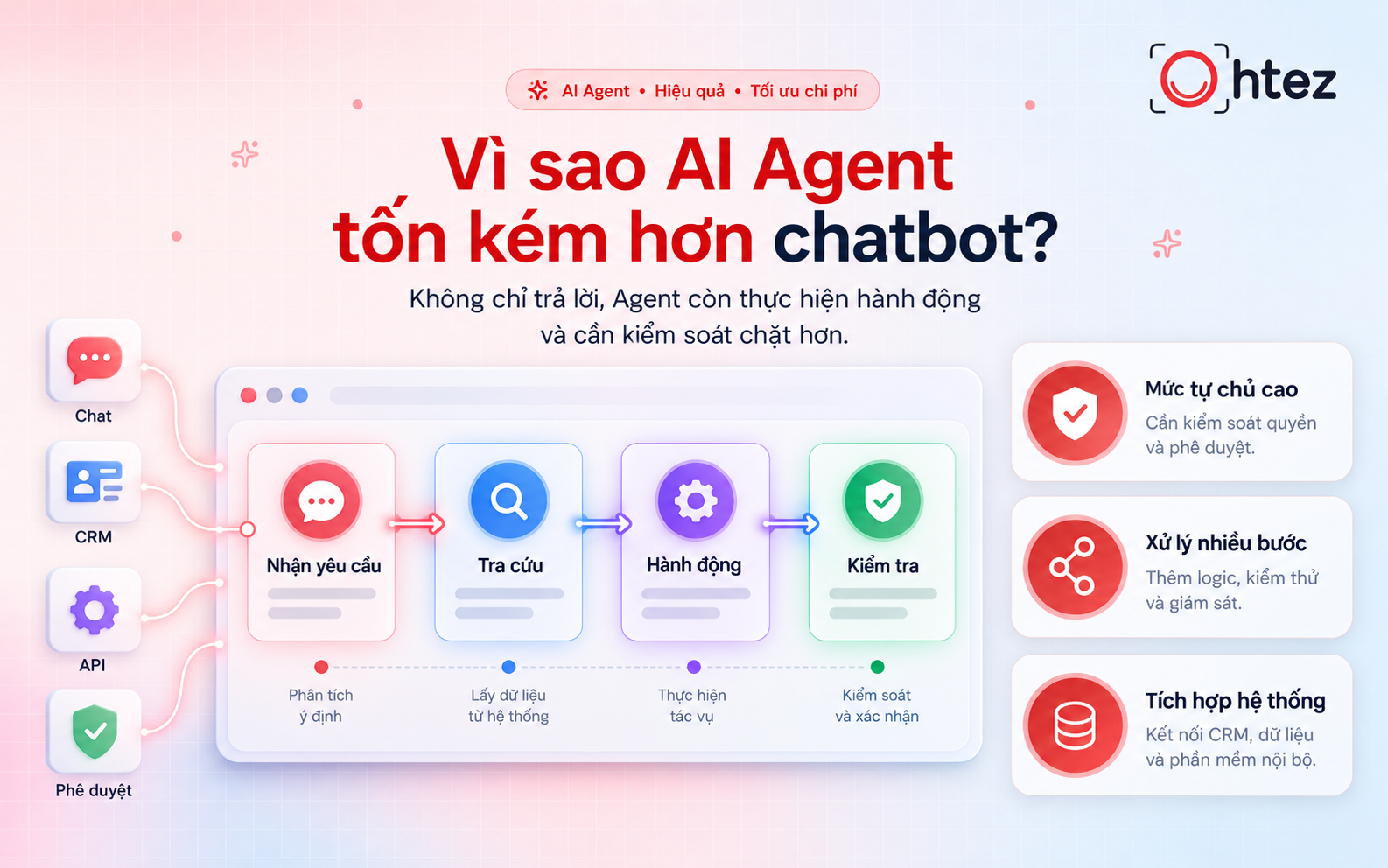
AI Agent implementation costs rise with autonomy and integrations
>> Read more: AI Agent vs AI Model: Comparing the differences and applications
Greater autonomy requires stronger controls
A chatbot can guide customers through checking their orders. An authorized Agent can look up an order, identify its status, and create a support request. Once the system can take action, a business must clearly define permissions, approval steps, and recovery procedures for mistakes. Higher autonomy also requires a more clearly defined testing and control scope. These measures must be included in AI Agent implementation costs.
Integrations and data expand the development scope
Connecting an Agent to a CRM or internal software requires checks on access permissions, data formats, and system responses. For example, before updating a customer record, the Agent must identify the correct customer and fields while avoiding overwriting important data. Therefore, an AI Agent implementation cost estimate should account for integration work, not just the conversational interface.
AI Agent pricing and estimated AI Agent implementation costs in 2026
Company size alone does not determine AI Agent pricing. Even a small business may need a substantial budget if its workflows are complex. The following estimates for SMEs are based on published reference ranges. They are indicative figures for the described scopes, not quotations from Ohtez.
1. No-code/SaaS for basic tasks
No-code/SaaS platforms are suitable for businesses testing AI Agents on basic tasks such as automated Q&A, information collection, and simple workflows. Their relatively low upfront investment makes them useful for validating demand before scaling up.
Indicative costs:
- Initial implementation: VND 5–15 million.
- Monthly maintenance: VND 500,000–2 million.
- Additional costs: API fees and charges for exceeding usage limits.
Implementation considerations: Businesses should check message limits, data sources, integration capabilities, and expected usage volumes. These factors directly affect actual AI Agent implementation costs, especially as demand grows.
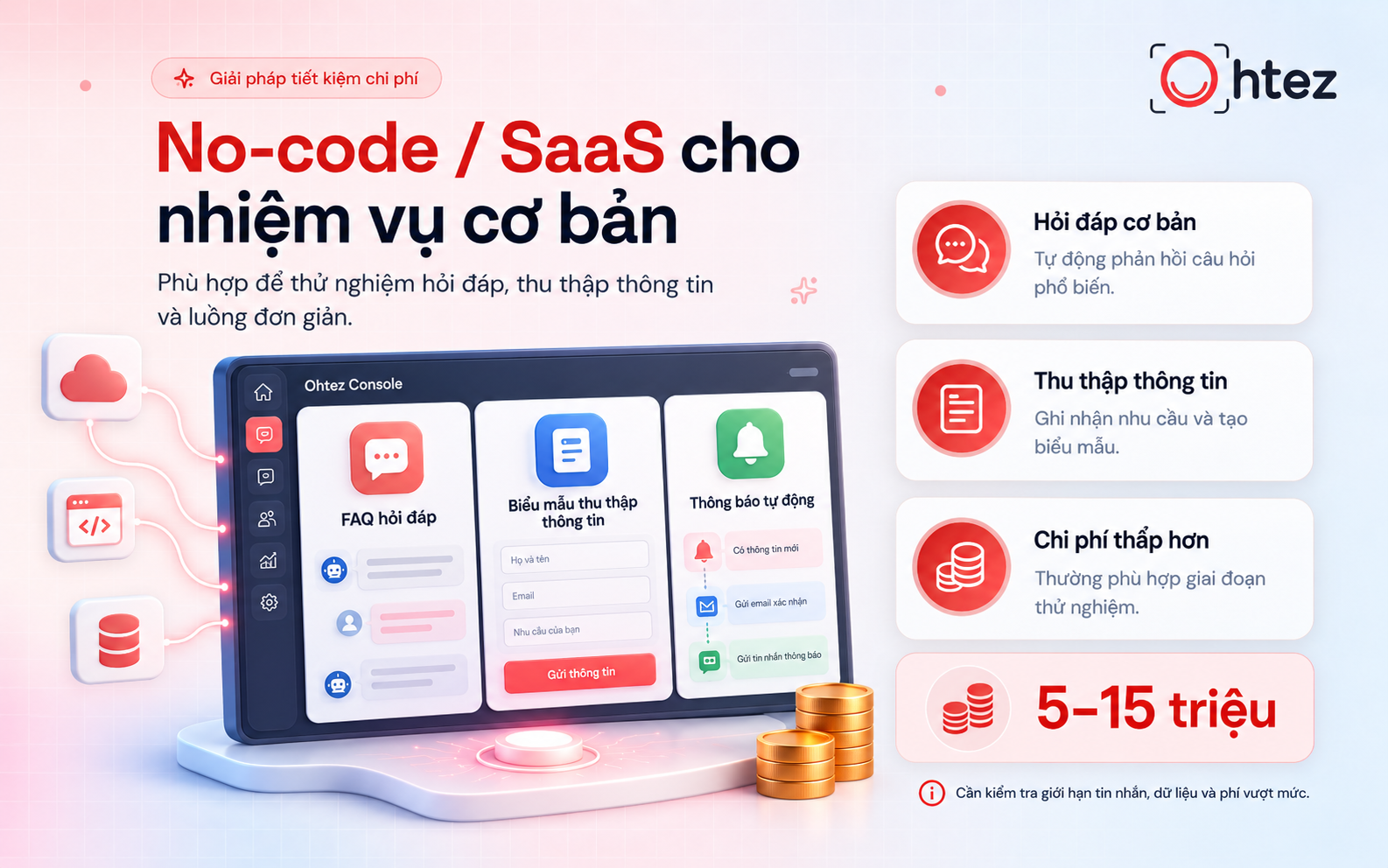
Low initial costs for basic no-code and SaaS AI Agent tasks
2. RAG solutions for enterprise document retrieval
Retrieval-augmented generation (RAG) solutions are appropriate for businesses that need to search internal documents and generate answers grounded in existing data. Implementation typically involves standardizing documents, setting up a retrieval system, and assessing response quality.
Indicative costs:
- Initial implementation: VND 40–80 million.
- Monthly maintenance: VND 1.5–3 million for infrastructure and storage.
- Additional costs: VND 2–5 million per month for system maintenance.
Implementation considerations: Businesses should assess data quality, document volume, and integration complexity before estimating AI Agent implementation costs. RAG can also be used in conventional chatbots; it does not necessarily require an AI Agent system.
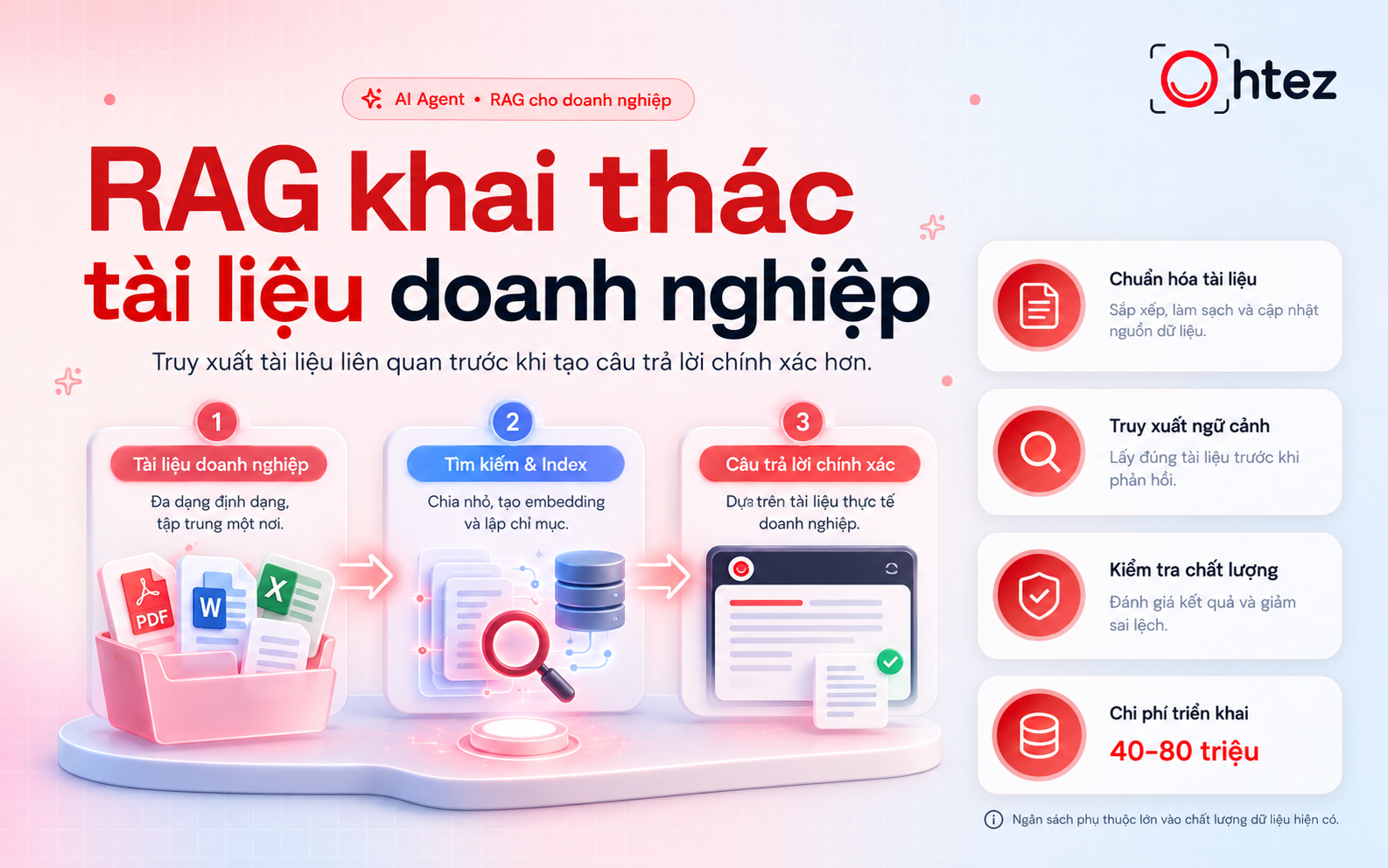
RAG-based AI Agent costs depend on business data and retrieval needs
3. Multi-agent systems for coordinated tasks
Multi-agent systems suit businesses that need several specialized AI Agents working together on tasks such as data analysis, content creation, and marketing workflow support. Compared with simpler solutions, these systems require additional orchestration, task handoffs, and outcome controls.
Indicative costs:
- Initial implementation: VND 100–200 million.
- Monthly maintenance: VND 10–25 million for system operations.
- Additional costs: Depend on the number of Agents, integration complexity, and scaling requirements.
Implementation considerations: Businesses should clearly define each Agent’s responsibilities, coordination mechanisms, and evaluation criteria. Deploying multiple Agents is worthwhile only when operational benefits justify the AI Agent implementation costs involved.
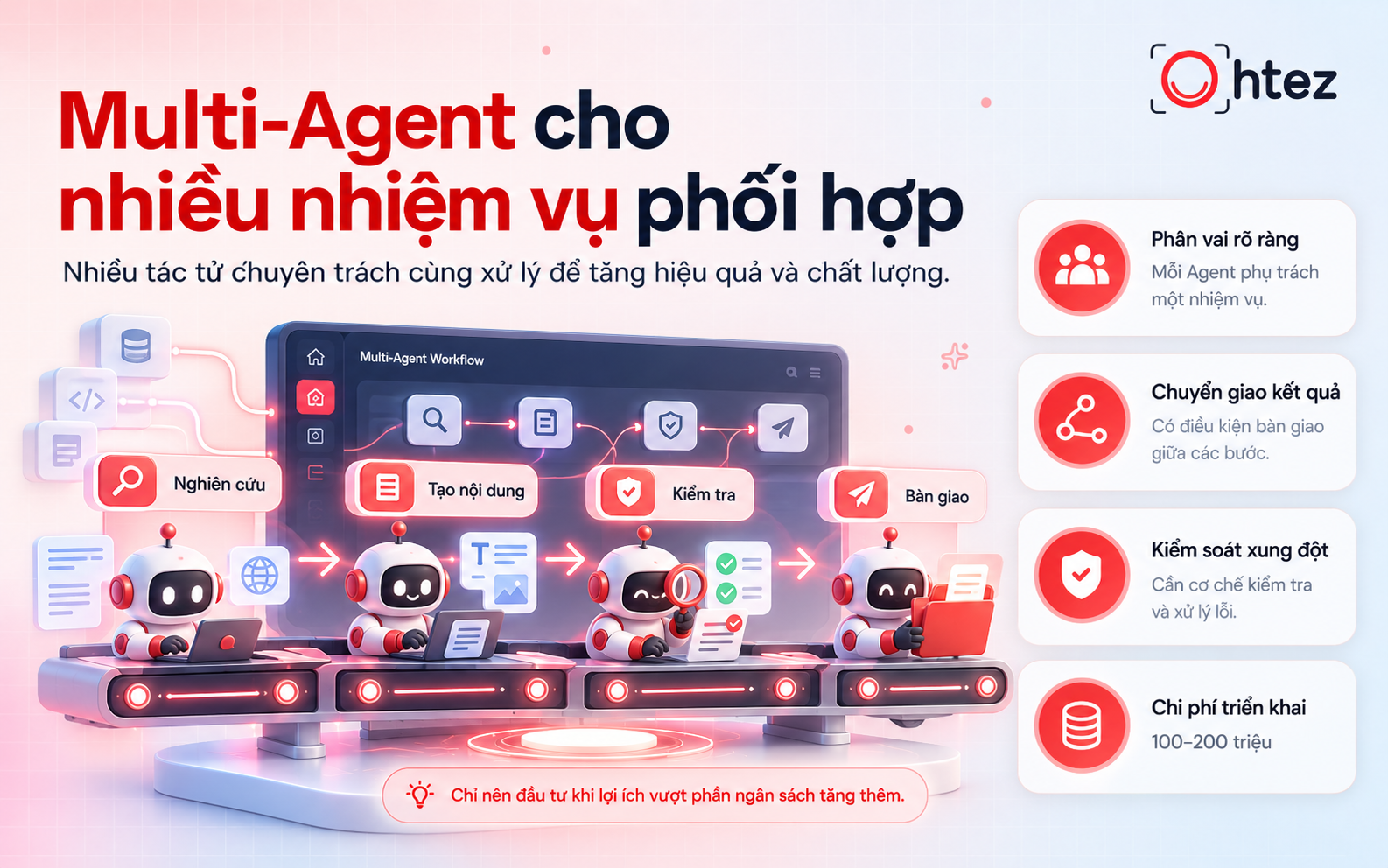
Multi-agent implementation costs depend on workflow coordination
7 factors affecting AI Agent implementation costs
Để so sánh báo giá, doanh nghiệp cần thống nhất phạm vi trên bảy yếu tố: nhiệm vụ, mức tự chủ, dữ liệu, tích hợp, mô hình AI, bảo mật và quy mô sử dụng. Mỗi yếu tố đều có thể làm thay đổi chi phí triển khai AI Agent cũng như tiêu chí nghiệm thu.
1. Workflow complexity and autonomy
An Agent that drafts content is generally easier to control than one that sends information directly to customers. Workflows with multiple branches, exceptions, or data-changing actions require more testing. Businesses should document both routine cases and situations requiring human escalation to estimate AI Agent implementation costs appropriate to the scope of work.
2. Number of integrations and data quality
Every CRM, email, or data repository connection must be tested under real-world conditions. If documents are outdated or customer records are duplicated, the implementation team must also clean the data. Good data preparation can therefore reduce development and revision work.
3. AI model selection and security requirements
Model selection should be based on testing against the intended tasks. Businesses must also define which data can be accessed, where it is stored, and who can view the logs. These requirements affect both system design and ongoing maintenance expenses, so they must be clarified when forecasting AI Agent implementation costs.
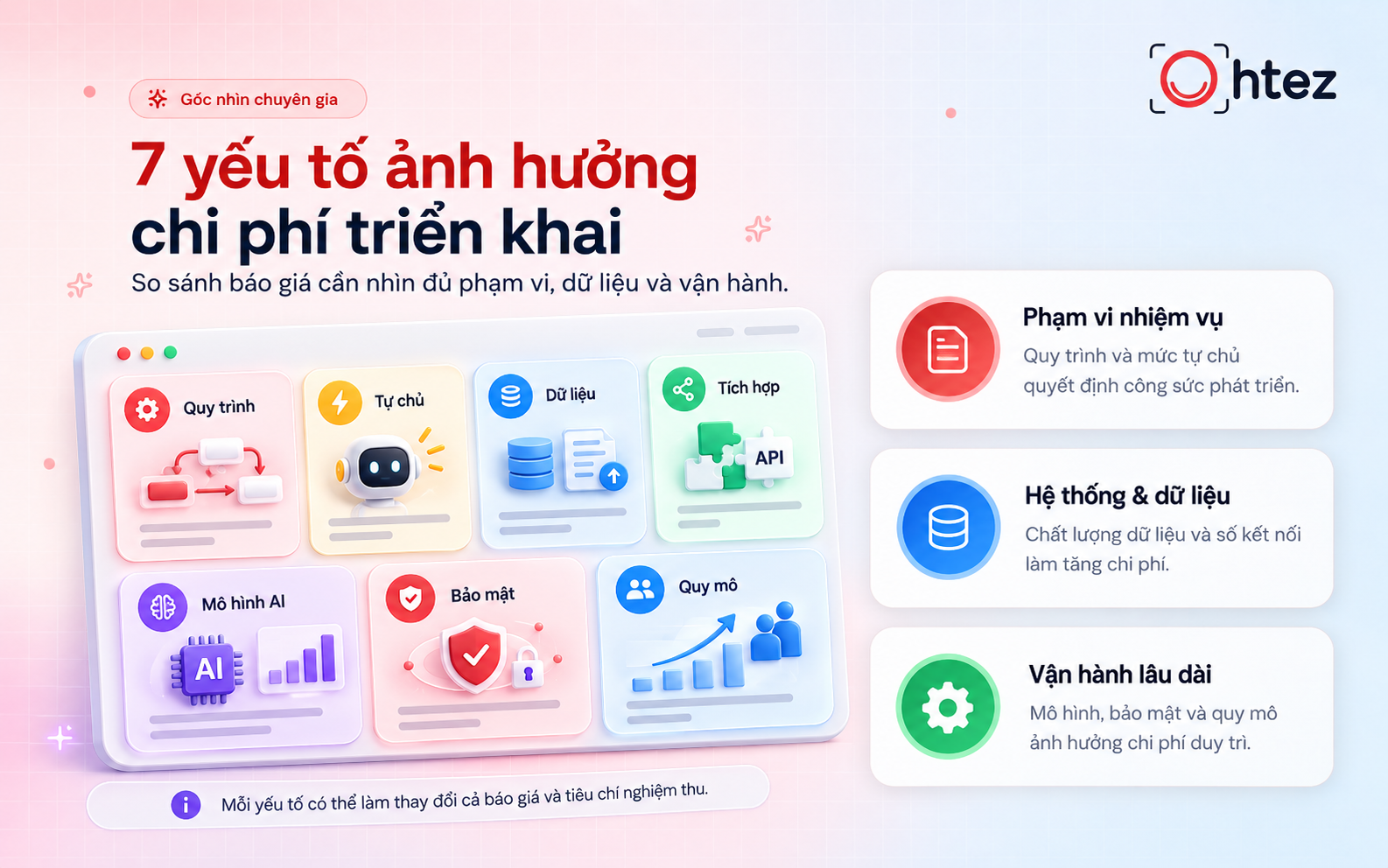
7 factors affecting AI Agent implementation costs for businesses
4. Number of systems to integrate
Each CRM, email, or data repository integration requires checks on permissions, formats, and error handling. AI Agent implementation costs also depend on API readiness, not merely the number of connections. A system with poor integration documentation may require more effort than several well-standardized tools.
5. Discovery and initial development costs
These costs may include requirements analysis, workflow design, data processing, coding, integration, and testing. An AI Agent implementation cost quotation should specify deliverables, the number of integrations, the scope of revisions, and acceptance criteria. Clear specifications help avoid disputes when project requirements expand.
6. Operating costs and AI model usage
After deployment, the system continues to incur infrastructure, storage, and AI model fees. Costs depend on usage volume, context length, and the number of model calls. Businesses should track the cost per successfully completed task to identify expensive workflows.
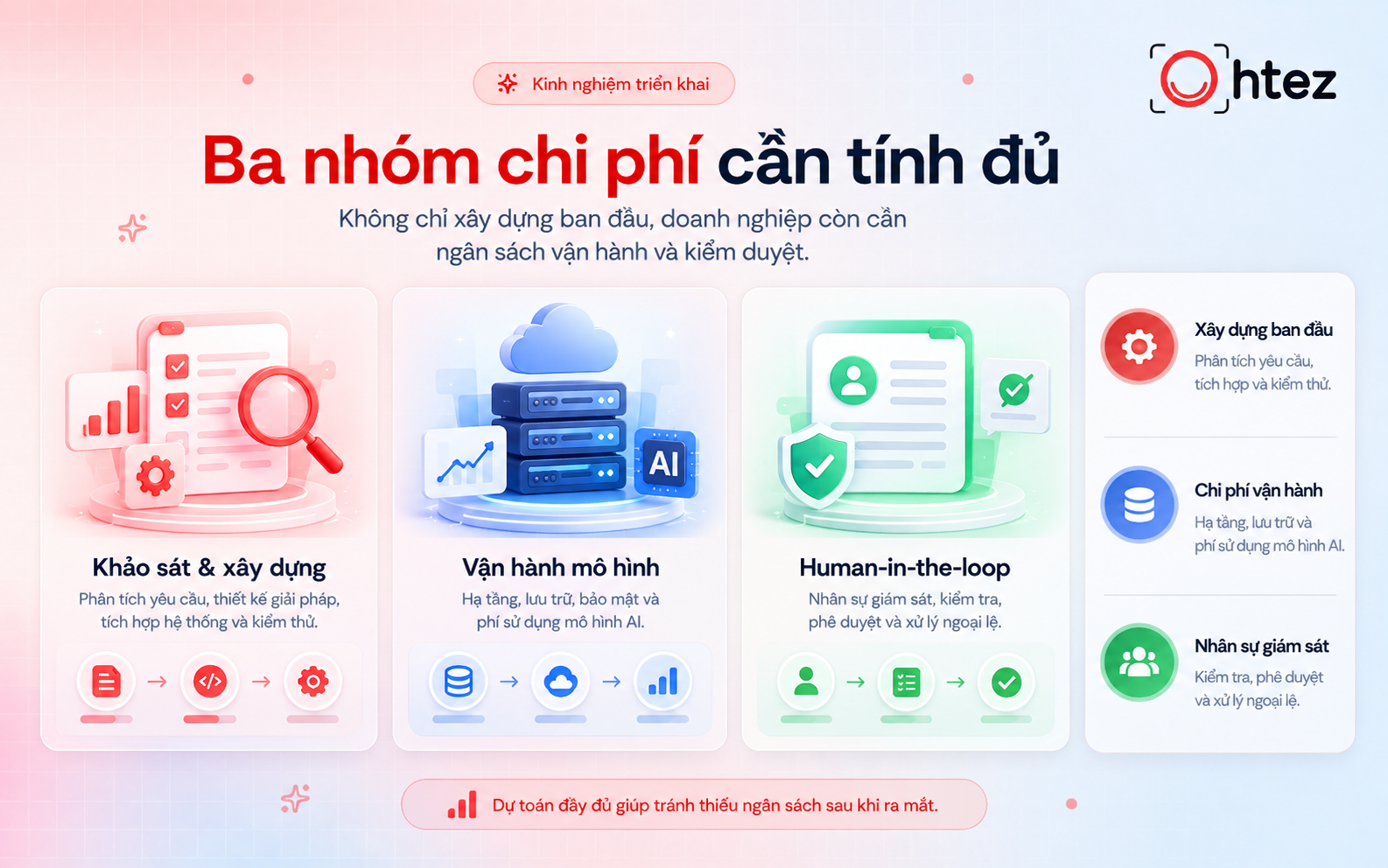
AI Agent costs include development, operations, and human oversight
7. Human review and supervision costs
Human-in-the-loop refers to involving people at steps requiring review or approval. This expense should be included in AI Agent implementation costs from the outset. If employees must correct most outputs, the business should reassess system quality and the actual time savings the Agent delivers.
>> Read more: Top 5 best free AI Agents in 2026, ready to use at no cost
5 steps to optimize AI Agent implementation costs without compromising quality
Optimizing AI Agent implementation costs starts with choosing the right scope. A small system that handles one specific task well is often easier to evaluate than a project spanning multiple departments from day one.
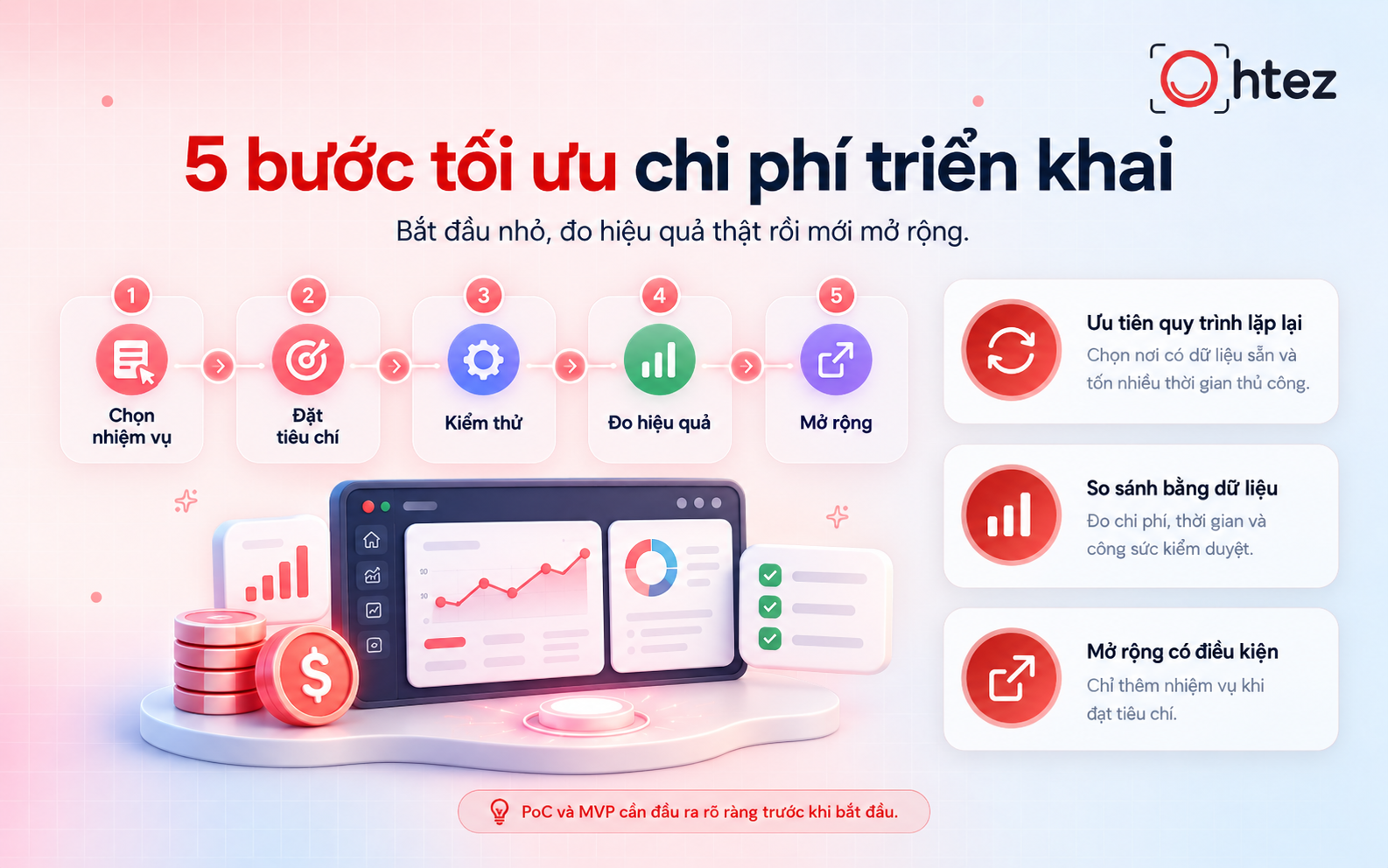
5 ways to optimize AI Agent implementation costs before scaling
A proof of concept (PoC) tests whether a solution is feasible; a minimum viable product (MVP) is a basic usable version designed to collect feedback. These phases serve different purposes, so their expected deliverables should be agreed upon before work begins.
Businesses can follow these five steps:
- Choose a task: Prioritize repetitive workflows with readily available data that require substantial manual effort.
- Set criteria: Define acceptable completion rates, error levels, response times, and budgets.
- Test real-world scenarios: Use representative data, including missing information, connection failures, and unauthorized requests.
- Measure effectiveness: Compare processing time, costs, and human review effort against the current workflow using the same workload.
- Scale conditionally: Add tasks only when results meet the criteria, and update the operating budget accordingly.
Custom AI Agent solutions from Ohtez and how to request a quote
Ohtez provides custom AI Agent development solutions, avoids developing unnecessary features, and reduces adjustments after deployment. tailored to each business’s workflows, data, and existing systems. Instead of investing in too many features at once, businesses can focus on tasks that need automation, reuse current tools, and scale as required. This approach helps optimize
To help Ohtez recommend a suitable solution and prepare a realistic estimate, businesses should provide the following information:
- Tasks: What the Agent should do, who will use it, and the expected output of each workflow.
- Data: Existing information sources, storage formats, update frequency, and permitted access rights.
- Integrations: Websites, CRM, ERP, or internal tools that need to be connected, including the API capabilities of each system.
- Action permissions: Actions the Agent may perform independently and steps requiring employee review or approval.
- Scale: Number of users, projected task volume, implementation timeline, and the budget allocated to the pilot phase.
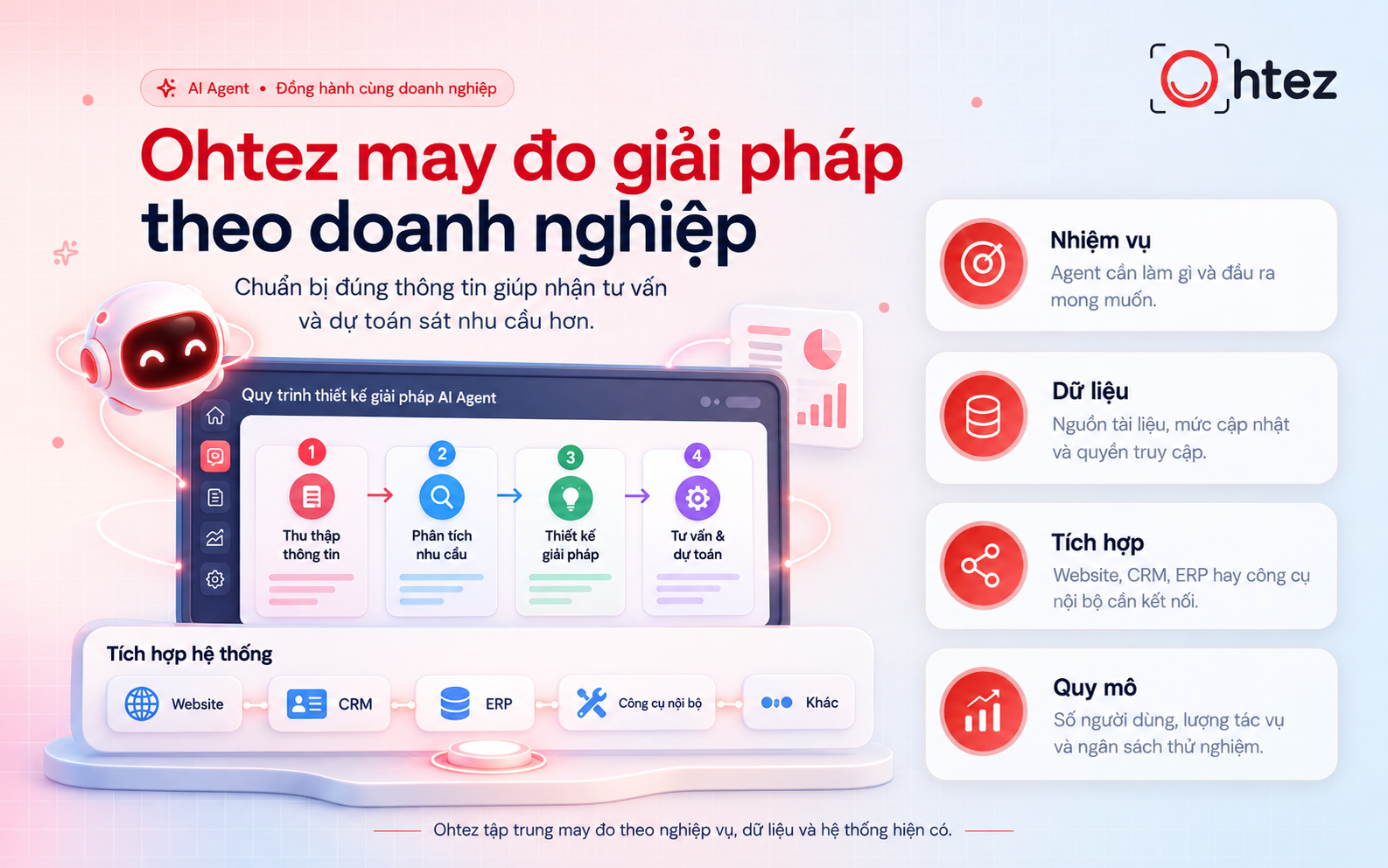
Ohtez estimates AI Agent costs based on business workflows and needs
AI Agent implementation costs depend on task scope, data quality, integration complexity, and operating requirements. To invest effectively, businesses should budget for development, maintenance, and human review, while piloting a specific workflow before scaling. Choosing the right solution helps control spending and create tangible business value. Contact Ohtez for advice on a custom AI Agent solution and a cost estimate tailored to your business needs.