
AI Agent trends in 2026 mark a shift from AI that merely answers questions to systems that help plan and execute tasks. For businesses, this creates opportunities to build digital employees, reduce manual work, and improve operational efficiency. However, results depend on data quality, integration capabilities, and appropriate oversight. Understanding these developments helps businesses identify practical applications. Explore the leading AI Agent trends with Ohtez in this article.
What is an AI Agent? How it differs from a chatbot
An AI Agent is an AI-powered software system that receives objectives, develops plans, selects tools, and carries out the necessary steps. Within its configured scope, an Agent can evaluate outcomes, adjust its approach, or escalate requests to a responsible employee. This is the foundation of AI Agent trends that are bringing AI deeper into everyday business operations.
Three key capabilities distinguish a conventional chatbot from an AI Agent acting as a digital employee:
- Proactive behavior: An Agent can monitor events, identify situations, and recommend actions within its assigned objectives.
- Multi-step execution: An Agent can break down tasks, use tools, and verify results before proceeding.
- System interaction: An Agent can retrieve data, call APIs, and update software when granted appropriate access permissions.
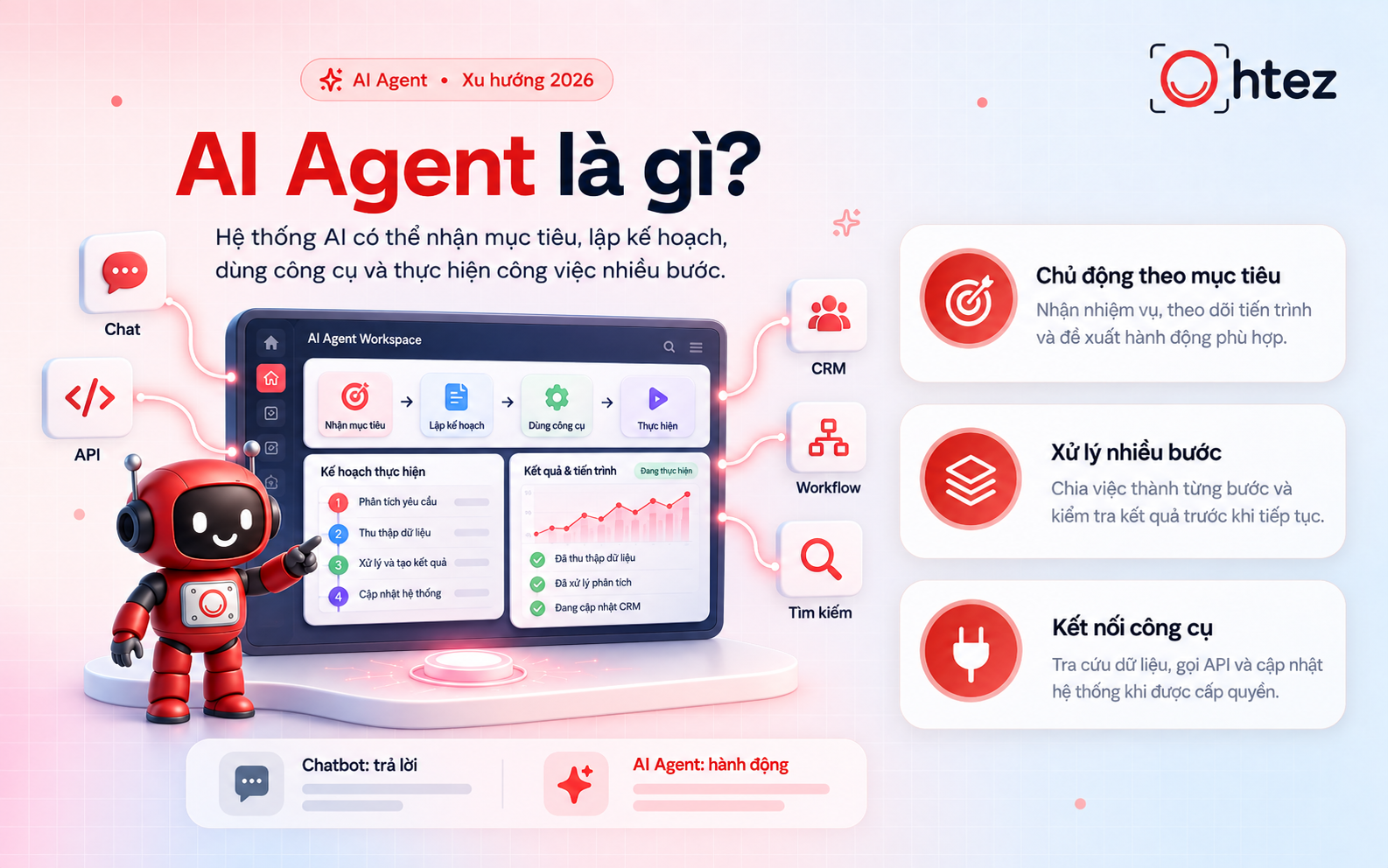
AI Agent trends reflect the evolution from chatbots to autonomous task-execution agents
>> Read more: AI Agent YouTube Automation: How to automate Youtube content
Top 4 AI Agent trends shaping 2026
AI Agent trends in 2026 focus on turning AI capabilities into tangible operational value. Key developments include goal-driven task execution, collaboration among multiple agents, and a stronger human orchestration role. Industry outlook reports also emphasize integrating Agents into business workflows and preparing employees to work alongside AI.
For Vietnamese businesses, advances in AI Agent trends offer opportunities to reduce manual tasks and accelerate information processing. However, suitability varies by industry and workflow. Companies should assess their data sources, integration readiness, and operating costs before choosing a solution. The four AI Agent trends below highlight important changes and practical ways to respond.
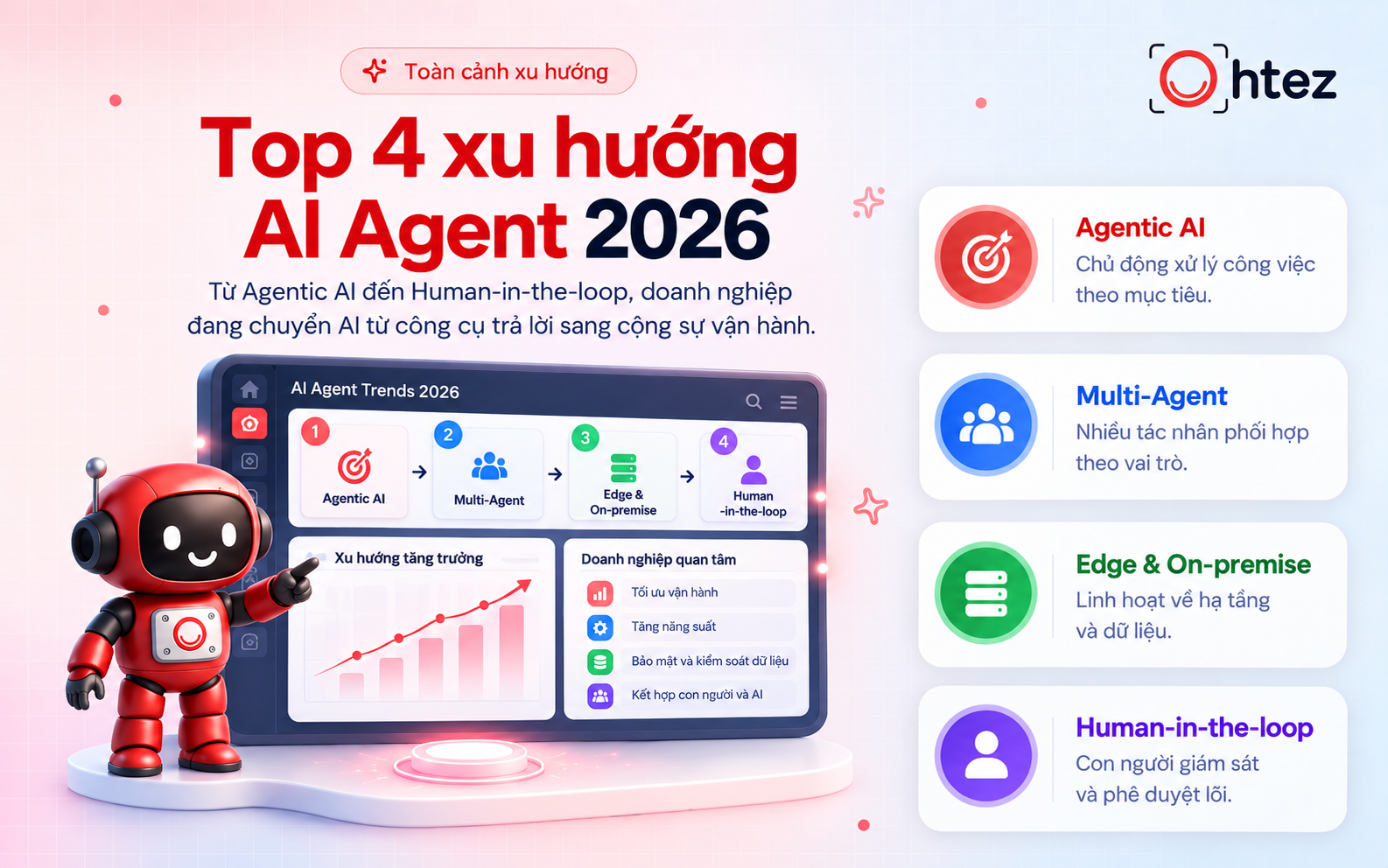
Four AI Agent trends in 2026 are shaping how businesses adopt AI
1. From robotic process automation (RPA) to proactive agentic AI
Traditional automation systems generally perform tasks according to predefined rules and scripts. When inputs change or exceptions arise, employees may need to intervene. AI Agent trends expand these capabilities by interpreting context, selecting tools, and recommending next steps. Agents can also try alternative approaches when appropriate validation and error-handling mechanisms are built in.
For example, an Agent can review an incomplete quotation request and identify the missing details. Once the customer replies, the system can continue retrieving information and prepare a draft quotation. For enterprise AI Agents, combining AI reasoning with fixed business rules helps maintain control over critical steps. In this way, AI Agent trends can complement RPA rather than replace existing systems entirely.
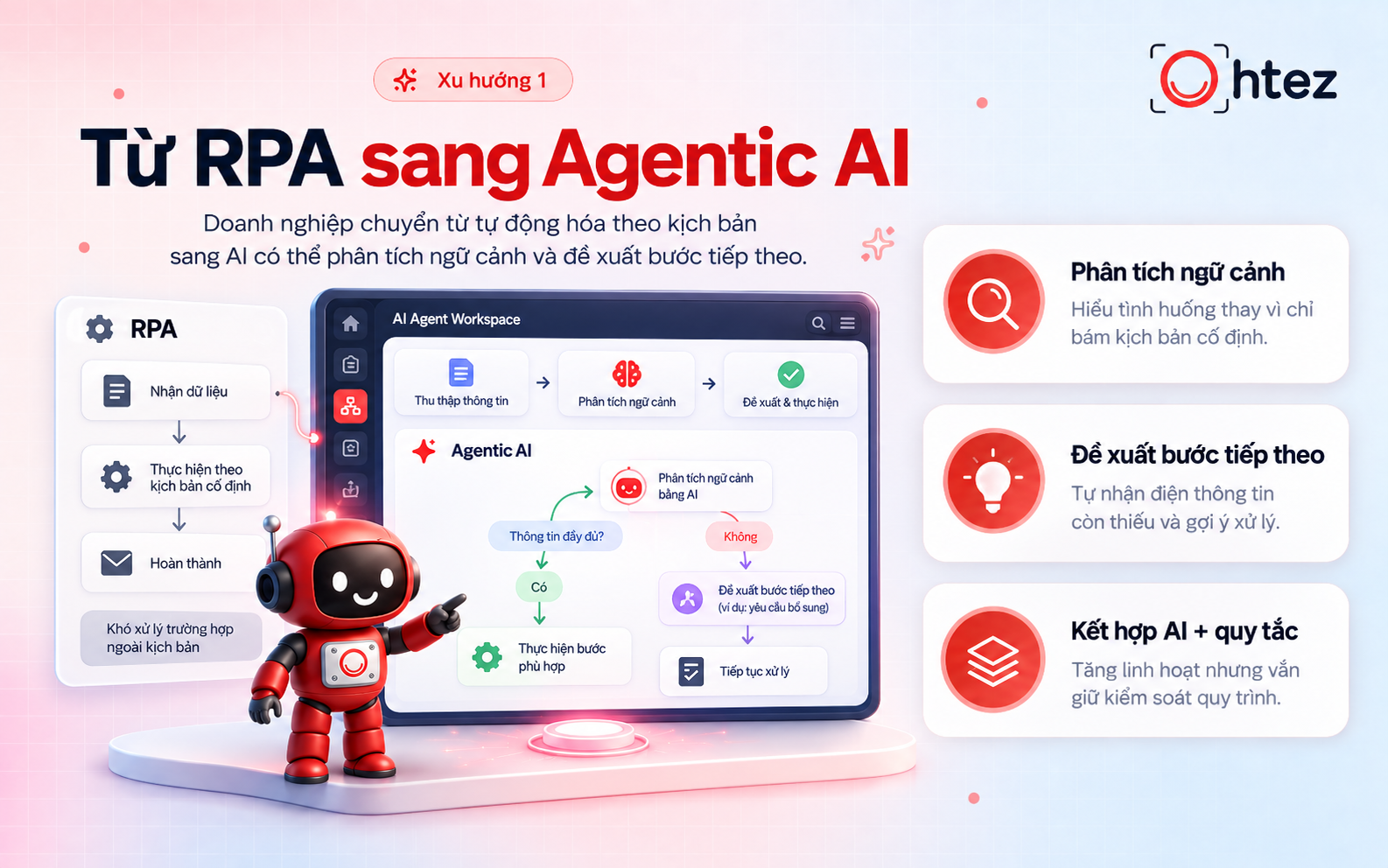
AI Agent trends combine RPA with more flexible, context-aware task handling
2. Multi-agent systems: A digital assembly line
A prominent direction in AI Agent trends is the coordination of multiple specialized Agents within a single workflow. Each Agent takes on a role such as research, content creation, quality assurance, or report generation. Outputs move between stages according to clearly defined handoff rules. This model can support work that requires different areas of expertise.
In marketing, a research Agent can compile information for a content Agent to develop a draft. A review Agent can then check the material before an employee approves publication. A team of AI Agent digital employees needs error-detection mechanisms and clear accountability at every step. When adopting AI Agent trends, adding more Agents is worthwhile only if it improves quality or processing time.
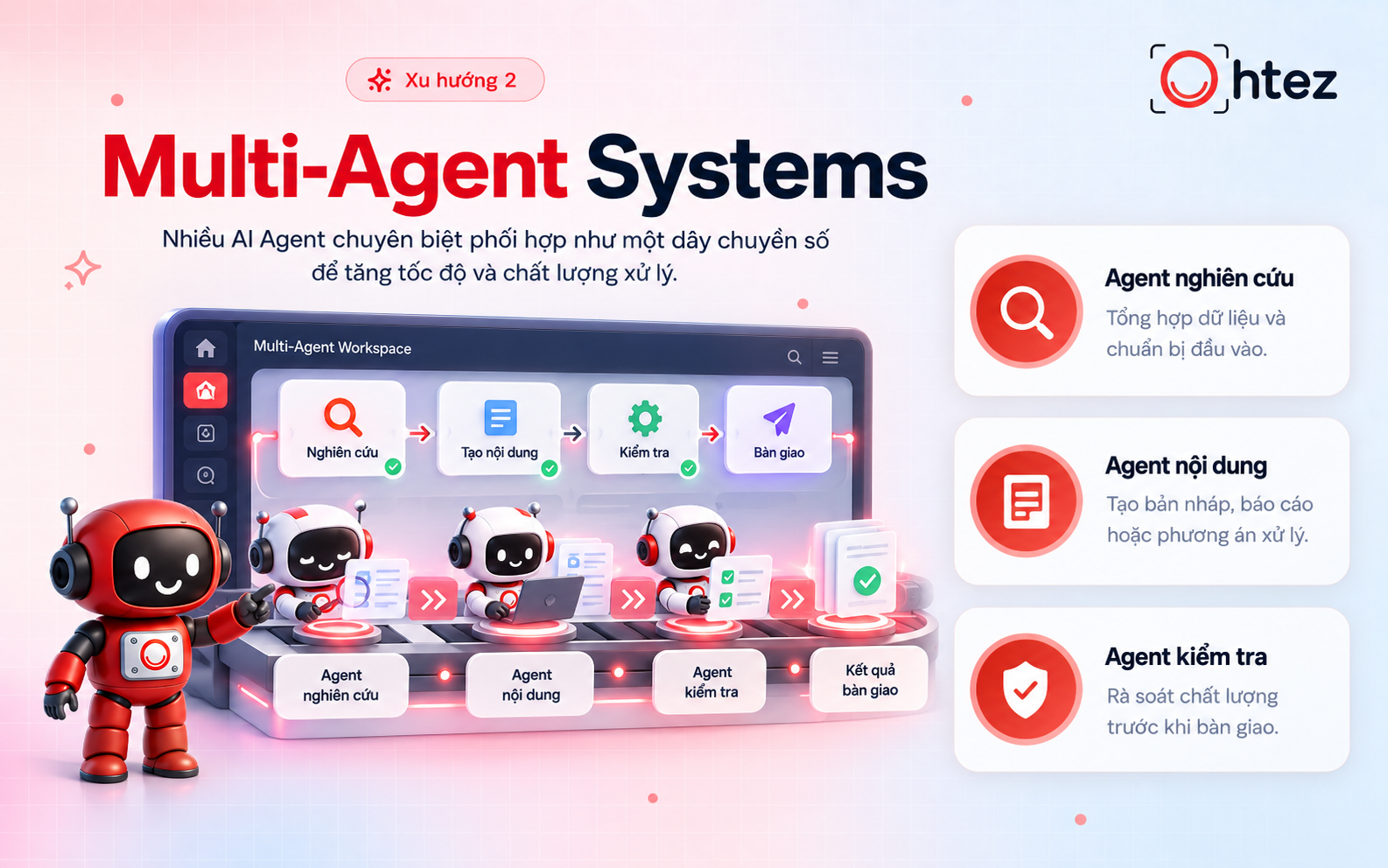
Specialized AI Agents collaborate on research, drafting, and quality checks
>> Read more: Characteristics of AI Agent and their real-world impacts
3. Infrastructure moves toward on-device and edge AI
When adopting AI Agent trends, businesses must consider where data is stored and processed. Options may include cloud services, on-premises servers, or partial processing on devices. On-premises deployment uses an organization’s own infrastructure, while edge AI processes data closer to its source. The two approaches can be combined based on latency, data requirements, and technical capabilities.
For enterprise AI Agents, choosing the right infrastructure can provide greater control and reduce certain data-transfer requirements. However, on-premises deployment does not guarantee absolute security. Businesses still need access controls, encryption, software updates, and access-log monitoring. Evaluating AI Agent trends from an infrastructure perspective therefore also requires accounting for maintenance costs and operational responsibilities.
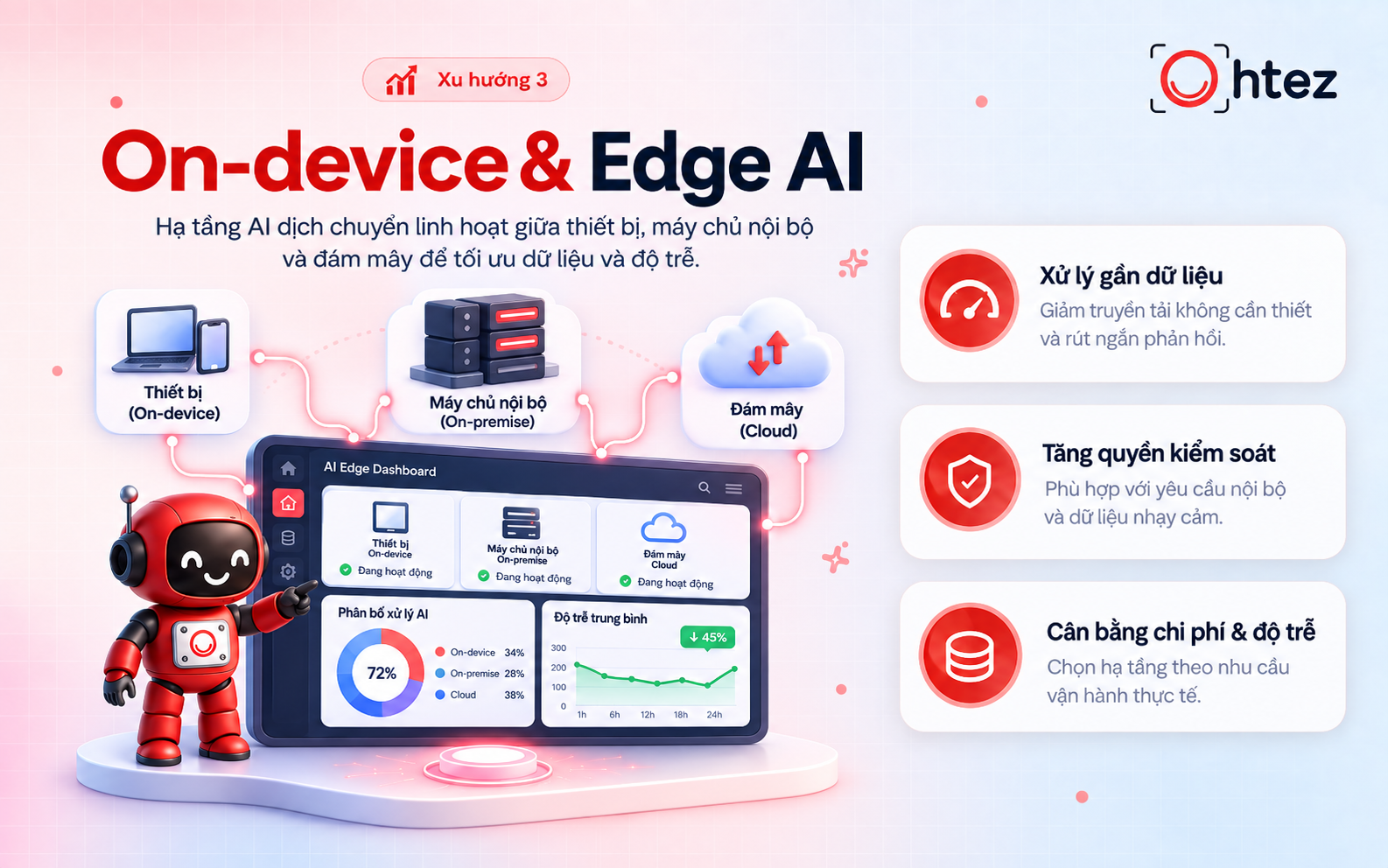
AI Agent trends use edge AI to process data closer to its source
4. Humans take on a central oversight role
AI Agent trends can reduce the time employees spend on repetitive tasks and data consolidation. Human responsibilities may shift toward setting objectives, evaluating outputs, and resolving exceptions. This transition requires training employees to delegate work and verify results. Businesses must also identify who is accountable for each workflow.
For example, an Agent can summarize advertising performance and recommend budget adjustments. The person in charge still evaluates the proposal before approving changes to spending. AI Agent digital employees need clear limits on actions involving payments, data, or customer commitments. As businesses adopt AI Agent trends, approval mechanisms help retain control while expanding automation.
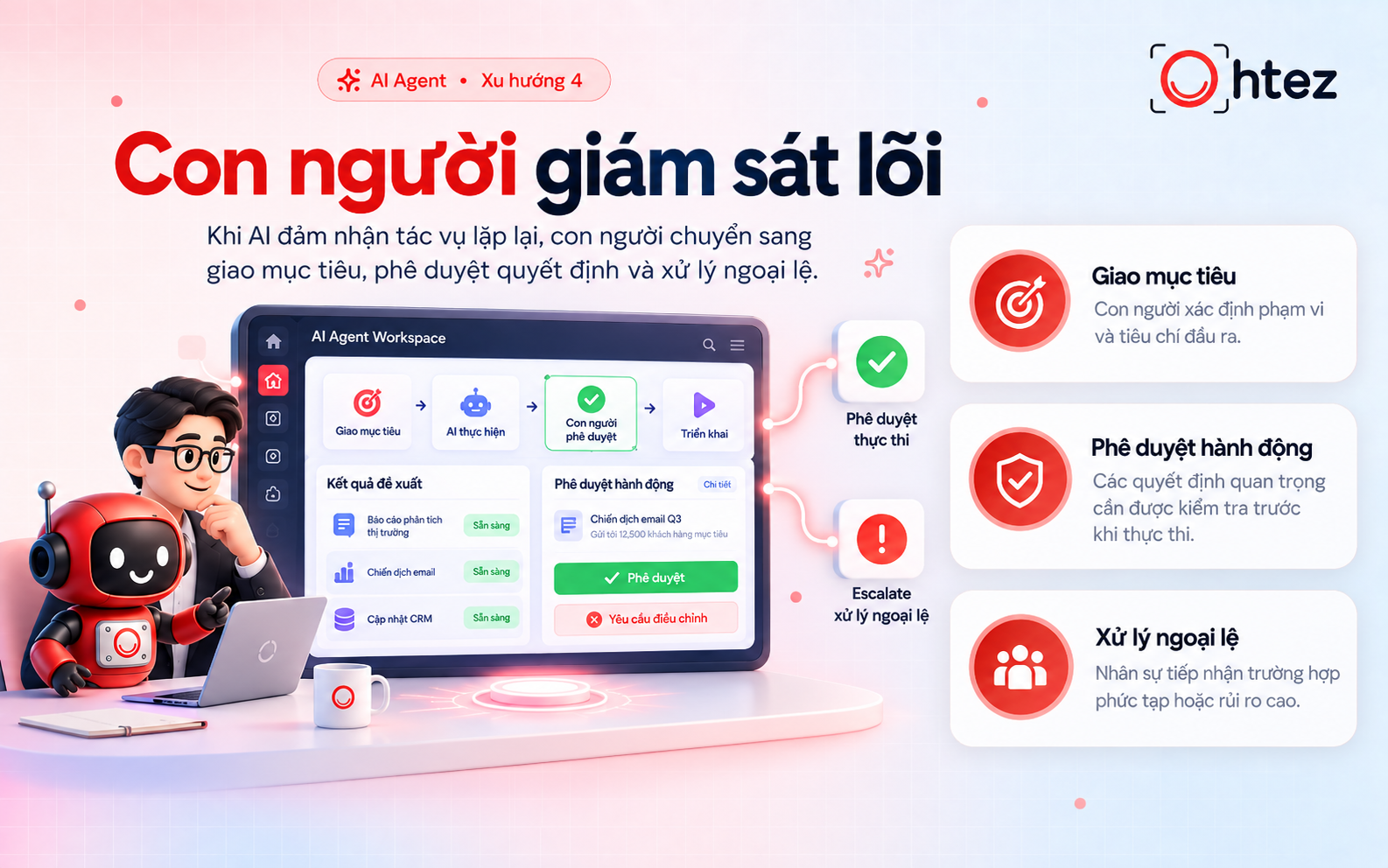
Humans supervise and approve critical AI Agent actions
Ohtez – Custom AI Agent solutions for three industriesc
Ohtez định hướng thiết kế và phát triển AI Agent cho ba lĩnh vực: Marketing, Logistics và E-commerce. Đây là những nhóm hoạt động có nhiều tác vụ lặp lại, dữ liệu phân tán và nhu cầu phối hợp giữa các bộ phận. Việc ứng dụng xu hướng AI Agent cần bắt đầu từ quy trình thực tế, nguồn dữ liệu và mục tiêu cải tiến của từng doanh nghiệp.
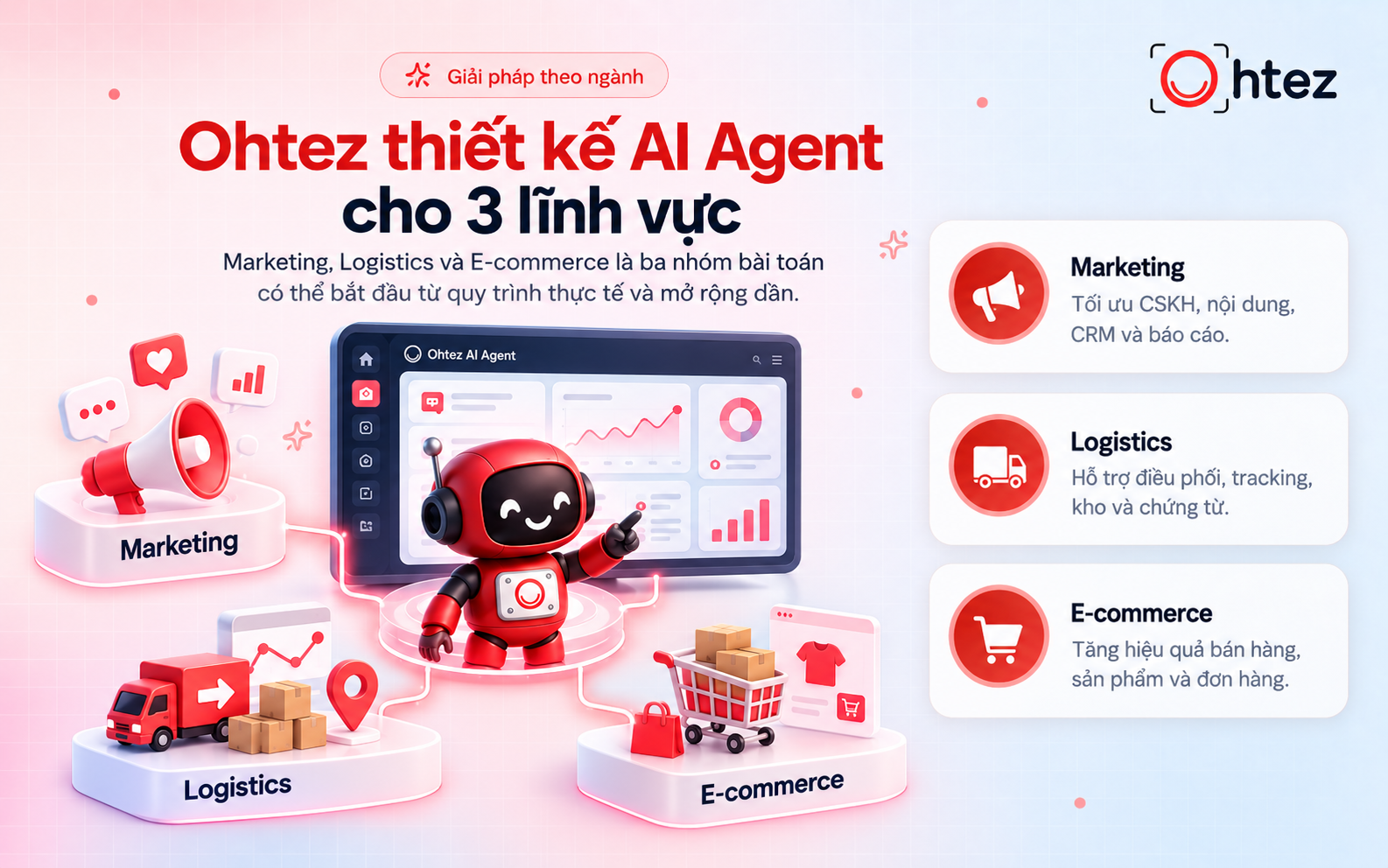
Ohtez applies AI Agent trends to marketing, logistics, and e-commerce
Custom solution design starts by defining the Agent’s responsibilities, connected systems, and permitted actions. For example, a business can prioritize classifying customer inquiries before expanding into customer support or reporting. A phased approach to AI Agent trends allows teams to validate outcomes and make adjustments early. The capabilities below provide a starting point for discussing enterprise AI Agent solutions; the exact scope is confirmed during assessment and demonstration.
1. Marketing Agent
In marketing, AI Agent trends help connect customer data, content, and campaign performance. Depending on business needs, potential capabilities include:
- AI customer service: Classifies customer needs, retrieves product information, and escalates requests beyond its authority to the responsible employee.
- AI content marketing: Consolidates reference materials, suggests ideas, and prepares content based on approved brand guidelines.
- AI performance marketing: Summarizes campaign results, analyzes experiments, and recommends changes for a specialist to evaluate before implementation.
- AI CRM and automation: Segments customers, triggers condition-based workflows, and reminds staff to follow up at scheduled times.
- AI marketing analytics: Aggregates metrics from connected sources, detects changes, and prepares reports for performance evaluation.
AI Agent digital employees support execution, while people approve messaging and budgets. Applying AI Agent trends requires clear quality criteria.
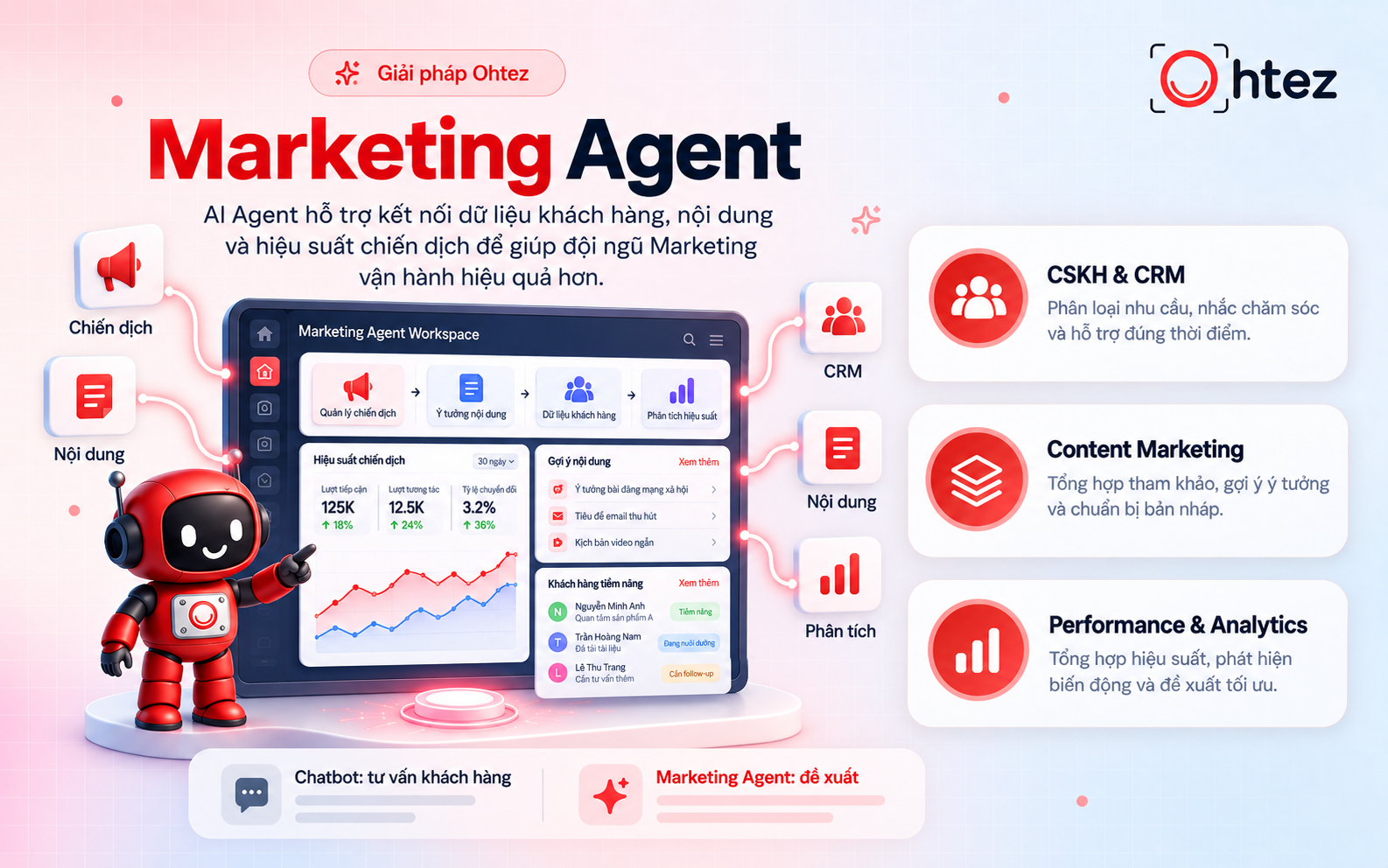
Marketing Agents support customer service, content, and campaign analytics
2. Logistics Agent
In logistics, AI Agent trends focus on supporting information retrieval, data reconciliation, and workflow coordination. Potential capabilities include:
- AI transport coordination: Consolidates location data, vehicle capacity, and delivery schedules to recommend options for dispatchers.
- AI warehouse management: Monitors inventory data, flags low stock levels, and prepares replenishment recommendations based on predefined thresholds.
- AI order tracking: Retrieves shipment statuses from logistics systems, communicates progress, and escalates unusual cases to responsible staff.
- AI documentation and declarations: Extracts information, cross-checks records, and prepares draft documents for operations staff to review.
- AI operations analytics: Summarizes route performance, vehicle utilization, and processing times to help identify improvement opportunities.
For AI Agents used by transportation businesses, up-to-date data is critical to output quality. AI Agent trends still require professional review of documents and declarations.
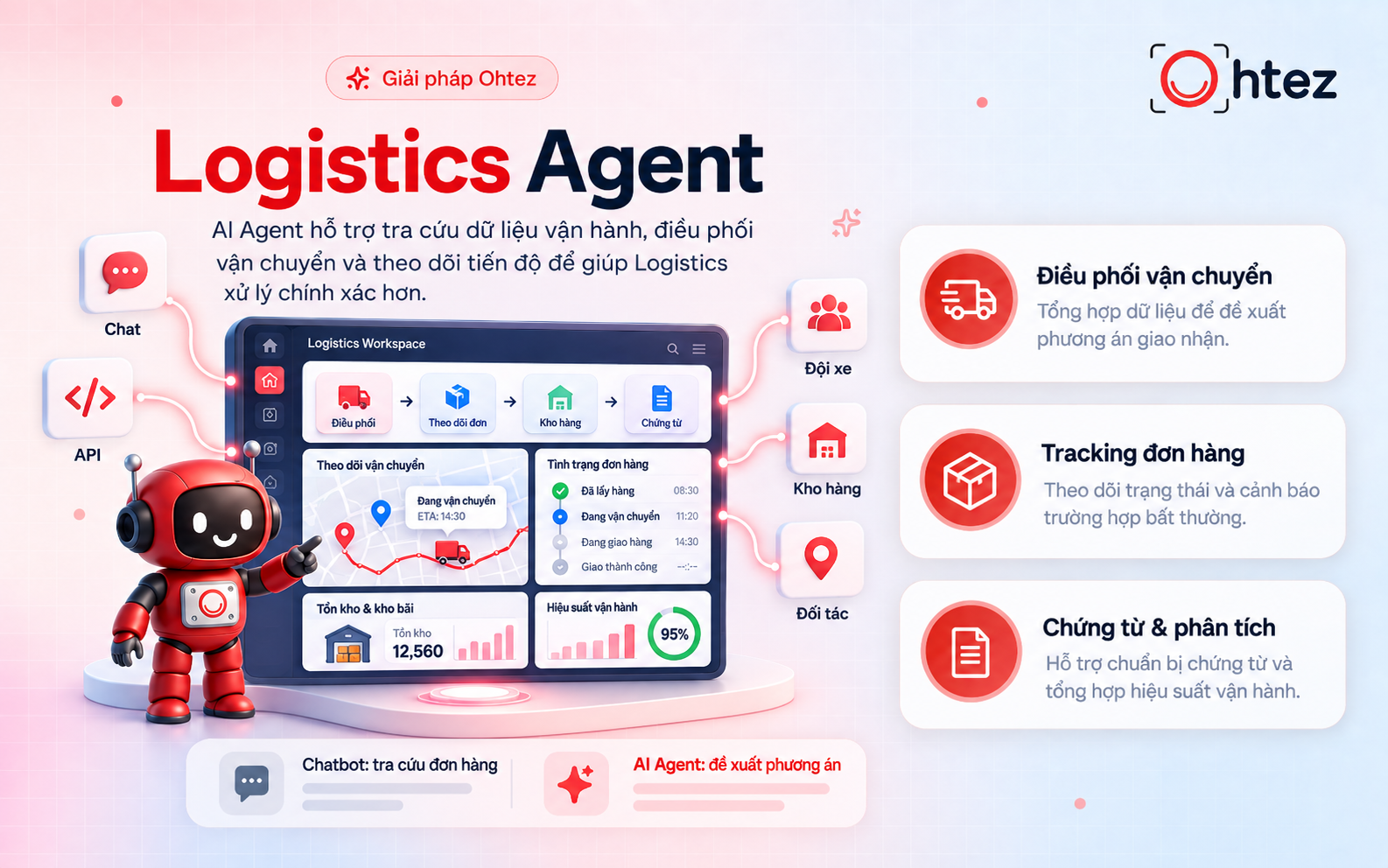
AI Agent trends support warehouse management, transportation, and order tracking
3. E-commerce Agent
In e-commerce, AI Agent trends support sales activities and consolidate information from connected channels. Potential capabilities include:
- AI shopping assistant: Retrieves product features, recommends options based on customer needs, and escalates questions with insufficient information.
- AI product management: Drafts descriptions, checks listing details, and supports data synchronization within platform capabilities.
- AI ratings and reviews: Summarizes feedback, categorizes recurring issues, and flags cases requiring customer support attention.
- AI marketplace advertising: Summarizes campaign performance, analyzes costs, and recommends budget changes within authorized limits.
- AI order processing and customer support: Consolidates order statuses, receives return or exchange requests, and supports reconciliation under established business procedures.
AI Agent digital employees must comply with sales policies. The feasibility of AI Agent trends depends on each platform’s APIs and access permissions.
>> Read more: Top 5 free AI Agents in 2026: Get started at no cost
Why should businesses choose Ohtez’s AI Agent solutions?
To benefit from AI Agent trends, businesses need solutions that fit their existing systems and operations. Ohtez aims to build operational AI teammates that can connect tools and take action. Four key advantages include:
- Deep customization: Agents are tailored to integrate with existing ERP, CRM, and Excel systems, minimizing disruption to established workflows.
- Industry experience: The team brings 5–10 years of hands-on experience and understands operational bottlenecks in marketing agencies, logistics, and e-commerce.
- Milestone-based payments: Businesses pay the remaining balance after the system runs reliably and passes acceptance testing, helping them manage budgets.
- Long-term support: Pilot the system over several weeks, measure real-world results, and receive 3–6 months of maintenance support.
These strengths help businesses approach AI Agent trends through a clear implementation roadmap. Ohtez’s enterprise AI Agent solutions focus on reducing manual tasks, standardizing workflows, and supporting continuous operations.
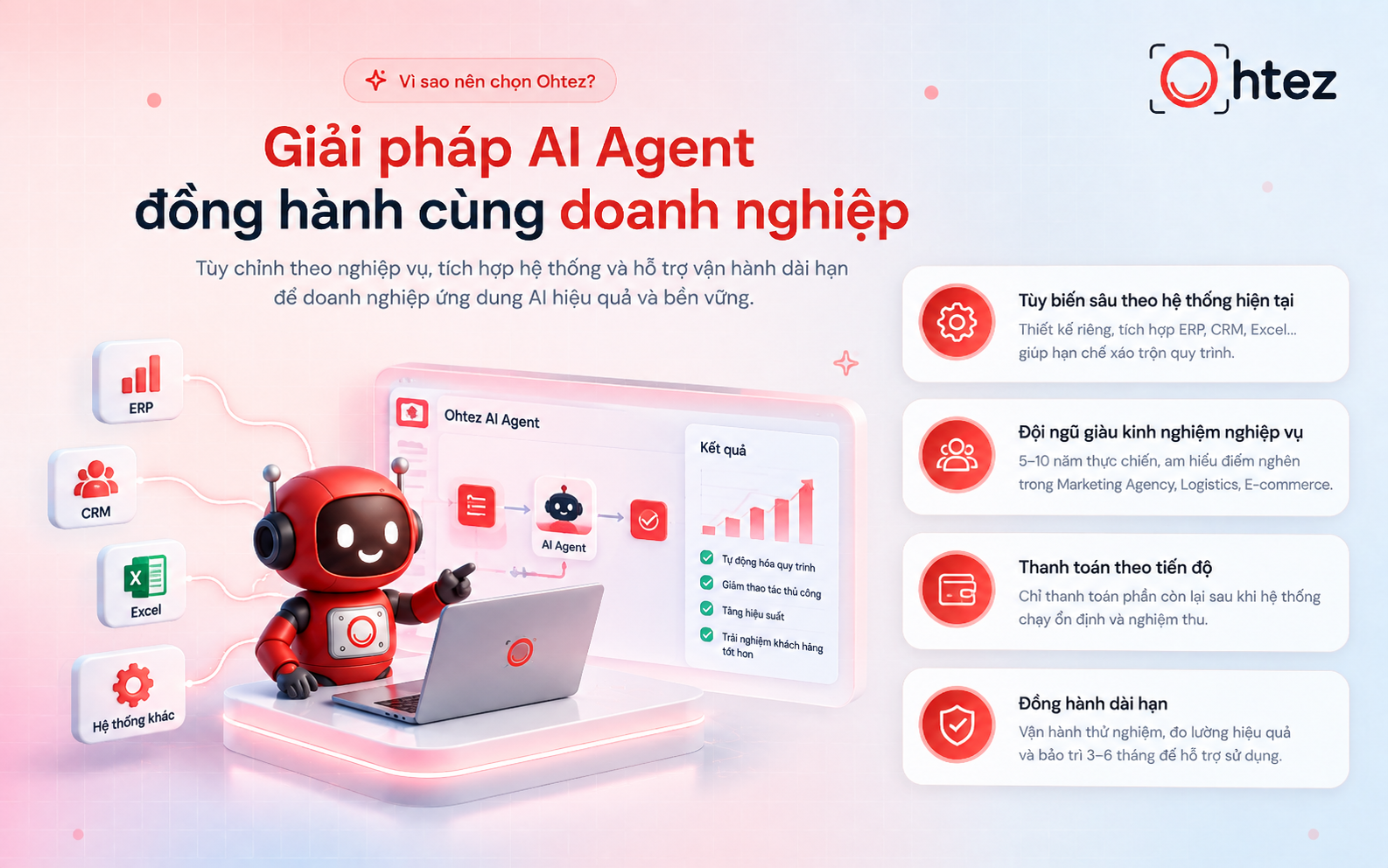
Ohtez develops customized AI Agents that fit business workflows and systems
AI Agent trends in 2026 create opportunities to automate workflows, reduce workloads, and improve business performance. To generate meaningful value, companies need to choose the right tasks, connect suitable data sources, and measure actual results. With tailored solutions for marketing, logistics, and e-commerce, Ohtez supports businesses from pilot projects through daily operations, helping build AI Agent digital employees that work with existing systems. Contact Ohtez today for expert advice and a demo of a solution tailored to your business.