
What is an AI virtual assistant, and why is this technology becoming increasingly common in everyday life and work? From finding information and managing schedules to supporting customer service, virtual assistants help people complete a wide range of tasks faster. By understanding natural language and connecting with other systems, this technology reduces manual work and improves productivity. This article explores how AI virtual assistants work, their benefits, practical and widely used application today..
What is an AI virtual assistant?
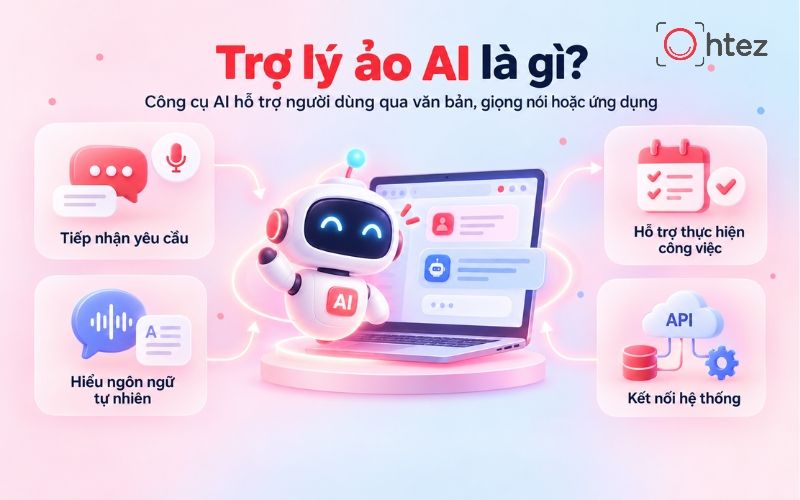
To answer the question “what is an AI virtual assistant?”, an AI virtual assistant is software that uses artificial intelligence to receive requests, understand natural language, and help users complete tasks. Depending on its design and intended purpose, the system can interact through text, voice, or an application interface.
Unlike automation software that only follows predefined instructions, an AI-powered virtual assistant can analyze requests, recognize context, and provide relevant responses. Some systems also integrate with management tools, databases, or external services to help carry out tasks. In business, the question “what is an AI virtual assistant?” can be answered by looking at its roles: retrieving documents, organizing information, supporting customers, and handling tasks with clearly defined workflows.
What is an AI virtual assistant,
>> See also: What does AI agent mean? How it works and practical applications in 2026
How does an AI virtual assistant differ from chatbots and AI agents?
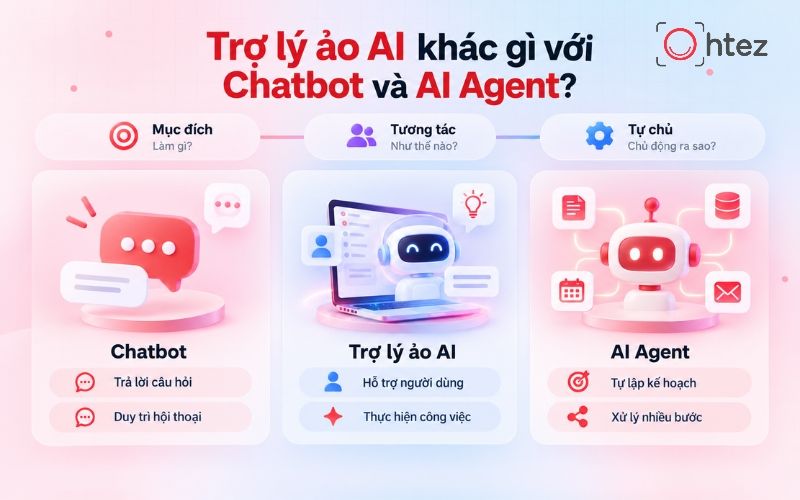
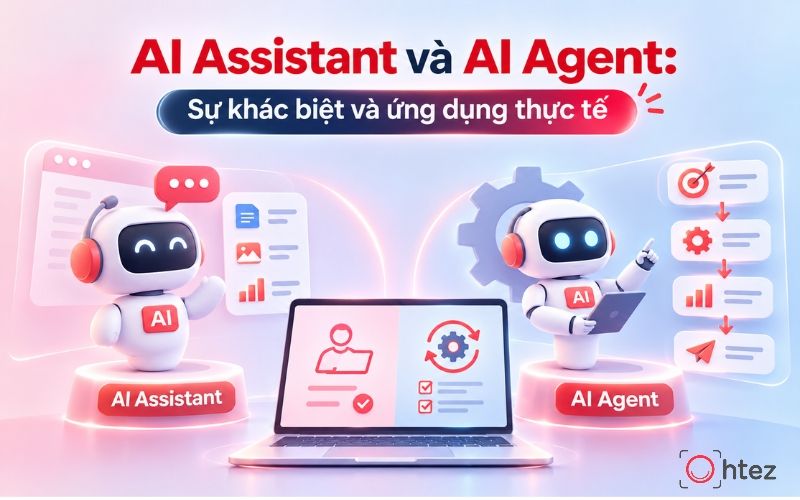
People asking “what is an AI virtual assistant?” often confuse this technology with AI assistants, chatbots, and AI agents. In fact, AI virtual assistants and AI assistants are similar: both help users manage information and complete tasks. However, compared with chatbots and AI agents, virtual assistants differ in their intended purposes, range of functions, and levels of autonomy. The table below highlights the key distinctions among these technologies.
How does an AI virtual assistant differ from chatbots and AI agents?
How does an AI virtual assistant work?
How does an AI virtual assistant work?
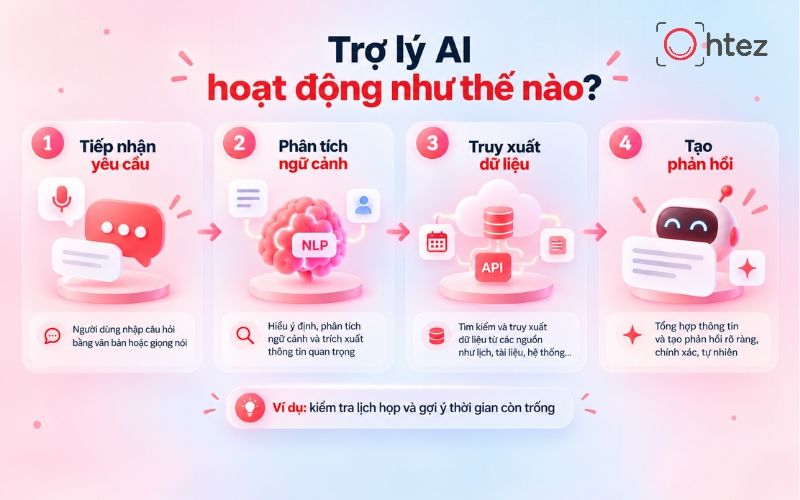
To explore “what is an AI virtual assistant?” in practice, it helps to examine how the system receives, processes, and responds to requests. The process typically combines speech recognition, natural language processing, and data retrieval in four main steps:
- Receiving requests: Users type a message or speak directly to the assistant. For voice input, automatic speech recognition (ASR) converts audio into text.
- Analyzing context: Natural language processing (NLP) and AI models identify user intent, key information, and conversation context.
- Retrieving data and performing tasks: Based on access permissions, the assistant connects to calendars, databases, or management software to retrieve information and fulfill requests.
- Generating a response: The system summarizes results and replies by text or voice. Its quality can improve through data updates and response evaluation.
AI virtual assistant applications in business operations
Beyond answering “what is an AI virtual assistant?”, businesses also need to identify the tasks where this technology can improve operational efficiency. Virtual assistants can support customer service, task management, document retrieval, and data analysis. The scope of each solution depends on specific business needs and integration capabilities.
1. AI virtual assistants for customer service and sales consulting
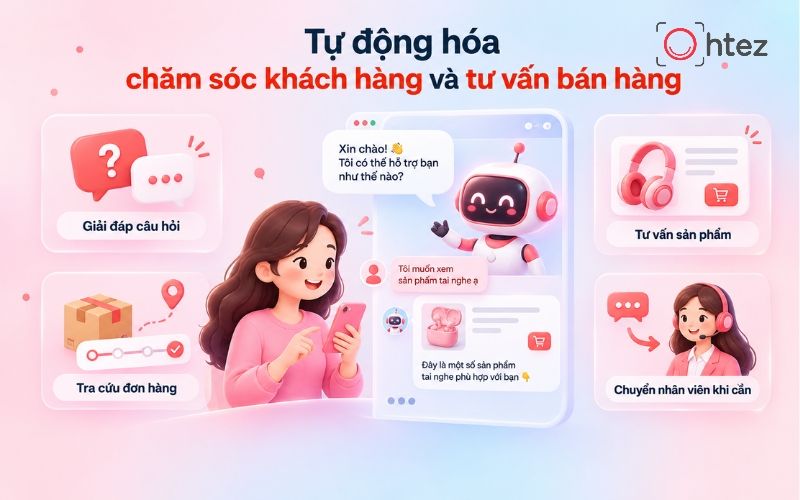
For businesses asking “what is an AI virtual assistant?”, customer service and sales support are important use cases. The system can receive inquiries, recommend products, and process information more efficiently.
- Automated answers: Respond to questions about products, pricing, and purchasing policies.
- Product recommendations: Suggest options based on customer needs and budgets.
- Order lookup: Check shipping status, inventory, and order details.
- Request escalation: Record complex issues for employees to handle.
AI virtual assistants for customer service and sales consulting
2. AI virtual assistants for schedule and internal task management
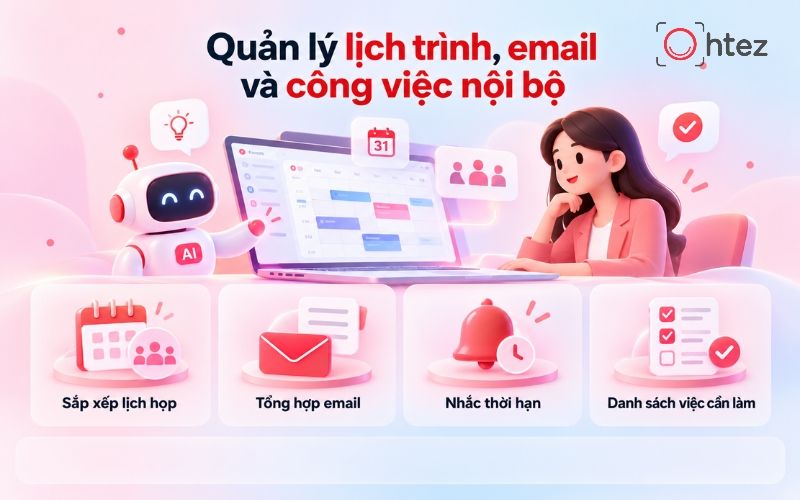
In office settings, exploring “what is an AI virtual assistant?” helps businesses make better use of time and task management capabilities. The assistant can connect with internal tools and support employees with daily responsibilities.
- Meeting scheduling: Check availability and suggest suitable meeting times.
- Task reminders: Track deadlines and notify employees of upcoming work.
- Email management: Sort messages, summarize content, and help draft replies.
- Progress tracking: Update statuses and compile outstanding tasks.
AI virtual assistants for schedule and internal task management
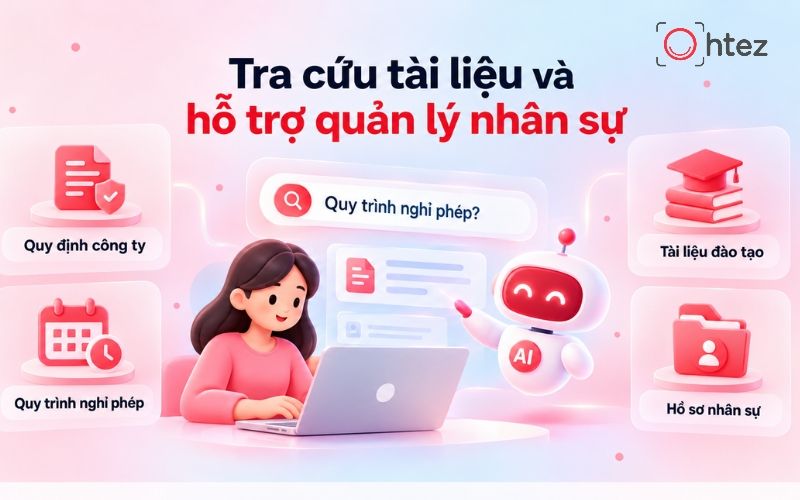
3. AI virtual assistants for document retrieval and human resources
For HR departments, the question “what is an AI virtual assistant?” can be answered through the assistant’s ability to retrieve and manage internal information. When connected to company data, the system helps employees access documents and complete procedures more conveniently.
- Document lookup: Find policies, forms, and standard operating procedures.
- Policy inquiries: Provide information on leave, attendance, and benefits.
- New employee support: Guide onboarding and provide training materials.
- Administrative assistance: Explain required documents and track HR requests.
AI virtual assistants for document retrieval and human resources
4. Trợ lý ảo AI hỗ trợ tổng hợp báo cáo và phân tích dữ liệu
Để hình dung trợ lý ảo AI là gì trong hoạt động quản lý, có thể xem xét khả năng truy xuất và xử lý dữ liệu của hệ thống. Khi tích hợp với phần mềm doanh nghiệp, trợ lý hỗ trợ tổng hợp thông tin và theo dõi hiệu quả hoạt động.
- Thu thập dữ liệu: Truy xuất số liệu từ bảng tính và phần mềm quản lý.
- Tạo báo cáo: Tổng hợp doanh thu, hiệu suất và kết quả hoạt động.
- So sánh chỉ số: Đối chiếu dữ liệu giữa các tháng hoặc bộ phận.
- Hỗ trợ phân tích: Nhận diện xu hướng và những biến động đáng chú ý.
>> Xem thêm: AI Agent tạo video là gì? Top 5 công cụ tự động hóa sản xuất video từ A–Z
See also: What is an AI video agent? Top 5 tools for automating video production from A to Z
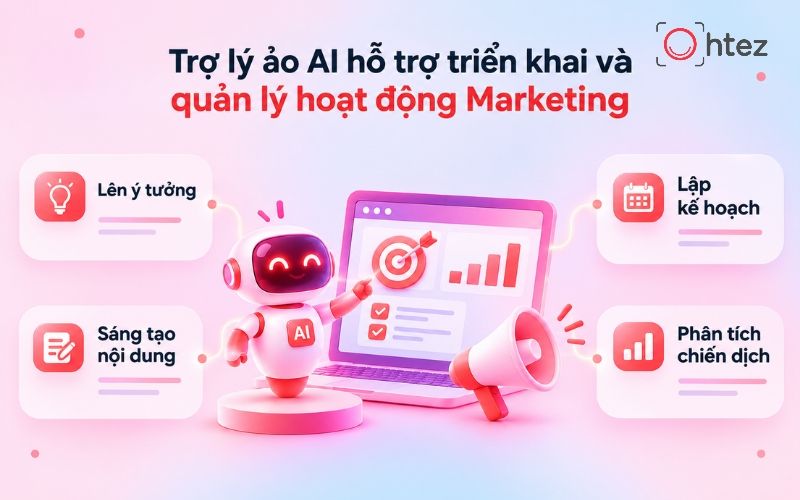
5. AI virtual assistants for marketing execution and management
For marketers asking “what is an AI virtual assistant?”, identifying suitable use cases is essential. Virtual assistants can support marketing teams from brainstorming and content preparation to monitoring campaign performance.
- Idea generation: Suggest topics based on products, target audiences, and communication channels.
- Content creation: Help write social captions, marketing emails, and video scripts.
- Planning: Build publishing calendars and track implementation progress.
- Campaign analysis: Summarize reach, engagement, and conversion data.
AI virtual assistants for marketing execution and management
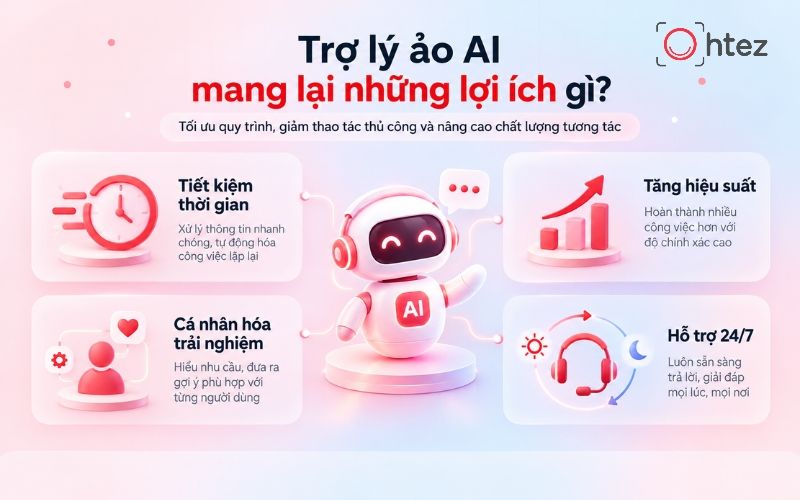
What are the benefits of an AI virtual assistant?
What are the benefits of an AI virtual assistant?
AI virtual assistants help individuals and businesses streamline workflows, reduce manual work, and improve the quality of interactions. When implemented appropriately, they provide several practical benefits in everyday operations.
- Saving time and reducing manual work: Assistants help find documents, classify emails, and compile information from multiple sources. Employees can spend less time on repetitive tasks and focus on higher-value work.
- Improving productivity and operational efficiency: AI virtual assistants help process requests, prepare data, and generate reports using established workflows. This reduces overlooked information and improves coordination across departments.
- Personalizing user experiences: The system can tailor responses to user needs, conversation context, and permitted data. For example, a shopping assistant may recommend products based on a customer’s budget and preferences.
- Providing 24/7 customer support: The assistant can accept questions, share information, and guide customers outside business hours. Complex cases can be recorded and forwarded to the appropriate staff.
See also:4 emerging AI agent trends shaping the future of business
When should a business build a custom AI virtual assistant?
Ready-made virtual assistants often handle common needs such as information retrieval, scheduling, and question answering. However, a customized solution may be more suitable when a business has specialized processes, complex internal data, or multi-step automation requirements. The following three situations are worth considering.
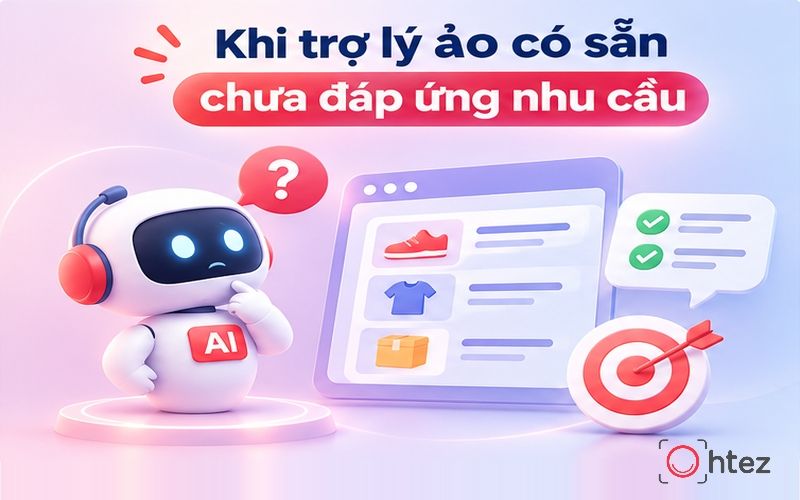
1. When ready-made virtual assistants do not meet business needs
After answering “what is an AI virtual assistant?”, businesses should evaluate whether existing tools truly support their workflows. General-purpose solutions may struggle with industry-specific terminology, internal policies, or specialized procedures. For example, a company with many product lines may need an assistant that provides advice based on its own specifications and policies. A custom system can use company data to generate more relevant responses while giving the business control over its recommendations.
When ready-made virtual assistants do not meet business needs
2. When internal data and system integration are required
When exploring “what is an AI virtual assistant?”, businesses should also assess how well it can connect with the systems they already use. A purpose-built assistant may integrate with CRM, ERP, HR software, or document repositories to retrieve information and support business processes. For example, employees could request customer details, order status, and transaction history from connected systems. To protect information, businesses need appropriate access controls, authentication, and data security measures.
3. When businesses need automation through AI agents
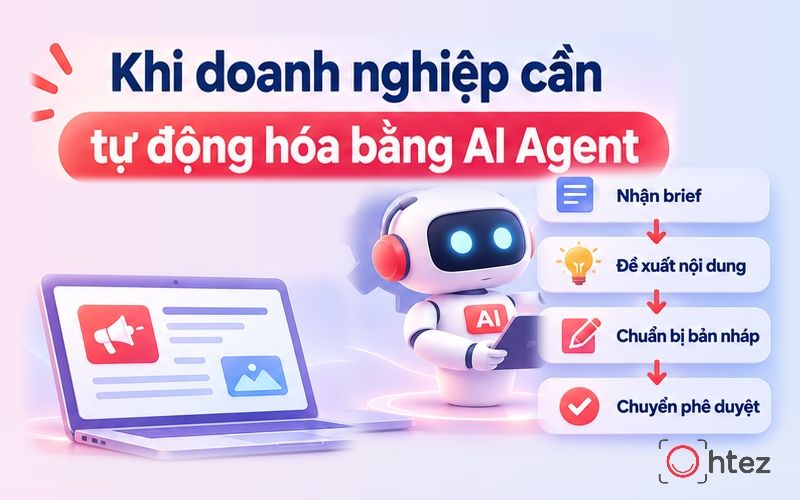
Understanding the answer to “what is an AI virtual assistant?” also helps businesses recognize the difference between an assistive tool and a system capable of independently carrying out tasks. For multi-step work, businesses can consider AI agents that plan actions, use tools, and execute tasks within granted permissions. For example, a marketing AI agent could receive a brief, suggest content, prepare a draft, and submit it to an employee for approval. Human oversight remains essential for quality control and risk reduction.
When businesses need automation through AI agents
Answering “what is an AI virtual assistant?” is the first step toward choosing an AI solution that matches a business’s operational needs. If you are looking for a system that can automate work, connect data, and handle workflows based on your requirements, explore Ohtez’s AI Agent services. With AI assistant solutions tailored to specific needs and designed for integration with existing systems, Ohtez helps businesses apply AI to real-world operations. Contact Ohtez today to discuss the right solution for your business!
You May Also Like
Contact Info
(+84) 90 1900 626
info@ohtez.com
CONTACT US
OHTEZ Assistant
Online Consultation